
Brent Crude Oil Price Per Barrel in 2026: Market Volatility, Key Drivers, and Future Predictions
Introduction: What $100+ Brent Barrel Prices Mean for You
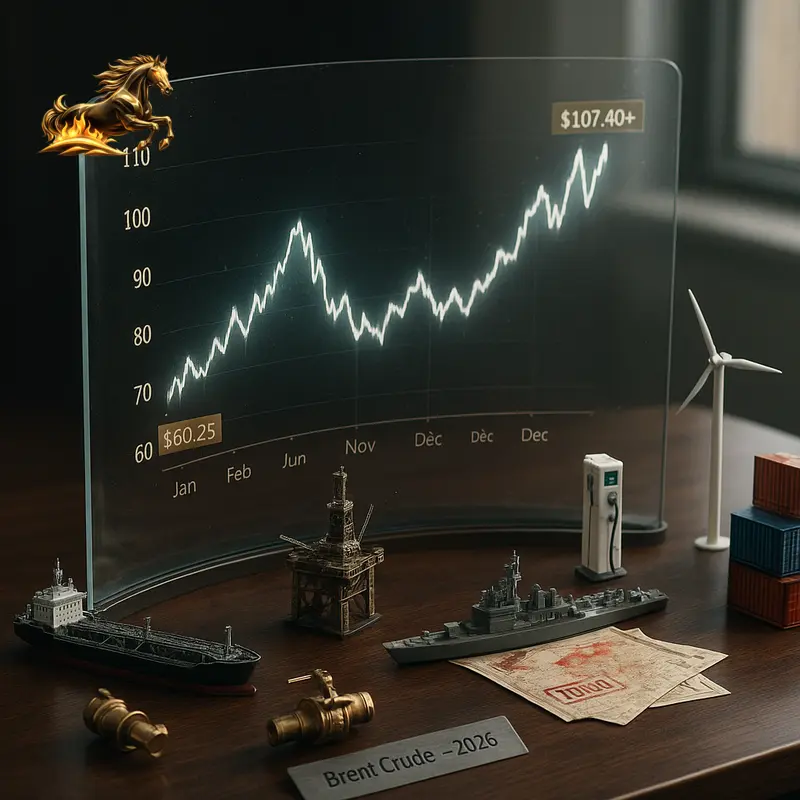
In 2026, the Brent crude oil price per barrel is swinging wildly—from lows near $60 to peaks above $107 in just months. This volatility isn’t just market noise; it impacts your fuel bills, global economies, and geopolitics. As the key benchmark for about two-thirds of global crude trade, Brent’s price shifts ripple across industries, governments, and consumers worldwide.
Grasping the causes behind Brent’s sharp price swings is critical in this environment. This article breaks down the main drivers behind Brent crude’s 2026 pricing rollercoaster and offers clear insights into what lies ahead. Whether you’re an investor, business leader, or consumer, understanding Brent crude oil prices will help you navigate today’s energy landscape.
Brent Crude: The Global Oil Benchmark in 2026
Brent crude is a light, sweet crude from the North Sea, the principal benchmark for Atlantic basin crude. Even with rising renewable energy use, Brent remains the premier global oil price indicator, reflecting economic health and geopolitical shifts in real time.
The 2026 Price Picture at a Glance
- Brent peaked at $107.05 per barrel in May 2026—a massive 63.67% jump year-to-date fueled by geopolitical tensions.
- Prices have been volatile: surging over $105 amid Middle East turmoil, then plunging 5% in a day.
- Some reports still show prices in the mid-$60 range due to contract timing differences and regional market nuances.
This illustrates today’s fractured oil market—spot prices react instantly to breaking news, while longer-dated contracts and physical assessments reflect more tempered trends.
Four Key Factors Driving Brent Prices in 2026
1. Global Supply Constraints: The Tightening Squeeze
Oil supply is deliberately tight, pushing prices up.
- OPEC+ Production Control: Saudi Arabia, Russia, and partners keep output restricted to support prices.
- U.S. Shale Slowdown: Higher costs and regulations limit flexible shale output.
- Underinvestment: Uncertain demand discourages big new projects, tightening future supply.
2. Geopolitical Risk: The Ever-Present Wildcard
Political instability keeps prices on edge.
- Middle East Hotspots: Conflicts around the Strait of Hormuz rattle markets instantly.
- Sanctions: Limits on Iran, Venezuela, and Russia reduce available supply.
- Superpower Diplomacy: Trade talks and rivalries sway oil demand forecasts.
3. Economic and Market Dynamics: Demand in Flux
Oil prices respond strongly to changing demand signals.
- Patchy Recovery: Uneven global growth means inconsistent oil use.
- Currency & Inflation: Stronger US dollar and inflation-led interest hikes weigh on demand.
- Speculation: Investor activity amplifies market swings.
4. The Energy Transition: A Lingering Influence
The shift to clean energy shapes how investors and markets view oil’s future.
- Peak Demand Looms: Expected decline in oil use before 2035 curbs upstream investments.
- Policy Changes: EV mandates, carbon taxes, and renewables challenge oil’s market share.
- Supply-Demand Imbalance: Underinvestment raises medium-term price risks despite the transition.
What a $100+ Brent Price Means for Everyone
- Consumers: Higher fuel and heating costs tighten household budgets.
- Industries: Aviation, shipping, manufacturing, and agriculture face increased expenses passed on to customers.
- Global Economy: Prolonged high prices slow growth and shift wealth to oil exporters, complicating inflation control.
Brent Crude Oil Price Outlook: Short Term vs. Long Term
Short-Term (2026–2027)
Expect ongoing volatility between $70 and $115 per barrel driven by:
- OPEC+ production decisions
- Sudden geopolitical flare-ups
- Economic data surprises
- Stockpile shifts
Prepare for sharp price jumps reacting to news and supply updates.
Long-Term (Post-2027)
Fundamental shifts will reshape pricing:
- Demand Peaks: EV adoption and efficiency gains will shrink oil use before 2035.
- Supply Adjustments: High prices may trigger new tech and production methods.
- Benchmark Changes: Brent’s dominance may fade as North Sea output declines.
How to Navigate Brent Market Volatility in 2026
- Investors: Diversify, watch geopolitical developments, manage risk.
- Businesses: Hedge energy costs, improve efficiency, plan for volatility and energy decline.
- Policymakers: Protect vulnerable groups, safeguard reserves, balance energy security with green goals.
- Consumers: Boost energy efficiency, budget smartly, support clean energy policies.
Conclusion: Thriving Amid Brent Price Volatility
In 2026, Brent crude prices reflect a market straddling dependence on oil and a faster energy transition. Volatility stems from deliberate supply controls, geopolitical tensions, economic uncertainty, and a looming demand peak.
Understanding these intertwined forces helps investors, businesses, policymakers, and consumers make smarter decisions. The era of stable, cheap oil is behind us—adapting to a world of price swings and gradual decline is essential for success.
FAQs: Brent Crude Oil Prices in 2026
- Q1: Why do Brent crude prices vary so widely—from $66 to over $107?
- Prices differ by contract types and timing. Near-term futures react sharply to breaking news, while later contracts and physical cargo deals may show more stable or lower prices.
- Q2: What is OPEC+ and how does it influence Brent prices?
- OPEC+ is a group of 23 major producers led by Saudi Arabia and Russia, coordinating output to control supply tightness and influence Brent prices.
- Q3: How do Brent prices affect U.S. gasoline costs?
- Brent price changes impact U.S. gas prices, especially on East and Gulf Coasts. Typically, a $10 Brent increase raises pump prices by 25–30 cents per gallon, though refining and taxes also matter.
- Q4: Will peak oil demand cause prices to collapse soon?
- Not immediately. Despite peak demand before 2035, underinvestment and volatility can keep prices elevated for years.
- Q5: How can individuals track and understand Brent price movements?
- Follow trusted financial news and reports from EIA, IEA, and OPEC. Look beyond headlines to geopolitical, economic, and production contexts shaping prices.
