
Energy Shifts Ahead: What’s Next for Global Markets?
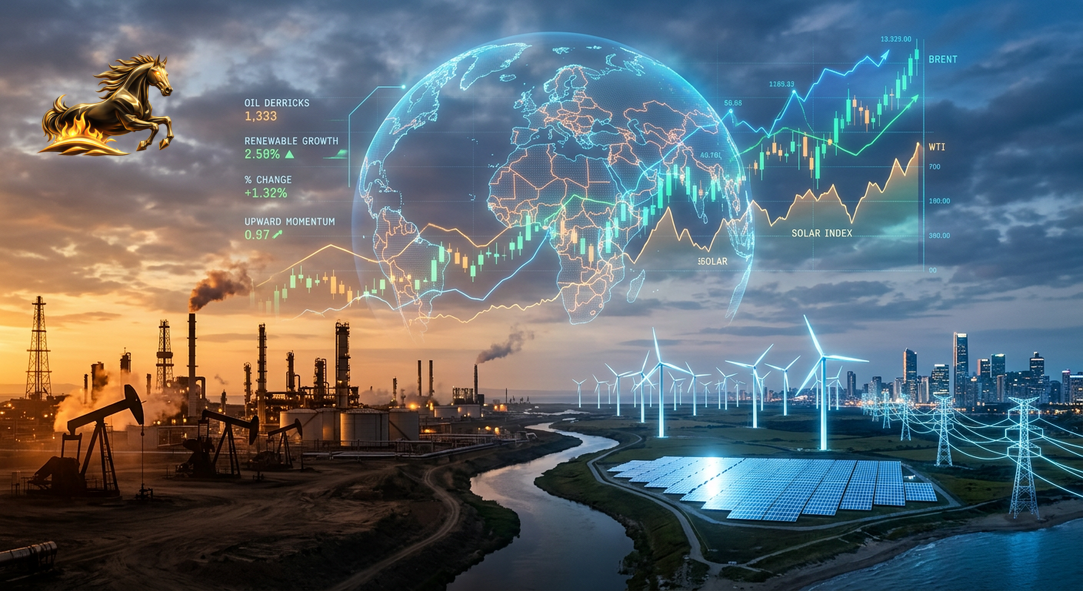
The global energy landscape is caught in a fascinating paradox: demand for oil, gas, and coal remains near record highs, even as unprecedented capital flows propel clean energy to reshape markets. This dynamic tension is reshaping economies, geopolitics, and investment strategies worldwide.
Energy powers virtually every aspect of modern life — from aviation and shipping to data centers and manufacturing. Meanwhile, technologies like solar panels, wind turbines, electric vehicles, and smart grids have moved beyond concepts to become vital pillars of today’s infrastructure.
So, what does the future hold for global energy markets?
Instead of a swift replacement of fossil fuels by clean energy, we face a dual reality: a sustained short-term dependence on fossil fuels marked by price volatility and geopolitical risks, alongside a committed long-term investment shift toward cleaner, more flexible, and secure energy systems.
Given energy prices’ impact on inflation, interest rates, competitiveness, and national security, these shifts carry far-reaching implications. To anticipate what’s next, it’s essential to grasp today’s energy dynamics, the drivers behind the transition, and how markets are likely to respond.
Fossil Fuel Demand Stays High Amid Capital’s Clean Energy Pivot
Often portrayed as a “new versus old” showdown, energy markets reveal a more nuanced story.
In 2023, fossil fuel consumption and emissions climbed to all-time highs. Oil demand has rebounded strongly post-pandemic, coal remains elevated particularly in Asia, and natural gas continues to play a central role in power and industry.
Meanwhile, clean energy investment surges ahead. The International Energy Agency (IEA) reports nearly twice as much capital flowing into renewables and related technologies than into fossil fuels, with global clean energy investments nearing $2 trillion.
This creates a compelling tension:
- Fossil fuels continue to power today’s energy use.
- Investment is increasingly focused on renewables, electrification, and efficiency.
- The transition is gradual, capital intensive, and complex.
We are witnessing a long-term transformation — not a sudden switch — of the world’s core economic system.
Present-Day Energy Demand: Growing, Tight, and Electrifying
Worldwide energy demand grows steadily, driven by urbanization, industrial expansion, digitalization, the rise of electric vehicles, and a growing middle class.
Oil remains vital for transport, shipping, and industry. Despite more electric vehicles, oil demand endures because vehicle and equipment turnover is slow. Oil price swings ripple through inflation, shipping costs, and emerging market currencies.
Natural gas holds a key balancing role in electricity generation but is caught in complex geopolitics due to Russian-Ukraine conflict, altered LNG flows, and regional competition.
Coal endures, especially in Asia, fueling rising electricity demand. Accelerating clean energy growth beyond overall demand is crucial to reducing reliance on these fossil fuels — a major challenge ahead.
The Geopolitics of Energy Pricing—A Reinvigorated Link
Volatility in energy markets remains tightly linked to geopolitics. Conflicts, supply shocks, and shipping route tensions across the Middle East, Russia, and beyond spark rapid price spikes that reverberate through the global economy.
Fossil fuel supply disruptions have immediate, significant effects because of rigid demand, scarce strategic reserves, and limited spare capacity.
As a result, energy security has moved to the forefront of policy and investment agendas.
Renewable energy, once viewed mainly through a climate lens, now emerges as a strategic asset. Growing domestic solar and wind capacity reduces exposure to global fuel shocks, forging a new energy security paradigm centered on clean infrastructure.
Renewables: From Alternative Choice to Economic Backbone
Renewable technologies like solar and wind are now cost-competitive and indispensable.
The IEA forecasts massive growth in renewable capacity — notably solar photovoltaic (PV) — positioning renewables to become the world’s largest electricity source. Battery cost declines enable smoother integration, despite some near-term supply chain hurdles.
Renewables offer multiple advantages:
- Shielding against fuel price volatility
- Boosting domestic energy production
- Modular, scalable deployment
- Inflation protection
- Strengthening industrial policy and job creation
Governments globally are framing clean energy as both a competitive edge and a security imperative, driving policies to accelerate manufacturing and deployment.
The Dual Reality: Balancing Fossil Fuel Use Today with Clean Growth Tomorrow
The defining characteristic of today’s energy markets is coexistence: ongoing fossil fuel reliance paired with accelerating clean energy investment.
In the short term, fossil fuels remain essential. Underinvestment risks create supply squeezes and price spikes, sustaining profits for some producers. Yet these assets face long-term headwinds from regulation and demand uncertainty.
Over the long haul, clean energy investments align with trends in electrification, grid modernization, and decarbonization. Still, challenges like financing costs and supply chain constraints provoke more selective investment.
This dual reality demands market participants carefully weigh cash flows, timelines, and risks across all energy assets.
Electricity: The Strategic Backbone of the Future Economy
Electricity is taking center stage as transport, heating, industry, and digital infrastructure become increasingly electrified.
Emerging demands from AI and data centers add unprecedented load, pushing investments in grids, storage, and power management.
The energy transition requires building an electricity system that not only replaces fossil fuels with renewables but supports a more electrified, digital world.
Storage, Smart Grids, and Flexibility: Essential for Renewable Integration
Solar and wind’s intermittent nature heightens the importance of battery storage and smart grids.
Battery systems store excess renewable generation, releasing power when output dips. Countries like the U.S., China, and across Europe rapidly expand storage to maintain grid stability and maximize renewable usage.
Upgrading grid infrastructure — including transmission, digital controls, and streamlined permitting — is crucial to avoid bottlenecks that could stall renewable deployment despite ample generation.
Critical Minerals: The New Frontier of Energy Security Risks
The energy transition shifts supply dependence from fuels to critical minerals—lithium, copper, nickel, and rare earth elements vital for batteries, wiring, and clean tech manufacturing.
With mineral processing and manufacturing concentrated heavily in China, new strategic vulnerabilities emerge reminiscent of historic oil supply concerns.
Energy security now encompasses securing diverse mineral supply chains, boosting recycling, and innovating to reduce dependency risks.
Emerging Markets: Navigating Growth, Access, and Decarbonization
Emerging economies will drive much future energy demand but face tough trade-offs between affordability, access, and decarbonization.
While clean energy is cost-effective long-term, its upfront capital needs are high. Availability of financing, policy certainty, and support will determine how quickly these markets leapfrog fossil fuels.
Effective energy strategies must balance reliability, cost, and emissions reduction to succeed politically and economically.
Macro Impact: Energy Prices Drive Inflation and Interest Rates
Energy price swings ripple through inflation, consumer expenses, and central bank policies worldwide.
Oil and gas shocks influence everything from airline tickets to food costs; electricity price jumps affect manufacturing and household budgets.
Renewables provide inflation hedges by removing fuel costs but remain sensitive to interest rates given their capital intensity.
Understanding energy’s macroeconomic role is vital for policymakers and investors alike.
Strategies Ahead for Oil, Gas, and Renewable Companies
Oil and gas companies face a crossroads: optimize current assets, diversify into low-carbon fields, or pursue hybrid models.
Investor focus on near-term returns complicates large-scale transition investments. Carbon capture may address tough sectors but won’t replace comprehensive decarbonization.
Renewables firms must shift from rapid build-out to disciplined growth emphasizing execution, financing, and integration.
Strong project delivery and dependable technologies will set winners apart in a maturing sector.
Energy Geopolitics: China, the U.S., and Europe in Focus
Energy transitions mirror global power shifts:
- China leads clean energy manufacturing and consumption but balances rapid renewables expansion with ongoing coal use.
- The U.S. leverages abundant fossil fuels alongside supportive clean policies, navigating political and regulatory uncertainties.
- Europe prioritizes energy security and decarbonization amid high costs, functioning as a policy innovation hub.
These differing paths will influence industrial competitiveness and geopolitical alliances.
Five Key Energy Market Shifts to Watch
- Persistent energy price volatility driven by geopolitical tensions will continue influencing inflation and market sentiment.
- Selective, strategic clean energy investments focusing on infrastructure bottlenecks and resilient supply chains.
- Growing electricity market significance as the strategic platform for decarbonized economies.
- Sustained emphasis on energy security, promoting diverse domestic energy and resilience.
- Uneven regional and sectoral transitions, generating distinct risks and opportunities.
Practical Advice for Businesses and Investors
Businesses should factor energy risks into strategy: manage exposure to price swings, explore renewable contracts, boost efficiency, and evaluate carbon regulations.
Investors must scrutinize supply discipline, infrastructure expansion, mineral supply chains, technology delivery, and emerging market financing.
Success hinges on navigating the complex energy transition landscape with informed discipline.
Conclusion: Embracing Energy’s Dual Future
Global energy markets are navigating a complex reality: fossil fuels remain vital today even as clean energy advances strongly.
This layered, capital-intensive, geopolitically charged transition demands balancing current fossil dependencies with forward-looking clean, flexible systems powering tomorrow’s economy.
Grasping this dual reality is essential for anyone engaged in the global energy space. The energy shift is well underway — those who adapt thoughtfully stand to lead the way.
This comprehensive perspective reveals a future energy market that is neither simple nor linear. Yet with prudent guidance, the world can steer toward a more secure, sustainable, and prosperous energy future.
