
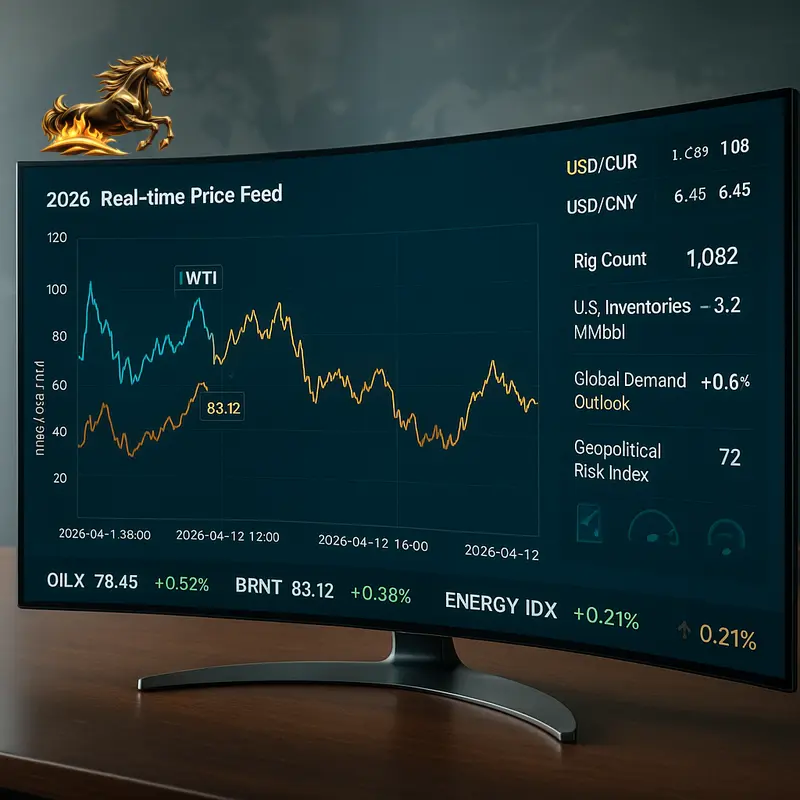
Oil Price Per Barrel Live Chart 2026: Your Ultimate Guide to Real-Time Market Tracking
In the fast-paced world of oil trading, tracking price changes as they happen is crucial. In 2026, with geopolitical shifts, economic fluctuations, and shifting market sentiment driving volatility, having access to an accurate oil price per barrel live chart is more important than ever. Take, for example, a recent Tuesday when West Texas Intermediate (WTI) crude prices swung sharply—rising 3% then dropping almost 2% within hours—sparked by unfolding news from Iran and the Strait of Hormuz. This volatility perfectly shows why investors, analysts, and policymakers must rely on real-time charts for timely insights.
This guide will help you make the most of live oil price charts, explain key factors influencing prices in 2026, and show how to integrate this powerful tool into your decision-making. Whether managing budgets, building a portfolio, or simply seeking global market clarity, mastering live charts enhances your grasp of this critical commodity.
Why Oil Prices Still Dominate in 2026
Despite progress in renewables, oil remains core to the global economy. Its price per barrel acts as a vital barometer impacting everything from fuel costs to financial markets worldwide.
Direct Economic Impact
Oil prices affect many sectors directly:
- Transportation & Logistics: Higher crude costs increase expenses for shipping, trucking, and air travel, raising prices across goods.
- Manufacturing & Chemicals: Oil is essential for products like plastics and fertilizers; price hikes squeeze manufacturing profits.
- Consumer Spending: Elevated gasoline and heating bills leave less disposable income, potentially slowing growth.
Oil importers tend to benefit from price drops, while exporters may face tighter budgets—a delicate global balance.
Oil as a Financial Asset
Today, oil is as much a traded financial asset as a physical commodity. Futures, indexes, and algorithmic strategies amplify price swings. Prices merge supply-demand realities with currency moves, interest rates, and speculative forces. Reading live oil price charts requires blending data analysis with keen market intuition.
Key takeaway: Oil’s price remains a powerful economic force reflecting complex global activity. Understanding its dynamics empowers smarter decisions.
Breaking Down the Oil Price Per Barrel Live Chart
At first, live oil charts might seem complex. Here’s what you need to know to read them confidently.
Core Components
- Price Benchmarks:
WTI (West Texas Intermediate): US-focused, sensitive to North American supply.
Brent Crude: Global standard, influenced by international geopolitics. - Timeframes: Adjustable—from 1-minute intraday views for active traders to monthly charts for long-term trends.
- Price Display: Typically candlesticks illustrating open, high, low, and close prices per period.
- Trading Volume: Below price bars, showing the strength behind moves. High-volume moves usually carry more weight.
- Key Stats:
Last Price
Change & Percentage Change (color-coded)
Bid/Ask Spread
Day’s High and Low
Spotting Patterns and Trends
- Support and Resistance: Price levels where markets often reverse, guiding entry and exit points.
- Trend Lines: Show if prices are trending up or down.
- Volatility Signs: Large candlestick wicks highlight reactions to news.
For instance, early 2026 data reveals a steady medium-term WTI uptrend despite occasional short-term dips.
Key takeaway: Mastering live charts means visualizing market sentiment and supply-demand shifts in real time.
Top Platforms for Live Oil Price Charts in 2026
Your choice of platform shapes your market view. Here are trusted options preferred by pros:
- Investing.com: User-friendly, offers live WTI and Brent charts plus news and economic calendars.
- TradingEconomics: Combines price data with macroeconomic forecasts for broader perspective.
- FXStreet: Detailed technical analysis and timely oil market commentary.
- OilPrice.com: Fundamental market reports alongside live charts for physical market insights.
- IG Markets & TradingView: Advanced tools and customization favored by day traders.
Key takeaway: Pick a platform that fits your style—whether you want integrated news, deep analysis, or ease of use.
Five Key Drivers of Oil Prices in 2026
Understanding what moves oil prices helps you read charts with greater confidence.
1. Geopolitical Events
Tensions or deals in oil-rich regions trigger swift price shifts. Recent Iran-related news caused sharp price spikes and reversals visible even on short charts.
Tip: Use 15-minute to 1-hour charts during geopolitical events for real-time market reactions.
2. Supply and Demand
Inventories, production, and consumption drive long-term trends. SPR releases offer temporary relief, but diminishing stockpiles support price strength.
Tip: Weekly and monthly charts help distinguish structural trends from noise.
3. Macroeconomics
Global growth, inflation, interest rates, and the U.S. dollar’s strength heavily influence oil demand and pricing. A strong dollar often pressures oil prices downward.
Tip: Always check economic calendars alongside live charts to understand sudden moves.
4. Futures Curve Shape
Backwardation signals tight current supply, pushing prices up; contango indicates oversupply or costly storage.
Tip: Watch the futures term structure to anticipate changing market sentiment beyond front-month prices.
5. Tech & Regulation
Energy transition policies and electric vehicle adoption affect long-term oil demand projections and price ceilings.
Tip: Examine multi-year charts to grasp evolving demand-side fundamentals.
Key takeaway: Combining chart analysis with awareness of these forces turns data into decisive insight.
Building Your Oil Chart Analysis Routine
A structured routine balances big-picture context with detailed chart reading:
- Review the Macro Environment: GDP forecasts, geopolitical news, and inventory stats.
- Analyze Long-Term Trends: Weekly/monthly charts reveal overall direction and critical support/resistance.
- Focus on Short-Term Setups: Daily and 4-hour charts show patterns within the bigger trend.
- Watch Real-Time Movements: Keep 15-minute and hourly charts open during market hours, syncing moves with news.
- Monitor Futures and Related Markets: Track term structure and currency or equity trends for broader signals.
This method helps you respond thoughtfully, not impulsively.
The Future of Oil Price Tracking Beyond 2026
Advances will make market insights even sharper:
- AI Predictive Models: Automated tools predicting price moves from complex data like satellite imagery and social sentiment.
- Personalized Alerts: Custom dashboards and notifications tailored to your portfolio.
- Immersive Visualization: Virtual reality may offer interactive 3D views of market data and geopolitical risks.
These tools promise to deepen understanding and improve decision-making.
Conclusion: From Charts to Clarity
In 2026, the oil price per barrel live chart is more than numbers—it’s a snapshot of global forces in motion. Its true power lies in your ability to interpret it within economic, political, and technical contexts.
Remember: No single price move tells the full story. Integrate chart patterns with fundamentals—geopolitics, demand-supply, macro factors, futures curves, and long-term trends—to navigate this volatile market successfully.
Start with reliable platforms like Investing.com or TradingEconomics. Watch, analyze, and practice regularly. Soon, those seemingly random lines will unfold the compelling narrative of global energy—and your skill in reading it will be your greatest asset.
Frequently Asked Questions (FAQ)
Q1: What’s the difference between WTI and Brent on live charts?
WTI reflects North American supply factors, while Brent covers global geopolitics. Their price gap reveals regional supply-demand nuances.
Q2: Why do prices sometimes jump without news?
Large trades, algorithms, or positioning before releases can cause sudden moves, as can technical stop orders triggering cascades.
Q3: How reliable are long-term oil price forecasts?
Forecasters use consensus models offering guidance but no certainties. Use forecasts alongside current fundamentals.
Q4: Can free live charts support investing?
Absolutely. Platforms like Investing.com and TradingEconomics provide solid real-time data fit for most investors. Professionals use premium tools for speed and depth but free sources are very powerful.
Q5: What should beginners avoid when reading live charts?
Avoid focusing only on ultra-short-term data without understanding the bigger trend and fundamentals—it often leads to poor timing.
Mastering the oil price per barrel live chart means connecting the dots of global energy dynamics in real time. Your journey towards insight and smarter decisions starts right now.
