
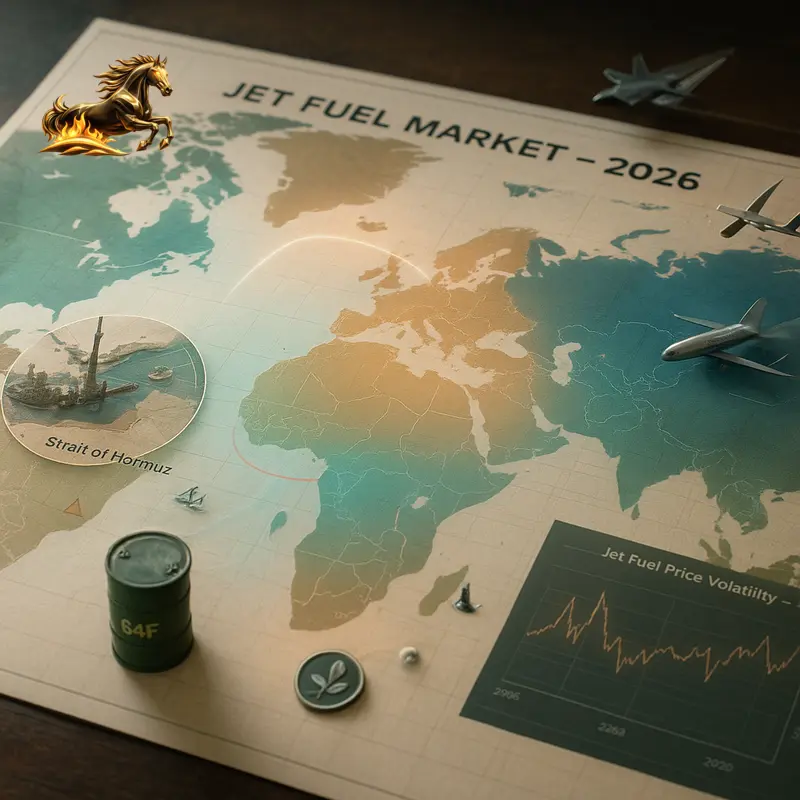
The Jet Fuel Price Landscape in 2026: Navigating Record Highs and Market Shifts
In aviation and energy trading, jet fuel prices have transformed from a stable cost to a dynamic factor reshaping industries overnight. As 2026 unfolds, the key question is no longer if jet fuel prices will surprise the market, but when and why those shifts will happen.
This article dives deep into the jet fuel price environment of 2026, exploring the root causes of volatility, risk management strategies adopted by industry players, and the long-term outlook for this crucial fuel. Whether you’re an airline executive, corporate travel manager, or energy market participant, understanding these forces is essential.
Understanding Jet Fuel: More Than Just an Airline Expense
Jet fuel, commercially known as Jet A or Jet A-1, is a specialized kerosene that powers aircraft engines while also lubricating and cooling them. Facing extreme high-altitude conditions, jet fuel must meet strict standards—from freezing point to thermal stability—that make substitution difficult.
This rigid quality assurance, combined with a complex supply chain from crude oil extraction through refining to airport delivery, means jet fuel prices reflect the entire journey of this essential commodity. Its inelastic supply structure contributes significantly to its pricing volatility.
The 2026 Jet Fuel Market Snapshot: Regional Extremes Shape Global Price Trends
Asia-Pacific: The Powerhouse of Demand and Volatility
Rapid economic growth and expanding middle classes have made Asia-Pacific the fastest-growing aviation region. Major hubs like Singapore and Shanghai serve as market barometers.
- Demand: Intra-Asia travel surges jet fuel consumption, making the region vulnerable to disruptions.
- Supply Risks: Dependence on imported crude and refined products moving through critical chokepoints like the Strait of Malacca creates potential supply shocks. The 2024 jet fuel price spike in Singapore underscored this vulnerability.
- Refining Limits: Despite China’s refining expansion, Southeast Asia still faces periodic capacity tightness, with the “regrade” spread (jet fuel vs. diesel prices) signaling market stress.
Europe: Regulation and Realignment Amidst Transition
Europe’s jet fuel landscape is shaped by strong environmental policies and geopolitical realignments.
- Environmental Impact: The EU’s Emissions Trading System (ETS) and Carbon Border Adjustment Mechanism (CBAM) raise fossil jet fuel costs, increasing refining expenses.
- Supply Chains: Efforts to diversify suppliers have added complexity and costs. Prices remain elevated, though less volatile than 2024 extremes.
- Outlook: No looming shortages, but the era of cheap, predictable fuel flows is over.
North America: Domestic Capacity Meets Global Market Forces
North America benefits from strong refining hubs, notably along the U.S. Gulf Coast, but remains linked to global market fluctuations.
- Refining Strength: Gulf Coast capacity leads jet fuel production, but spot prices remain volatile.
- Export Role: U.S. refiners’ export prominence means domestic prices respond to global spikes.
- Infrastructure: Storage and pipeline bottlenecks occasionally trigger local price surges during peak demand.
Five Key Drivers of Jet Fuel Price Volatility in 2026
1. Geopolitical Tensions: The Market’s Wild Card
Conflict and uncertainty, especially around chokepoints like the Strait of Hormuz, add risk premiums and sudden price shocks. Targeted attacks on refineries and dynamic sanctions frequently disrupt supplies, creating regional imbalances.
2. Crude Oil: The Baseline, Not the Limit
While crude oil prices set a floor, jet fuel prices can soar above crude due to product-specific shortages. The “crack spread”—the margin between jet fuel and crude—highlights these supply tightness signals.
3. Refining Constraints: Pressure on the Production Front
Plant closures, environmental regulations, and yield optimization challenges limit refiners’ ability to boost jet fuel output, tightening supply further.
4. Strong Aviation Demand: Post-Pandemic Momentum
The aviation rebound has exceeded expectations, with fleet expansions and more flights driving persistent jet fuel demand despite efficiency gains.
5. Policy Pressure and the Green Transition
Environmental mandates, carbon pricing, and Sustainable Aviation Fuel (SAF) requirements increase production costs and shape investment in fuel supply, adding near-term price support.
How Airlines and Consumers Are Adapting to Jet Fuel Price Volatility
Airlines: Hedging and Efficiency Are Key
- Advanced Hedging: Using futures, options, and swaps to lock in fuel costs despite rising hedge expenses.
- Operational Improvements: Route optimization, weight reduction, and fleet upgrades cut fuel usage daily.
- Fuel Surcharges: Dynamic surcharges pass through cost fluctuations more quickly.
- SAF Agreements: Forward SAF contracts secure future supply and regulatory compliance, even at higher prices.
Travelers and Corporations: Managing Budget Uncertainty
Airfares now commonly include fuel surcharges, especially internationally. Corporate travel policies favor virtual meetings, early bookings, and flexible class options to control rising travel expenses.
The Road Ahead: What to Expect for Jet Fuel Prices
Scaling Sustainable Aviation Fuel (SAF)
SAF remains the cornerstone of decarbonizing aviation but faces high costs and limited capacity. Technological progress and scaling are key to easing price pressures over time.
Technological Innovations
Next-gen aircraft promise better fuel efficiency, though commercial adoption is years away. Emerging hydrogen and electric propulsion focus mainly on regional travel today.
Market Dynamics and Financialization
Increased trading complexity brings liquidity but also volatility. Refinery and airline consolidations may strengthen resilience and fund green transitions.
Conclusion: Embracing the New Normal in Jet Fuel Pricing
Stable jet fuel prices are a thing of the past. In 2026, a complex blend of geopolitical risk, refining bottlenecks, rising demand, and evolving policy defines the landscape. The 2024 price shocks were signals, not anomalies.
Success hinges on agile risk management, operational excellence, and sustainable investments for airlines. Travelers and corporations must plan for variable costs, while investors should watch product-level markets beyond crude oil.
Navigating this volatile terrain requires insight and flexibility—and a clear view of the evolving sustainable aviation journey ahead.
Key Takeaways
- Geopolitical risks at chokepoints drive large price swings.
- The jet fuel crack spread signals specific supply tightness.
- Refining capacity constraints create ongoing bottlenecks.
- Aviation demand remains resilient post-pandemic.
- Environmental policies and carbon pricing add costs.
- Hedging strategies are essential for airlines.
- The transition to SAF and new technologies will shape prices gradually.
FAQ
- Q1: Why did jet fuel prices hit record highs in 2024? Could similar spikes occur in 2026 or 2027?
- A: The 2024 spike resulted from geopolitical tensions threatening key transit routes, causing jet fuel shortages decoupled from crude oil prices. Similar shocks remain a risk due to persistent vulnerabilities.
- Q2: Why are fuel surcharges appearing on airline tickets again?
- A: Fuel surcharges help airlines pass fluctuating fuel costs transparently and flexibly without changing base fares frequently.
- Q3: What is the “crack spread”?
- A: The crack spread is the price difference between jet fuel and crude oil, reflecting refinery margins and product-specific tightness.
- Q4: Will Sustainable Aviation Fuel bring down jet fuel prices?
- A: SAF is currently costlier and tends to increase fuel expenses short-term. Long-term cost reductions depend on scaling and innovation.
- Q5: How do airlines manage unpredictable jet fuel prices?
- A: Airlines use sophisticated hedging tools, improve operational efficiency, apply fuel surcharges, and secure SAF supply agreements to mitigate price risks.
Understanding the jet fuel price dynamics for 2026 empowers stakeholders to make informed decisions in a complex, ever-changing market. With savvy strategy and adaptability, navigating this landscape is entirely possible.
