
body {
font-family: -apple-system, BlinkMacSystemFont, “Segoe UI”, Roboto, Oxygen,
Ubuntu, Cantarell, “Open Sans”, “Helvetica Neue”, sans-serif;
color: #222;
line-height: 1.6;
margin: 20px auto;
max-width: 900px;
padding: 0 20px;
background-color: #fff;
}
h1 {
color: #004e89;
font-weight: 700;
font-size: 2.8rem;
margin-bottom: 1rem;
border-bottom: 3px solid #00a2ff;
padding-bottom: 0.5rem;
}
h2 {
color: #007acc;
border-left: 5px solid #00a2ff;
padding-left: 12px;
margin-top: 2.5rem;
margin-bottom: 1rem;
font-weight: 700;
}
h3 {
color: #005a9c;
margin-top: 1.8rem;
margin-bottom: 0.8rem;
font-weight: 600;
}
p {
margin-bottom: 1rem;
font-size: 1.05rem;
}
strong {
color: #003f6b;
}
hr {
border: 0;
border-top: 2px solid #00a2ff;
margin: 2rem 0;
opacity: 0.2;
}
ul {
margin: 0.8rem 0 1rem 20px;
}
li {
margin-bottom: 0.4rem;
font-size: 1.05rem;
color: #333;
}
blockquote {
margin: 1rem 0 1.5rem 0;
padding-left: 15px;
border-left: 4px solid #00a2ff;
color: #555;
font-style: italic;
background-color: #f0f8ff;
}
.faq-question {
font-weight: 700;
margin-top: 1.3rem;
margin-bottom: 0.3rem;
color: #004e89;
font-size: 1.1rem;
}
.faq-answer {
margin-left: 15px;
margin-bottom: 1rem;
font-size: 1.05rem;
color: #222;
}
LNG in 2026: The Flexible Fuel Driving a
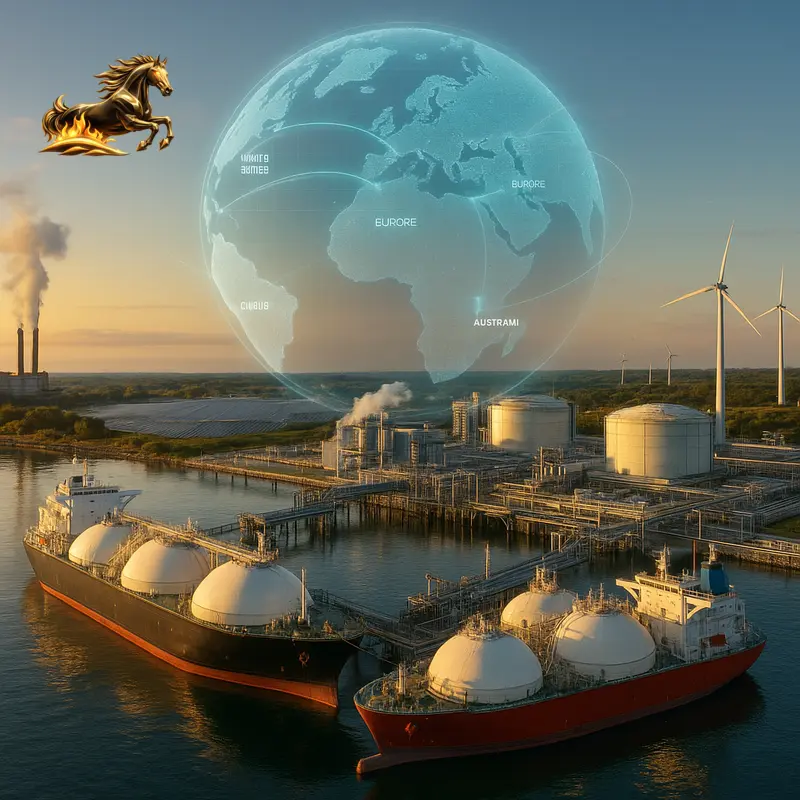
The world’s energy landscape is evolving faster than ever. Countries grapple with sustaining economic growth while meeting ambitious climate targets. In this challenging environment, Liquefied Natural Gas (LNG) stands out as a versatile and critical fuel. Once a niche shipping solution for natural gas, LNG has grown into a global cornerstone for energy security and a practical means to reduce emissions. Looking ahead to 2026, LNG’s role has become more strategic and multifaceted than ever before. This post explores the current LNG industry and its path forward—covering key market forces, massive infrastructure investments, environmental challenges, and strategic opportunities shaping its future.
The LNG Landscape: Growth, Geopolitics & Climate Ambitions
LNG is natural gas cooled to around -162°C, shrinking its volume by roughly 600 times—making it economically viable to transport vast gas supplies across oceans. While growth was steady in past decades, the expanding demand and shifting geopolitics of the last 20 years have made LNG a truly global energy staple.
From a Niche Commodity to a Global Energy Essential
Since the late 1990s, LNG has transformed from a regional player into a worldwide energy linchpin. The U.S. shale revolution turned America into a major exporter, complementing traditional leaders like Qatar and Australia, and creating a more flexible, competitive LNG market.
By 2023, the global LNG market approached a $60 billion valuation (S&P Global), with demand surging—especially in Asia’s booming power sector and Europe’s urgent diversification away from Russian pipeline gas. LNG’s cleaner-burning characteristics, emitting less carbon than coal or oil, and its adaptable supply chains make it increasingly attractive for countries seeking reliable, lower-emission energy.
Bottom line: LNG’s unique economic and environmental advantages firmly position it as a vital fuel for the global energy transition.
Key LNG Market Drivers Toward 2026
Today’s LNG market is shaped by a complex mix of supply-demand dynamics, geopolitical shifts, regulatory trends, and technological innovation.
Geopolitics Reshape LNG Trade Flows
Europe’s push to reduce dependence on Russian gas is accelerating investments in import infrastructure—especially Floating Storage and Regasification Units (FSRUs)—and forging long-term supply deals with producers in the U.S., Africa, and the Middle East.
Meanwhile, Asia remains the powerhouse of LNG demand. China’s economic growth and coal-to-gas switching strategy, along with steady consumption in Japan, South Korea, and Southeast Asia, sustain robust regional demand. This creates a uniquely responsive global market where LNG cargoes continuously reroute based on price and geopolitical realities.
Flexible Contracts & Pricing Evolution
The LNG market is increasingly moving beyond rigid decade-spanning contracts. Spot trading volumes are rising, injecting liquidity and flexibility—though with more price volatility. The rise of liquid trading hubs in Europe and Asia enhances transparency and enables innovative offerings, including carbon-neutral LNG cargoes.
Summary: Geopolitical realignment and contracting innovations define a more agile, transparent LNG market ready to meet evolving energy needs.
Infrastructure Expansion: The Backbone of LNG’s Future
Unprecedented investments are reshaping the LNG ecosystem—from mega export plants to advanced shipping fleets and agile import terminals.
Mega Export Projects Powering Supply Growth
Ambitious projects underscore LNG’s economic and strategic importance:
- Australia’s Browse to North West Shelf: Woodside’s development is projected to add more than AUD 141 billion to the Australian economy over its lifespan, demonstrating LNG’s role beyond energy—as a job creator and growth driver.
- U.S. Capacity Boost: Facilities like Cameron LNG plan to ramp up output by over 6 million metric tons annually by 2026, cementing America’s flexible role as a global LNG supplier.
- Global Rivalry and Innovation: Qatar’s North Field Expansion, Canada’s LNG Canada project, and Mozambique’s ventures are increasing geographic diversity, intensifying competition, and sparking new innovations.
Shipping & Bunkering: Ensuring Reliable LNG Delivery
Reliable LNG transport depends on a sophisticated and growing fleet of specialized carriers. Petronas’s 20-year charter for five LNG vessels with MISC Group highlights the importance of long-term shipping contracts to secure delivery and project financing.
The sector is diversifying as well—specialized bunkering vessels like UNITED LNG I, chartered by Titan Clean Fuels, point to expanding LNG use as marine fuel. Tightening shipping emissions regulations make LNG bunkering a fast-growing market offering new business prospects.
FSRUs: Flexibility in Import Infrastructure
Floating Storage and Regasification Units provide a nimble and cost-effective way to increase LNG import capacity quickly, without permanent infrastructure investments. Excelerate Energy’s recent nine-month FSRU charter deal illustrates how vital this flexible option is amid fluctuating demand and geopolitical change.
Takeaway: Large-scale infrastructure combined with flexible shipping and import solutions empowers LNG to meet growing global energy demands efficiently.
LNG’s Environmental Balancing Act: Transition Fuel & Responsibility
LNG stands at a crossroads in the climate conversation—offering significant emission benefits over coal but facing challenges that require urgent attention.
LNG as a Bridge to Decarbonization
LNG’s environmental value is grounded in three main benefits:
- Coal Replacement: Switching from coal to gas can cut CO₂ emissions by roughly 50% per energy unit, providing immediate gains in regions like Asia.
- Supporting Renewables: Gas-fired plants provide flexible backup power, complementing intermittent renewables such as solar and wind to stabilize the grid.
- Cleaner Shipping Fuel: LNG reduces sulfur oxides, nitrogen oxides, and particulate emissions from vessels, helping meet stringent international maritime standards.
Environmental Challenges and Industry Responses
Yet, LNG’s climate story is incomplete without addressing:
- Methane Leakage: Methane’s high global warming potential demands industry-wide focus on leak detection and reduction across the value chain.
- Carbon Lock-In: Large LNG infrastructure investments risk sustained fossil fuel reliance, potentially slowing the shift to zero-carbon energy.
- Lifecycle Emissions: Energy-intensive liquefaction and long-distance shipping can narrow LNG’s carbon advantage.
Transparency and proactive emissions management will be key for LNG’s continued social license and market relevance.
Conclusion: LNG is a crucial transitional fuel but must improve environmental performance to thrive in a decarbonizing global economy.
Technological Innovation Propels LNG Forward
Innovation drives LNG’s dual promise of economic viability and environmental stewardship.
Better Liquefaction Efficiency
Next-gen liquefaction uses electric compressors instead of gas turbines, cutting onsite emissions and carbon intensity per ton of LNG produced.
Digitalization and Smart Operations
AI-based predictive maintenance, optimized logistics, and harmonized operational standards enhance safety, reduce downtime, and lower costs. For example, the collaboration between SGMF and Ofiniti on LNG bunkering standardization boosts both efficiency and safety in LNG maritime fuel supply chains.
Integration with Low-Carbon Technologies
Looking beyond 2026, LNG infrastructure could integrate:
- Carbon Capture & Storage (CCS): Mitigating CO₂ emissions from regasification or gas power plants.
- Green Hydrogen Production: Using renewables to produce hydrogen onsite, enabling blending with natural gas or standalone sales.
- Power-to-Gas Systems: Transforming LNG hubs into multi-vector energy centers for a clean energy future.
Insight: Innovation in efficiency, digital tech, and low-carbon integration is vital for LNG’s sustainable evolution.
Strategic Outlook: Opportunities and Challenges in 2026
The road ahead offers great promise—but demands strategic agility.
Climate-Conscious Financing
ESG criteria increasingly shape LNG funding. Projects with strong methane mitigation, CCS integration, and clear transition alignment attract investment. Long-term shipping agreements remain essential for financing certainty.
Growth in LNG Bunkering and Marine Fuels
Environmental maritime regulations catalyze LNG as a ship fuel, driving demand for specialized bunkering vessels, port facilities, and trained personnel—a rapidly expanding market segment.
Regulatory Complexity
Tightening methane limits, carbon pricing, and green certifications challenge producers but also create opportunities for forward-thinking companies.
Socioeconomic Impact
LNG projects, like Australia’s Browse, generate significant employment and GDP benefits, underscoring the fuel’s wider development role.
Summary: Success in 2026 lies in balancing resilience, regulatory savvy, innovation, and social responsibility.
Conclusion: LNG at a Critical Crossroads in 2026
LNG’s role as a flexible, lower-carbon energy source is more vital than ever amid ongoing energy transitions. Backed by vast infrastructure and shifting markets, LNG supports energy security and emission reductions—especially by displacing coal and backing renewables.
However, increased environmental scrutiny calls for rapid innovation—in methane management, CCS, and broader low-carbon integration—to safeguard LNG’s future. Leading players will champion transparency, technological advances, and best practices to remain competitive and socially accepted.
For stakeholders, the essentials are clear:
- LNG demand stays strong, fueled by Asian growth and Europe’s diversification.
- Infrastructure projects across exports, shipping, and imports continue apace.
- Methane emissions reductions are critical for environmental credibility.
- LNG bunkering creates dynamic new market opportunities.
- Flexibility and innovation are keys to adapting LNG for the evolving energy landscape.
Navigating these factors will shape LNG’s trajectory beyond 2026—securing its place as a crucial, adaptable fuel in the journey toward a cleaner energy future.
Frequently Asked Questions (FAQ)
Q1: What’s driving LNG demand growth up to 2026?
A: Strong economic growth and coal-to-gas switching in Asia, combined with Europe diversifying away from Russian gas, mainly fuel demand increases.
Q2: How is the industry tackling methane emissions?
A: Via advanced leak detection (satellites, drones), improved maintenance, and transparent reporting aligned with OGMP 2.0 guidelines.
Q3: What is an FSRU and why is it important?
A: A Floating Storage and Regasification Unit enables flexible, quick LNG imports without permanent onshore terminals—ideal for scaling or temporary needs.
Q4: How does LNG as marine fuel impact the industry?
A: It opens a fast-growing market segment requiring new bunkering infrastructure and standards, diversifying LNG demand beyond power generation.
Q5: Can LNG align with long-term net-zero goals?
A: LNG serves as a transitional fuel lowering emissions in the near term; long-term alignment depends on CCS adoption, hydrogen blending, and eventual shifts to renewable fuels.
