
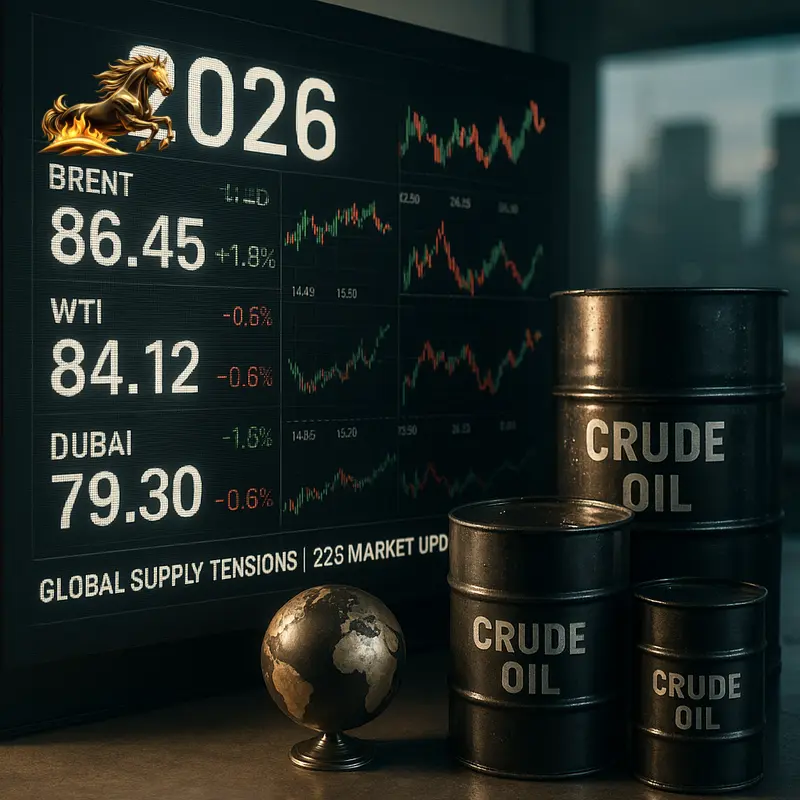
Live Crude Oil Price Per Barrel in 2026: Trends, Triggers, and What’s Next
The live crude oil price per barrel is more than just a number flashing on your screen—it’s a crucial barometer of global economic health, geopolitical tensions, and energy security. In 2026, this figure captures a volatile market shaped by historic conflicts and shifting global dynamics. Whether you’re an investor, business leader, or consumer, understanding the drivers behind crude oil prices today is key to navigating an increasingly complex and unpredictable energy landscape. This article breaks down the key trends, triggers, and forecasts impacting the live crude oil price in 2026 — and what lies ahead for the market.
A Snapshot of May 2026: Current Market Landscape
As May 2026 unfolds, the crude oil market is marked by sharp volatility. West Texas Intermediate (WTI) crude futures recently fell to $102.50 per barrel—a 2.45% drop from the previous day—propelled mainly by renewed optimism around US-Iran ceasefire talks rather than fundamental supply or demand shifts. Meanwhile, Brent crude, the global benchmark, climbed above $113 per barrel in early Asian trading sessions.
This divergence between WTI and Brent prices reveals a fragmented market. WTI reflects US-focused factors and geopolitical sentiment, while Brent signals a severe physical supply disruption in the Middle East—one that mere hope for diplomacy can’t quickly resolve.
Key Insight: The live crude oil price is not a single static figure but a set of regional prices that collectively expose deeper global supply tensions—especially the expanding Brent-WTI spread signaling serious Middle Eastern supply challenges.
Decoding the Benchmarks: Brent vs. WTI
It’s essential to understand the two primary benchmarks:
- Brent Crude: Sourced from the North Sea, Brent serves as the global oil price benchmark, reflecting supply and demand in Europe, Africa, and the Middle East.
- West Texas Intermediate (WTI): Produced mainly by US inland fields, WTI benchmarks prices within the Americas, responding closely to US inventory and policy changes.
Typically, the Brent-WTI spread is modest—just a few dollars per barrel. But in 2026, a spike beyond $10 highlights a major disruption to global oil supply chains.
The Core Crisis: Strait of Hormuz Blockade
At the heart of 2026’s crude oil price volatility lies the blockade of the Strait of Hormuz. This critical chokepoint handles about 21 million barrels per day—roughly 21% of global seaborne oil transport. The blockade has effectively removed around 9 million barrels daily—about 10% of global consumption—from the market.
This has several ripple effects:
- Shipping Costs Skyrocket: Tankers must take the longer route around Africa’s Cape of Good Hope, driving up transit times and costs by millions of dollars.
- Asian Markets Face Shortages: Heavily reliant on Middle Eastern oil, Asia confronts serious supply squeezes and price spikes.
- Inventory Drawdowns: Global reserves are rapidly depleting as countries tap stockpiles to make up the shortfall.
This blockade directly drives the Brent-WTI price premium, which averaged $12 per barrel in early 2026 to compensate for Middle Eastern supply disruption.
Key Insight: The Strait of Hormuz blockade is the immediate trigger behind soaring and regionally uneven crude oil prices, creating a stark global supply-demand imbalance.
Factors Shaping Live Crude Oil Prices in 2026
1. Geopolitical Tensions & Supply Security
- US-Iran Negotiations: Ceasefire progress or setbacks will determine if the Strait reopens and supply stabilizes.
- OPEC+ Production Strategies: The coalition, including Russia, balances supporting prices while avoiding alienating cost-burdened consumers.
- Strategic Petroleum Reserves: Coordinated releases relieve short-term shortages but can’t replace lost output.
2. Uneven Global Demand
- Resilient Asian Consumption: Industrial growth and petrochemicals in Asia intensify supply pressures.
- OECD Demand Variability: Slower growth and efficiency gains reduce demand increases, yet weather-induced spikes remain.
- Aviation Fuel Demand: Post-pandemic recovery sustains steady jet fuel consumption.
3. Production Outside OPEC+
- US Shale Prudence: Shale producers prioritize financial discipline over rapid output expansion, limiting supply growth.
- Latin America Production: Brazil’s deepwater and Canada’s oil sands add barrels steadily but lack quick scalability.
- Rising Capital Costs: Higher interest rates restrict financing new projects.
4. Accelerated Energy Transition
- Policy & Regulation: Carbon pricing and EV incentives dampen long-term fossil fuel demand forecasts.
- Growth in Electric Vehicles: Rapid EV adoption, especially in China, the US, and Europe, cuts future oil consumption.
- Shifting Investments: Divestments and tougher financing challenge new hydrocarbon developments.
Key Insight: In 2026, oil prices reflect a complex mix of acute geopolitical shocks, supply-demand imbalances, and the growing influence of the global energy transition.
Official Forecasts: What to Expect
The U.S. Energy Information Administration (EIA) projects Brent crude to peak near $115 per barrel in Q2 2026, coinciding with peak supply disruptions. Following this, prices may ease if physical constraints relax, supported by increased non-OPEC output and inventory draws.
Yet, forecasters caution about volatility:
- Upside Risks: Escalating conflicts, extreme weather events, or constrained supply growth.
- Downside Risks: Diplomatic breakthroughs, global economic slowdown, or large-scale reserve releases.
Key Insight: A mid-year price peak is likely, but market participants should prepare for significant fluctuations driven by unpredictable geopolitics and economic shifts.
Historical Context: How We Arrived Here
To fully grasp today’s prices, consider recent history:
- 2010s Shale Boom: US shale production surged, easing global price spikes.
- 2020 Pandemic Collapse: Demand crashed, disrupting futures markets.
- Post-Pandemic Demand Surge: Supply lagged reopening demand, pushing prices above $100 by 2022.
- Energy Transition Momentum: Renewables and electrification steadily pressure fossil fuel demand.
Key Insight: Today’s crisis blends traditional geopolitical disruption with transformative market changes driven by technology and policy.
What High Crude Oil Prices Mean for You
Crude oil above $110 per barrel impacts everyone:
- Consumers: Higher gasoline, diesel, and heating costs strain household budgets and fuel inflation.
- Businesses: Elevated fuel prices squeeze margins in transport, manufacturing, and chemicals—leading to price increases.
- Investors & Traders: Volatility creates opportunities but demands advanced risk management and hedging.
Key Insight: Understanding how oil prices ripple through the economy helps businesses and consumers plan smartly amid uncertainty.
Looking Ahead: The Long-Term Outlook
Beyond 2026, the crucial question is when global oil demand peaks amid ongoing energy transition pressures. While demand may plateau in the late 2020s or early 2030s, maintaining production requires steady investment to offset natural declines.
Expect a future marked by greater price swings—oscillating between surplus stranded assets and scarcity-driven spikes.
Key Insight: The coming years will require vigilance to navigate short-term shocks and long-term structural shifts reshaping the oil market.
In Conclusion: Essential Takeaways
- The widened Brent-WTI spread reveals critical supply shortages from the Strait of Hormuz blockade.
- US-Iran talks dominate near-term price direction.
- Prices likely peak near $115 mid-2026 before easing.
- The energy transition reshapes investment and demand fundamentals amid disruption.
- Elevated prices impact consumers, businesses, and inflation worldwide.
What You Should Do Next:
- Follow updates from trusted sources like the EIA, IEA, and OPEC.
- Monitor Brent and WTI prices for regional market insights.
- Prepare for volatility with scenario planning and risk management.
- Recognize the era of stable, low oil prices may be over.
FAQs
The $12 per barrel spread stems from the Strait of Hormuz blockade. Brent prices reflect disrupted Middle Eastern supply and costly shipping reroutes to Asia, whereas WTI, linked mainly to US production, remains less affected regionally.
A lasting diplomatic resolution reopening the Strait and a global economic slowdown cutting demand could trigger steep price drops. Reserve releases offer only short-term relief.
Absolutely. Elevated prices make electric vehicles and renewables more economically attractive, boosting adoption and policy support for the energy transition.
They provide useful baseline scenarios but cannot predict sudden geopolitical shocks. Treat forecasts as informed guidance, not guarantees.
Oil-exporting countries and producers with low costs gain financially. Consumers, importers, and energy-intensive industries face higher expenses and economic strain.
Staying informed about live crude oil prices empowers smarter decisions and better preparation for tomorrow’s energy challenges. The evolving 2026 market demands awareness, adaptability, and strategic insight for all stakeholders.
