
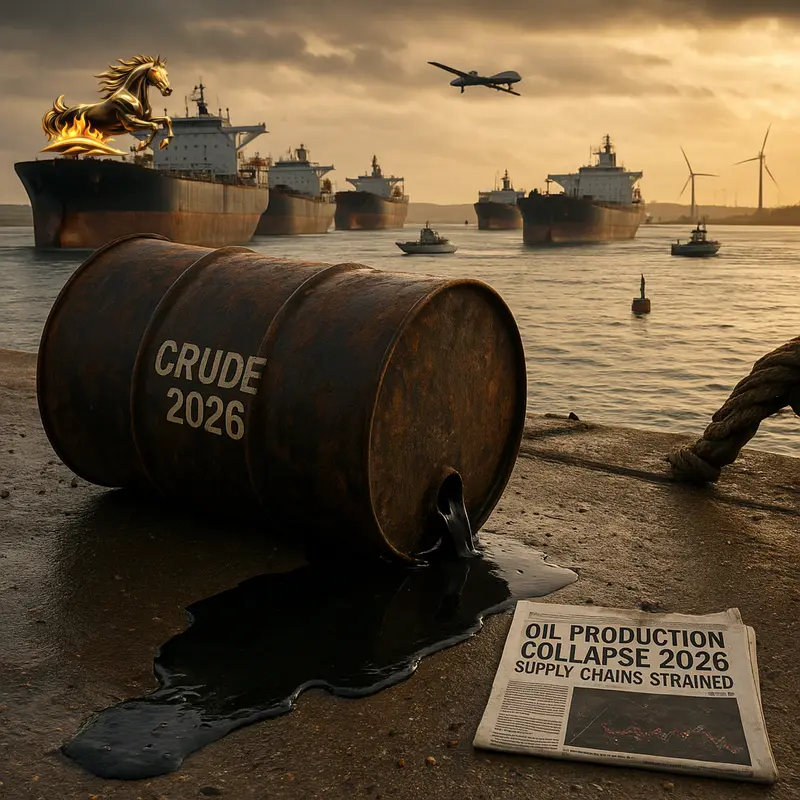
Global Crude Oil Production in 2026: Navigating Unprecedented Market Disruption
The global energy market has long operated with a steady rhythm of supply and demand, ensuring reliable energy flows that power our modern world. But in 2026, that rhythm was shattered by a dramatic and unprecedented disruption. What used to be predictable trends in crude oil production gave way to volatility and structural fractures unseen in decades. With the largest single-month production collapse in 40 years, the market faced critical challenges impacting economic stability, national security, and the accelerating shift to renewable energy.
Understanding global crude oil production by year is no longer just a historical exercise; it’s now essential for interpreting geopolitical shifts and shaping future energy strategies. This analysis traces the historical context that shaped the oil market, breaks down the 2026 crisis, and explores its lasting effects on producers, consumers, and policymakers worldwide.
From Boom to Shock: Setting the Stage for 2026
To grasp the magnitude of the 2026 disruption, it’s important to look back at key trends in recent decades driven by technology, alliances, and shocks.
The Shale Revolution: Redefining Production (2008-2020)
Hydraulic fracturing and horizontal drilling unlocked vast shale reserves in the U.S., transforming global oil dynamics. By 2018, the U.S. production surged past 13 million barrels per day (bpd), making it the world’s top crude oil producer. This reshaped market power by introducing a fast-adjusting supply source outside the traditional OPEC cartel.
- Emergence of a new “swing producer” independent of OPEC.
- Increased market competitiveness and fragmentation.
- A more complex and dynamic oil supply landscape.
The Formation of OPEC+: Stabilizing Markets (2016-Present)
In response to U.S. shale growth and fluctuating prices, OPEC joined forces with non-OPEC producers like Russia to form OPEC+. This alliance aimed to manage production collectively and stabilize prices.
- Coordinated efforts to influence supply and prices.
- A duopolistic market balance between OPEC+ and U.S. shale.
- Strategic production decisions balancing cuts and increases.
Pandemic Impact and Geopolitical Tensions (2020-2025)
COVID-19 triggered a historic collapse in demand, with prices briefly turning negative. OPEC+ imposed unprecedented cuts to stabilize markets amid uneven recoveries. Concurrent geopolitical conflicts, such as Russia-Ukraine, disrupted trade and production, while the push for energy transition introduced investment uncertainties.
These factors set a fragile and tightly balanced stage heading into 2026.
The 2026 Turning Point: A Historic Supply Collapse
March 2026 marked a watershed moment with a severe oil production shock that shook global markets.
The March Crisis: 7.56 Million BPD Drop
OPEC’s crude output fell by 7.56 million barrels per day in March alone—the largest monthly decline in four decades—reducing total output to about 22 million bpd. The disruption centered in the Middle East, where geopolitical instability and infrastructure issues forced major producers including Saudi Arabia, Iraq, and the UAE to slash production.
The Strait of Hormuz bottleneck was the critical factor, disrupting approximately 20% of global oil shipments. The consequences:
- Onshore storage capacity rapidly maxed out.
- Oil tankers became idle, tightening the physical supply chain.
- Refineries and consumers globally felt immediate shockwaves.
Lasting Effects: Persistent Supply Deficit
This was no temporary glitch. Forecasts showed a growing deficit peaking at 9.1 million bpd in April and a structural shortfall of 3-5 million bpd enduring for years. Damaged infrastructure and ongoing security risks make swift recovery uncertain. OPEC+ responded cautiously, boosting production by a mere 206,000 bpd from May 2026—reflecting strategic restraint amid complex conditions.
Regional Production in a Disrupted Landscape
Different regions faced distinct challenges amid the 2026 turmoil.
Middle East: From Producer Powerhouse to Volatile Hotspot
Once the world’s reliable supply engine, Middle Eastern producers now grapple with:
- Balancing market reentry against price and strategic concerns (Saudi Arabia, UAE).
- Infrastructure and political hurdles limiting output (Iraq, Kuwait).
- Critical investments in alternative export routes to bypass chokepoints like the Strait of Hormuz.
North America: Resilient but Restrained
U.S. production held steady at around 13.6 million bpd in 2026:
- Growth in key areas like the Permian Basin offsets declines elsewhere.
- Emphasis on capital discipline caps aggressive production boosts.
- Canada’s oil sands maintain steady supply but face export constraints.
Other OPEC+ Producers: Limited Expansion
- Russia remains a strategic but capacity-constrained player facing geopolitical challenges.
- African and South American producers struggle with underinvestment despite high prices.
Market Fallout: Inflation, Security, and the Energy Transition
Inflation Hits Hard
Sustained supply deficits push crude prices higher, fueling inflation. Industries reliant on oil—transportation, chemicals, manufacturing—face soaring costs that weigh on global economic growth.
Strategic Reserves and Energy Security Strain
Governments have tapped strategic petroleum reserves (SPRs) to cushion shocks. But these reserves are finite, raising concerns over long-term resilience amid ongoing insecurity.
Mixed Effects on Energy Transition
Higher prices encourage short-term shifts toward efficiency and alternative supplies. Long-term, the crisis accelerates policy momentum for electric vehicles, renewables, and grid modernization. However, some emerging markets may temporarily lean more on coal, highlighting complex trade-offs.
Looking Ahead: The Post-2026 Oil Market Landscape
Prioritizing Supply Security
Energy security has become paramount:
- Accelerated re-shoring and partner-aligned supply chains.
- Investments in infrastructure redundancy and alternative routes.
- Shift toward long-term contracts reducing spot market volatility.
The Changing Face of OPEC+
OPEC+ strengthens its market influence but must navigate internal tensions balancing revenue and stability.
U.S. Shale: A Steady Foundation
American shale remains critical but will grow more modestly, emphasizing financial discipline amid rising environmental and regulatory scrutiny.
Demand Trends and Peak Oil
Sustained high prices and policy-driven electrification may bring peak oil demand sooner, shifting markets toward gradual decline.
Key Lessons from 2026
- Political stability is crucial: Supply exists but disruptions at chokepoints cause crises.
- Spare capacity is insurance: Scarcity of excess capacity, especially in the Middle East, exposes vulnerability.
- Shale is mature: It stabilizes supply but won’t offset major collapses alone.
- Energy security equals national security: Managing oil supply is deeply geopolitical.
- Energy transition continues: Volatility reinforces the need for diversification and clean energy.
Conclusion: Adapting to a New Energy Era
The 2026 crude oil production crisis signals the end of an age of relative abundance and predictability. Industry players must prioritize resilience and strategic agility; governments need to balance crisis management with progressive energy transitions; investors face a volatile yet opportunity-rich environment.
Energy’s future is no longer a simple game of supply and demand. It is shaped by geopolitical risks, market evolution, and rapid technological change. How the global community rises to these challenges will define the energy landscape for decades ahead.
Frequently Asked Questions (FAQ)
Q1: How does the 2026 production drop compare to the 1973 oil embargo?
The 2026 decline (7.56 million bpd) surpasses the 1973 embargo’s 4-5 million bpd. Unlike the politically driven 1973 cut, 2026’s is rooted in a physical infrastructure crisis at the Strait of Hormuz, creating immediate supply chokepoints.
Q2: Why can’t U.S. shale ramp up quickly despite high prices?
Investor demands for capital discipline, natural well decline rates, labor shortages, supply chain bottlenecks, and regulatory pressures limit shale’s ability to surge rapidly. It acts more as a steady supplier than a quick swing producer.
Q3: What does a persistent 3-5 million bpd supply deficit mean for consumers?
It translates to prolonged high fuel prices, rising transportation and goods costs, and sustained inflation, impacting living costs and slowing economic growth worldwide.
Q4: Will this crisis delay the renewable energy transition by enriching oil producers?
While oil producers benefit in the short-term, the crisis ultimately strengthens the case for accelerated investment in renewables and efficiency, making energy transition more urgent and strategic.
Q5: How can countries protect against similar disruptions?
Strategies include diversifying supply sources, boosting renewable energy, improving efficiency, maintaining strategic reserves, and fostering diplomatic ties to ensure stable supply agreements.
© 2024 Global Energy Insights
