
body {
font-family: Arial, sans-serif;
color: #222;
line-height: 1.6;
margin: 20px auto;
max-width: 800px;
padding: 0 15px;
background: #fff;
}
h1, h2, h3 {
color: #003366;
margin-top: 1.6em;
}
h1 {
text-align: center;
font-weight: 700;
font-size: 2.5rem;
padding-bottom: 0.3em;
border-bottom: 3px solid #003366;
}
h2 {
font-size: 1.8rem;
border-bottom: 2px solid #0a568c;
padding-bottom: 0.3em;
}
h3 {
font-size: 1.3rem;
color: #004080;
margin-bottom: 0.3em;
margin-top: 1.2em;
}
p {
margin-bottom: 1.1em;
font-size: 1rem;
}
ul {
padding-left: 20px;
margin-bottom: 1.2em;
list-style-type: disc;
}
blockquote {
border-left: 4px solid #0a568c;
padding-left: 15px;
margin: 1em 0;
color: #555;
font-style: italic;
background: #f9faff;
}
hr {
margin: 2em 0;
border: none;
border-bottom: 1px solid #ccc;
opacity: 0.5;
}
strong {
color: #004080;
}
.faq-question {
font-weight: 700;
margin-top: 1em;
color: #003366;
}
.faq-answer {
margin-left: 15px;
margin-bottom: 1em;
}
Current Oil Futures in 2026: A Comprehensive Look
As we move through 2026, the oil futures market stands at a pivotal crossroads. Whether you’re an investor, trader, or market watcher, the ongoing shifts are hard to miss: oil prices are declining, geopolitical tensions are easing, and supply-demand dynamics are evolving fast. This isn’t just a temporary blip—it’s a fundamental reshaping of risk factors, supply chains, and demand forecasts that will influence trading strategies for years to come.
In this article, we’ll dive deep into what’s driving price pressures on oil futures today, examine the broader market changes influencing sentiment, and share strategic insights to help you confidently navigate this critical period in the energy sector.
Why Oil Futures Are Under Pressure Right Now
Oil futures prices are currently facing significant downward pressure. This trend is driven by interconnected factors—geopolitical stability, surging inventory levels, and shifting market expectations—all combining to reshape price trajectories.
Geopolitical Stability—The Strait of Hormuz Reopens
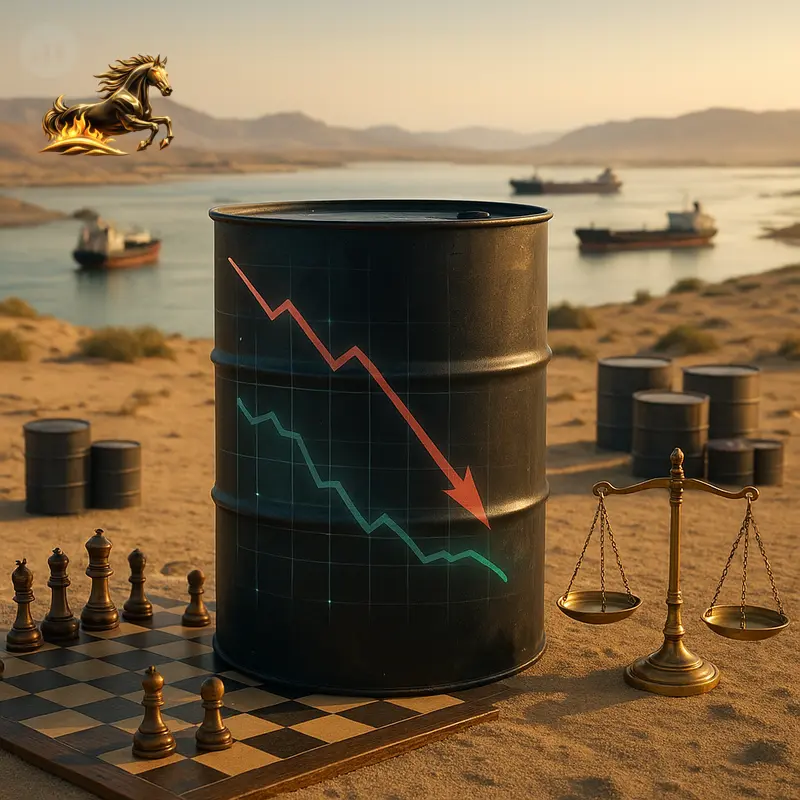
One of the biggest game-changers was the recent de-escalation of tensions in the Middle East, especially the reopening of the Strait of Hormuz. This narrow passage has historically been a strategic chokepoint, responsible for a large chunk of global seaborne oil traffic, with risks of disruption built into futures pricing.
Thanks to a landmark preliminary agreement between the U.S. and Iran, freedom of navigation through the Strait is now secured, removing a hefty geopolitical risk premium. This breakthrough pushed Brent crude prices below $75 per barrel, while WTI dropped to around $71—levels not seen since the early days of the Iran conflict. Brent futures plunged approximately 27% leading up to the deal, reflecting a dramatic reassessment of geopolitical risk.
Physical markets responded immediately—hundreds of tankers are now navigating the Strait confidently, boosting global supply and putting notable downward pressure on futures prices.
Rising U.S. Inventories Tip the Scales
Beyond politics, physical supply imbalances are increasingly visible. U.S. crude inventories have climbed for five straight weeks, pressuring WTI futures amid clear oversupply signals.
Key contributors include:
- Unexpected refinery outages due to maintenance and weather challenges.
- Softer-than-anticipated demand compounding surplus issues.
Inventory increases have consistently outpaced analyst forecasts, reinforcing a bearish market outlook. While Brent showed some resilience, the broader narrative remains one of supply abundance driving prices lower.
OPEC+ Considers Extended Cuts
In reaction to falling prices, OPEC+, led by Saudi Arabia and Russia, is weighing the extension of voluntary production cuts into Q2 2026. The goal: tighten supply to support prices amid easing geopolitical risks and swelling inventories.
However, the market remains skeptical about whether supply cuts alone can counterbalance the confidence sparked by Middle East stability. This tug-of-war between controlled output and rising logistical capacity will be a defining focus throughout the year.
Bottom line: Current oil futures pressures stem from a blend of improved geopolitical conditions, increasing inventories, and complicated OPEC+ supply strategies.
Structural Shifts Point Toward a Future Surplus
Beyond short-term factors, the oil market outlook is undergoing a profound transformation. Leading analysts have shifted projections, signaling a bearish structural trend with lasting impact on pricing.
IEA Adjusts Forecasts; Banks Revise Price Targets
The International Energy Agency (IEA) now anticipates an oil market surplus by 2027, reversing earlier expectations of tightening conditions. This shift is fueled by:
- Slower demand growth as energy transitions accelerate and consumption patterns change.
- Strong non-OPEC production, especially from the U.S., Guyana, and Brazil.
- Greater supply reliability following eased Middle East tensions.
Major financial players like JPMorgan have lowered Brent price forecasts accordingly, matching futures markets that trade below previous yearly targets. These revisions are molding investor confidence and capital flows.
The Inventory Paradox: Low Reserves Amid Expected Surplus
Despite surplus forecasts, a key paradox remains: short-term physical vulnerability due to depleted reserves. OECD nations have drawn down strategic petroleum reserves substantially, leaving fewer buffers against shocks.
Moreover, key storage hubs like Cushing, Oklahoma, sit at historic lows—below 20 million barrels. This fragile inventory landscape means sudden price spikes remain a real risk, even amid a structurally bearish environment.
Practical takeaway: While the long-term outlook tilts bearish, traders and investors must stay alert to episodic volatility triggered by tight immediate supply buffers.
Market Dynamics Shaping Oil Futures Trading in 2026
Grasping how these forces influence the futures curve and benchmark spreads is key to successful trading.
WTI vs. Brent: Diverging Fundamentals
WTI futures are feeling pressure from U.S.-centric factors like climbing inventories and refinery disruptions, while Brent prices reflect global supply flows and potential OPEC+ production discipline. This divergence has widened the Brent-WTI spread, serving as a vital indicator of regional supply-demand imbalances.
Traders should watch this spread closely for clues about whether U.S. oversupply will spill into global markets or if domestic demand will strengthen.
The Contango Curve Widens
The futures market shows growing contango—where futures prices for later delivery outstrip spot prices. This setup incentivizes storage and delayed sales, aligning with ample supply and safer shipping lanes.
Monitoring contango depth provides insights into market liquidity and storage economics, helping predict shifts in inventory flows.
Lower Volatility and Hedging Opportunities
After the sharp post-Hormuz price drop, oil price volatility measures—like the CBOE Oil Volatility Index (OVX)—have declined, signaling calmer market conditions. Lower implied volatility cuts option costs, presenting a strategic window to hedge positions cost-effectively or position for unexpected price swings.
Trading tip: Utilize the lower volatility environment to capitalize on options premium and establish protective hedges ahead of potential market shocks.
Smart Strategies for 2026 Oil Futures Participants
Navigating this complex market calls for flexible, well-informed approaches.
For Traders & Speculators
- Embrace range-bound trading and options premium strategies given uncertain price trends.
- Leverage Brent-WTI spreads, calendar spreads, and physical-futures arbitrage opportunities.
- Stay alert to geopolitical developments; the Strait of Hormuz deal remains sensitive to disruption.
For Investors & Portfolio Managers
- Differentiate between cyclical price moves and structural shifts to make measured decisions.
- Consider sector-wide plays: low-cost producers, midstream infrastructure benefiting from storage economics, and energy transition assets.
- Use futures strategically for hedging or tactical portfolio adjustments rather than long-term exposure.
For Corporate Hedgers (Airlines, Shipping, Industrials)
- Review and adjust hedging ratios to reflect lower risk premiums and changing market conditions.
- Stress-test positions for volatility and liquidity to maintain robust risk management.
- Expand hedging tools with collars and swaps to balance protection and cost efficiency.
Looking Ahead: Key Themes to Watch in 2026 and Beyond
- Sustaining stability in the Strait of Hormuz to ensure seamless tanker flows.
- Maintaining OPEC+ production discipline under pricing pressure.
- Monitoring demand trajectories amid economic growth, energy transition, and policy shifts.
- Managing limited strategic reserves and their impact on market interventions.
Conclusion
The oil futures market in 2026 is undergoing a significant evolution, shaped by a combination of easing geopolitical risks, rising inventories, and a bearish long-term supply outlook. With Brent below $75 and WTI near $71, the old risk premiums linked to Middle East tensions have largely vanished, replaced by fresh fundamentals demanding new trading tactics.
Success hinges on recognizing this isn’t a mere correction but a paradigm shift. Traditional approaches focused on geopolitically driven price spikes need to give way to strategies that exploit price ranges, spread relationships, volatility patterns, and inventory paradoxes.
The top advice is clear: maintain structural caution with oil prices but stay tactically nimble for episodic upsides. Prioritize relative value and remain adaptable—because in oil futures markets, change remains the only constant.
FAQs
Q1: Why have oil prices fallen sharply in early 2026?
The key trigger was the U.S.-Iran agreement reopening the Strait of Hormuz, removing a significant geopolitical risk premium. Rising U.S. inventories further pressured prices downward.
Q2: Can OPEC+ production cuts halt the price decline?
While OPEC+ cuts may stabilize prices somewhat, they can’t fully counterbalance the effects of eased geopolitical tensions and rising supply. Cuts can slow declines but face limitations in reversing bearish trends alone.
Q3: How do WTI and Brent futures differ right now?
WTI prices suffer from U.S.-specific oversupply and refinery outages, while Brent remains linked to global flows and OPEC+ actions. This drives a wider Brent-WTI price spread.
Q4: IEA forecasts a surplus by 2027, but inventories are low now—why?
This reflects a short-term inventory paradox: depleted reserves make the market vulnerable to shocks despite structural surplus expectations, risking sudden price spikes.
Q5: Should investors avoid oil futures given the bearish outlook?
Not necessarily. Tactical trading, spread arbitrage, and selective sector investments offer opportunities despite structural headwinds. Futures remain valuable for hedging and short-term positioning.
