
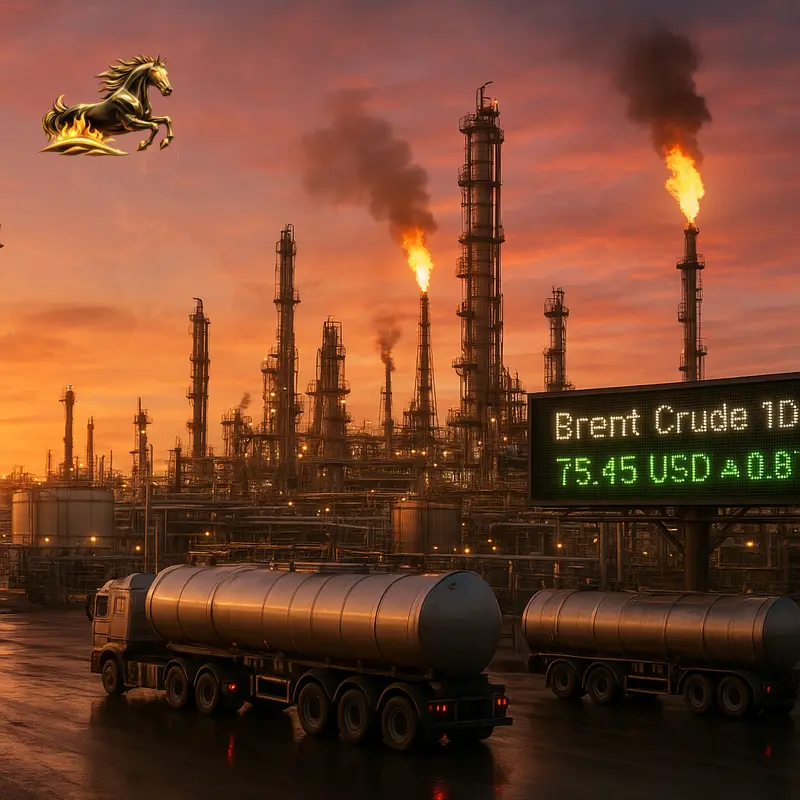
Brent Crude Live Price in 2026: Navigating the New Era of Volatility
The flickering number on your screen—the live Brent Crude price—is far more than just a data point in 2026. It embodies a complex dance of geopolitical tensions, shifting supply and demand, economic upheavals, and the unstoppable global energy transition. For investors, policymakers, and energy businesses, understanding this live price means unraveling the deeper currents beneath the surface.
As of mid-2026, Brent crude prices have been rollercoasting. After a steep drop last month, prices have stabilized around $73 to $74 per barrel—levels not seen since before the recent flare-up of Iran-related conflicts. This signals a shift from a market previously fueled by fear-driven “war premiums” to one now focusing on supply discipline, evolving demand, and geopolitical stability. Let’s dive into this evolving landscape and what it means for anyone tracking Brent crude oil now.
2026 Brent Price Snapshot: Embracing Volatility as the New Normal
Current Price Action & Trends
In late June 2026, Brent crude nudged up to $74.10 per barrel, a modest 0.49% intraday gain. Yet this sits atop a steep 23% decline over the last month. Despite the wild ride, there’s still an 11.1% gain year-to-date, highlighting the choppy waters investors have faced.
These sharp ups and downs echo ongoing volatility triggered by a string of geopolitical and market shocks. The current price retreat to the $73–$74 range reflects the market recalibrating after shedding the earlier “risk premium” tied to Middle East tensions. Simply put, as fears of a supply disruption ease, so does the premium baked into prices.
From “War Premium” to Supply Fundamentals
The story of Q2 2026 is clear: markets pivot from fear-driven speculation to fundamental supply-demand realities.
- Strait of Hormuz Calm: The easing of tensions around this vital shipping chokepoint has defused blockade fears that once threatened roughly 20% of global oil flows. As tanker traffic normalizes, the price premium fades alongside it.
- Market Psychology at Work: What you see is a classic risk cycle: panic-buying during crises, followed by price normalization when worst-case scenarios don’t materialize. Prices peaked based on hypothetical shortages; now they mirror actual supply flows.
Four Pillars Steering Brent Crude Prices in 2026
Beyond headlines, four core forces shape the Brent crude live price this year: geopolitics, OPEC+ dynamics, global demand shifts, and the accelerating energy transition.
1. Geopolitics Remain Central—but More Complex
Geopolitical flashpoints trigger the most immediate price swings.
- U.S.-Iran Relations: Price volatility spikes with news on nuclear talks and sanctions. Optimism eases prices; hostility or incidents in key shipping lanes send them soaring. Traders continuously digest these signals, keeping the live price on edge.
- Broader Political Risks: Instability beyond the Middle East—across parts of Africa and lingering Russia-Ukraine fallout—sustains a baseline risk premium, preventing prices from plunging too low.
2. OPEC+ Discipline Shows Cracks
The unity and discipline of OPEC and allies remain crucial but increasingly fragile.
- Production Pressures: Prices in the mid-$70s put pressure on some members to ramp up output to protect revenues, straining collective supply control.
- Kazakhstan’s Overproduction: By exceeding its quotas, Kazakhstan signals emerging cracks in OPEC+. If unchecked, this threatens to flood markets and depress prices.
- Saudi Arabia’s Balancing Act: As the alliance’s anchor, Saudi Arabia’s production decisions will heavily influence price direction—juggling economic goals with market stability is key.
3. Uneven Global Demand Patterns
Demand tells a nuanced story shaped by economic conditions and tech shifts.
- Regional Disparities: While parts of Asia still show growth, Europe’s economic softness and China’s slower pace, plus inflationary pressures worldwide, cloud demand outlooks.
- Impact of Electrification: Electric vehicles (EVs) are now measurably denting on-road gasoline demand in developed nations, though sectors like aviation and petrochemicals keep overall consumption steady for now.
4. Energy Transition: The Long Game
Environmental policies and clean energy technologies increasingly influence oil fundamentals.
- Capital Shifts: ESG investing and climate regulations divert funding from fossil fuel projects, raising mid-term supply risks and potentially pushing prices up.
- Renewables Rising: Falling costs for solar, wind, and batteries place a structural cap on oil demand growth, signaling an irreversible challenge for the oil sector and shaping long-term price expectations.
The Mechanics Behind the Live Brent Price
The live Brent crude price is a mix of physical market realities and intense financial trading.
- Futures Markets: The Intercontinental Exchange (ICE) Brent futures contract is where supply, demand, and sentiment collide. Speculators, hedgers, and algorithms constantly rebalance positions, adding to minute-by-minute price swings.
- Inventory Data: Weekly reports—especially from the U.S. Energy Information Administration—act as market catalysts. Unexpected inventory builds or draws trigger immediate price reactions as traders reevaluate supply tightness.
What’s Next? Short-Term and Long-Term Outlooks
Short-Term: A Volatile Trading Range
Brent crude is expected to fluctuate between $70 and $85 per barrel through the rest of 2026, reacting sharply to:
- OPEC+ policy moves or infighting,
- Crucial updates in U.S.-Iran diplomacy,
- Global economic data surprises,
- Currency fluctuations affecting oil affordability.
Significant price moves outside this range will likely need major geopolitical or economic shocks.
Long-Term: Transition and Transformation Ahead
Toward 2030 and beyond, Brent crude faces a bumpy but managed plateau shaped by:
- Declining demand from EV adoption and decarbonization,
- Supply constraints amid capital scarcity and climate-driven investment pullbacks,
- Persistent but contained political risks in key producing regions.
Oil markets will shift from growth-driven to carefully managed decline, with prices increasingly reflecting production costs and energy policy trajectories.
Conclusion: Mastering Brent Crude’s New Volatile Reality
The Brent crude live price in 2026 vividly reflects a world caught between immediate geopolitical shocks and profound long-term transformation. The recent retreat to the low $70s highlights how markets swiftly shed fear premiums and refocus on supply-demand fundamentals, alliance cohesion, and economic trends.
To navigate this dynamic market, keep these strategies in mind:
- Separate Temporary from Structural: Identify when price moves stem from fleeting risks like tanker traffic fears versus lasting factors such as OPEC+ cohesion shifts.
- Monitor OPEC+ Unity Closely: The alliance’s internal discipline remains a leading market indicator.
- Incorporate Energy Transition Trends: Factor in slowing demand growth and capital shifts toward renewables into your outlook.
- Use a Broad Data Lens: Beyond live prices, watch shipping lanes, inventories, official statements, and geopolitical news for the full story.
Adopting this holistic, anticipatory approach is key in a market where volatility has become the new normal.
Frequently Asked Questions (FAQ)
Q1: Why did Brent crude prices drop sharply in June 2026?
The sharp decline resulted mainly from the removal of the “war premium” as fears of supply disruption at the Strait of Hormuz eased, compounded by worries over OPEC+ production discipline, particularly Kazakhstan’s quota breaches.
Q2: What drives daily Brent price volatility in 2026?
The most immediate fluctuations stem from geopolitical events linked to U.S.-Iran relations and strategic chokepoints like the Strait of Hormuz. OPEC+ meetings and internal disagreements also cause rapid market moves.
Q3: Can OPEC+ still effectively influence prices?
OPEC+ remains the dominant supply manager, but internal compliance challenges and shifting demand due to the energy transition weaken its long-term price-setting power.
Q4: How does the energy transition impact Brent’s live price today?
It shapes prices through forward-looking market sentiment and capital flows—reduced investment in new fossil projects tightens mid-term supply, supporting prices despite demand pressure.
Q5: What Brent price range is realistic for the rest of 2026?
Prices will likely oscillate between $70 and $85 per barrel, balancing geopolitical risks, supply management efforts, demand uncertainties, and energy transition dynamics.
By mastering these intertwined factors, anyone tracking Brent crude in 2026 can move beyond reacting to volatility and start anticipating the market’s next turn.
