
body {
font-family: -apple-system, BlinkMacSystemFont, “Segoe UI”, Roboto, Oxygen,
Ubuntu, Cantarell, “Open Sans”, “Helvetica Neue”, sans-serif;
color: #222;
line-height: 1.7;
padding: 20px 30px;
max-width: 900px;
margin: auto;
background: #fcfcfc;
}
h1 {
color: #0a3d62;
border-bottom: 3px solid #0a3d62;
padding-bottom: 8px;
margin-bottom: 25px;
font-weight: 700;
}
h2 {
color: #155799;
border-bottom: 2px solid #bbb;
padding-bottom: 6px;
margin-top: 40px;
}
h3 {
color: #1e3799;
margin-top: 30px;
}
strong {
color: #e55039;
}
ul {
list-style-type: disc;
margin-left: 25px;
margin-bottom: 20px;
}
blockquote {
border-left: 4px solid #0a3d62;
background: #eaf0f9;
margin: 25px 0;
padding: 15px 20px;
font-style: italic;
color: #555;
}
hr {
border: none;
border-top: 1px solid #ccc;
margin: 40px 0;
}
.faq-question {
color: #30336b;
font-weight: 700;
margin-top: 20px;
}
.faq-answer {
margin-top: 6px;
margin-bottom: 18px;
}
Brent Crude Price USD: A Complete 2026 Market
Brent Crude Price USD: A Complete 2026 Market Analysis and Outlook
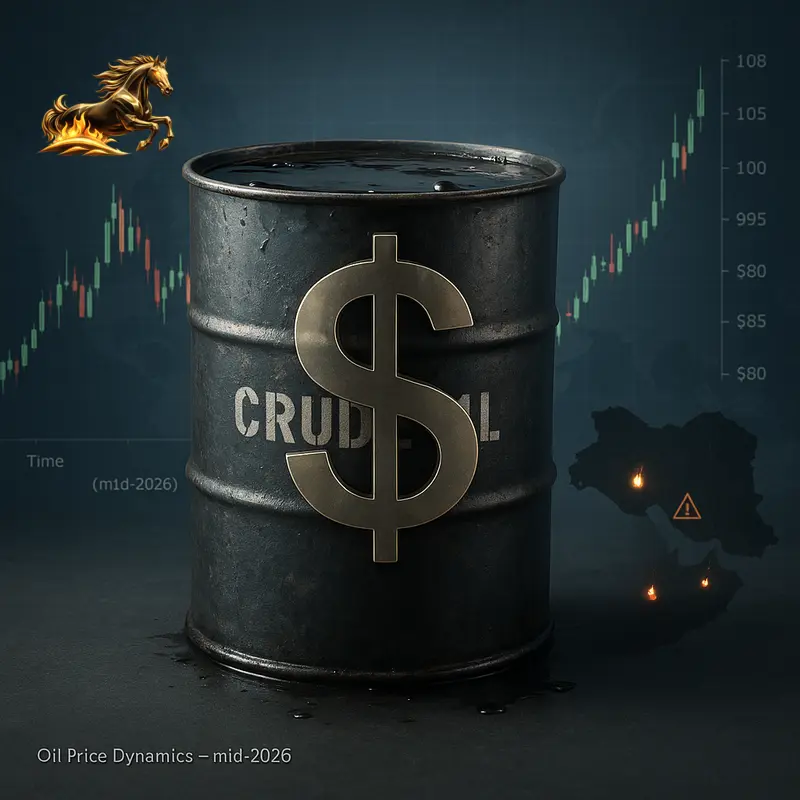
The Brent crude oil price in U.S. dollars is far more than just a number on the market ticker. It acts as a crucial barometer of global economic health, mirrors geopolitical tensions, and directly influences everything from daily transportation costs to national inflation rates. As we reach mid-2026, Brent crude has experienced a dramatic weekly plunge of about 8-9%, dropping from highs above $108 per barrel to the low $80s. This sharp swing, rooted in recent Middle Eastern geopolitical developments, underscores the complex dance of risk, supply, and demand that continues to define the global energy market. For investors, businesses, and policymakers alike, grasping the forces behind Brent crude prices is essential. This analysis dives deep into current market conditions, explores the core drivers, and offers a clear outlook for 2026 and beyond.
Brent Crude Mid-2026: A Market in Flux
As of June 2026, the Brent crude market is navigating significant turbulence, balancing a recent spike fueled by geopolitical upheaval with a swift price correction. After weeks of intense volatility, the benchmark price is now striving for stability.
Recent Price Movements and Volatility Overview
Trading Economics data reveals Brent crude steadying near $80.6 per barrel following a steep sell-off. This marks a notable retreat from the $108+ peak experienced just weeks earlier. Here’s a quick recap:
- Geopolitical Surge: In late spring 2026, Brent prices jumped over 5% in a single session, surpassing $108 per barrel after airstrikes targeted Iran’s South Pars gas fields amid escalating Middle Eastern conflict. This spike added nearly 47% over the month, reflecting heightened risk premiums baked into prices.
- Rapid Decline: The rally reversed sharply as diplomatic breakthroughs emerged. News of a tentative ceasefire between Israel and Hezbollah, alongside a U.S.-Iran agreement reopening the Strait of Hormuz, restored supply flows by several million barrels daily. This eased supply fears and slashed Brent prices by roughly 8-9% within one week — a stark weekly drop measuring among the largest in recent history.
- Price Consolidation: Brent is now trading within a narrow range between $78.80 and $80.82, approaching a 3.5-month low as market participants recalibrate expectations amid evolving geopolitical and fundamental factors.
Why Brent Crude Remains the Go-To Benchmark
Despite the global push toward renewables, Brent crude continues as the primary international oil benchmark. Roughly two-thirds of global crude trades are priced relative to Brent. Its USD-denominated price shapes government budgets, corporate strategies, and trading decisions worldwide. The recent swing from $108 to the low $80s demonstrates Brent’s continued sensitivity to geopolitical shocks and macroeconomic shifts.
What’s Driving Brent Crude Prices in 2026?
The Brent crude price pivots on a mix of geopolitical tensions, fundamental supply-demand dynamics, economic trends, and strategic moves by major oil producers. Let’s break down these key elements shaping 2026 pricing.
1. Geopolitics: The Game-Changing Wild Card
Geopolitical events remain the most unpredictable and potent price driver this year.
- Risk Premium Impacts: The attack on Iran’s South Pars facility vividly showed how a single geopolitical flashpoint can add $20+ per barrel in risk premiums, reflecting fears over disrupted supply.
- Peace Signals and Price Swings: Recent ceasefire talks and the reopening of crucial shipping lanes cut risk premiums sharply. However, any unraveling of peace in the Middle East could trigger brutally fast price spikes as supply worries resurface.
2. Market Fundamentals: Supply, Demand, and Inventories
Beyond the headlines, classic supply and demand factors anchor Brent prices.
- OPEC+ Production Controls: Saudi Arabia, Russia, and OPEC+ partners maintain production quotas to keep prices stable. Yet, rising non-OPEC+ output (notably from Iran) challenges this balance and could force quota recalibrations.
- Demand Patterns: 2026 sees mixed demand — slower growth in developed markets due to higher interest rates, but sustained industrial activity in Asia, especially China. The energy transition drags growth structurally, but economic cycles still drive near-term demand.
- Inventory Levels: Oil stockpiles absorb shocks. Rising inventories usually signal oversupply and pressure prices down, while inventory draws tighten the market and support price gains.
3. Macroeconomic Factors: Dollar Strength and Interest Rates
Brent’s USD pricing means currency moves and monetary policy heavily impact prices.
- Stronger U.S. Dollar: A firm dollar makes oil pricier in other currencies, limiting buying power and typically pushing Brent prices lower.
- Tightening Interest Rates: Ongoing high interest rates curb inflation but risk slowing global growth, potentially dampening oil demand and weighing on prices.
4. Energy Transition: Influencing Oil’s Future
While a long-term trend, the shift to renewables increasingly affects oil markets.
- Investor Shifts: ESG priorities and net-zero goals are funneling capital away from fossil fuels, restricting supply growth and potentially tightening future markets.
- Regional Policy Effects: Aggressive clean energy policies in regions like the EU reduce oil demand locally, complicating the global demand outlook.
Who Feels the Impact of Brent Price Fluctuations?
Brent crude’s price swings ripple through economies and industries worldwide with significant real-world consequences.
National Economies and Governments
- Oil Exporters: Nations dependent on oil exports—Saudi Arabia, Nigeria, Norway—face revenue losses when prices dip. This may lead to budget cuts or deploy sovereign wealth funds.
- Importing Countries: Importers like India and many European nations benefit from cheaper oil, helping reduce inflation and improve trade balances.
- Central Banks: Falling Brent prices ease inflationary pressures, potentially allowing looser monetary policy to support economic growth.
Corporations and Industries
- Transportation & Airlines: Fuel cuts boost margins for airlines, trucking, and shipping firms, stabilizing costs for consumers.
- Manufacturing & Chemicals: Lower input costs strengthen industrial competitiveness and profitability.
- Consumers: Cheaper gasoline leaves more disposable income, feeding broader economic activity.
Investors and Traders
- Volatility = Opportunity: Price swings create risks but also chances for profit through futures, options, and energy ETFs.
- Portfolio Impact: Crude price moves influence not just energy stocks but general market sentiment on inflation and growth.
Brent Crude Price Outlook: What’s Ahead for 2026-2027?
Looking forward, several realistic Brent price scenarios emerge:
Scenario 1: Stabilization ($78 – $88 per barrel)
- Assumptions: The Middle East stays calm with a fragile truce; the Strait of Hormuz remains open; OPEC+ balances supply; global growth is steady.
- Outlook: Brent prices hover in a narrow range driven by balanced fundamentals.
Scenario 2: Risk Resurgence ($90 – $110+ per barrel)
- Assumptions: Geopolitical tensions flare into conflict or blockade; demand remains strong.
- Outlook: Risk premiums surge, pushing Brent above $100 amid constrained spare capacity.
Scenario 3: Demand Collapse ($65 – $75 per barrel)
- Assumptions: Global recession hits; energy transition accelerates; OPEC+ unity breaks, sparking oversupply.
- Outlook: Prices plunge, pressuring high-cost producers and triggering industry shakeouts.
Strategic Insights for Stakeholders
Navigating Brent crude’s volatile market calls for smart, flexible strategies.
- Businesses: Use dynamic hedging to manage volatility, model multiple price outcomes, and establish contingency plans.
- Investors: Look beyond spot prices—study futures curves, diversify energy holdings, and favor resilient companies.
- Policymakers: Monitor inventories and spare capacities carefully to anticipate supply tightness and shocks.
Conclusion: Embracing Complexity in Oil Markets
Brent crude’s steep drop from over $108 to near $80 per barrel encapsulates today’s oil market complexity—a crossroads of diplomacy, conflict, economics, and finance. In 2026, the energy landscape remains finely balanced and sensitive to geopolitical shifts, economic data, and production policies. Stakeholders must build holistic frameworks that integrate geopolitical risk, supply-demand fundamentals, macroeconomic factors, and producer strategies. This comprehensive approach is key to making informed decisions in this evolving and uncertain market.
Frequently Asked Questions (FAQ)
Q1: Why did Brent crude price drop sharply in June 2026?
The 8-9% weekly fall stemmed primarily from easing Middle East tensions, including a tentative ceasefire between Israel and Hezbollah, and reopening of the Strait of Hormuz, both of which restored near-term supply expectations and alleviated risk premiums.
Q2: What is the “risk premium” in oil pricing?
It’s an extra cost embedded in oil prices reflecting the potential supply disruption risks due to geopolitical conflicts or sanctions, representing future uncertainties rather than current availability.
Q3: How does a strong U.S. Dollar impact Brent crude?
A strong dollar raises oil prices in other currencies, reducing buying power and typically exerting downward pressure on Brent prices.
Q4: What role does OPEC+ play in 2026’s oil market?
OPEC+, led by Saudi Arabia and Russia, coordinates production quotas to balance supply and prices. Their policy decisions remain pivotal in market stability.
Q5: Is Brent crude still relevant amid the energy transition?
Absolutely. Despite growing renewables and electrification, oil remains essential for transport and industry globally. Brent crude remains the primary pricing benchmark, sensitive to both geopolitical and economic trends, and will retain relevance through the medium term.
