
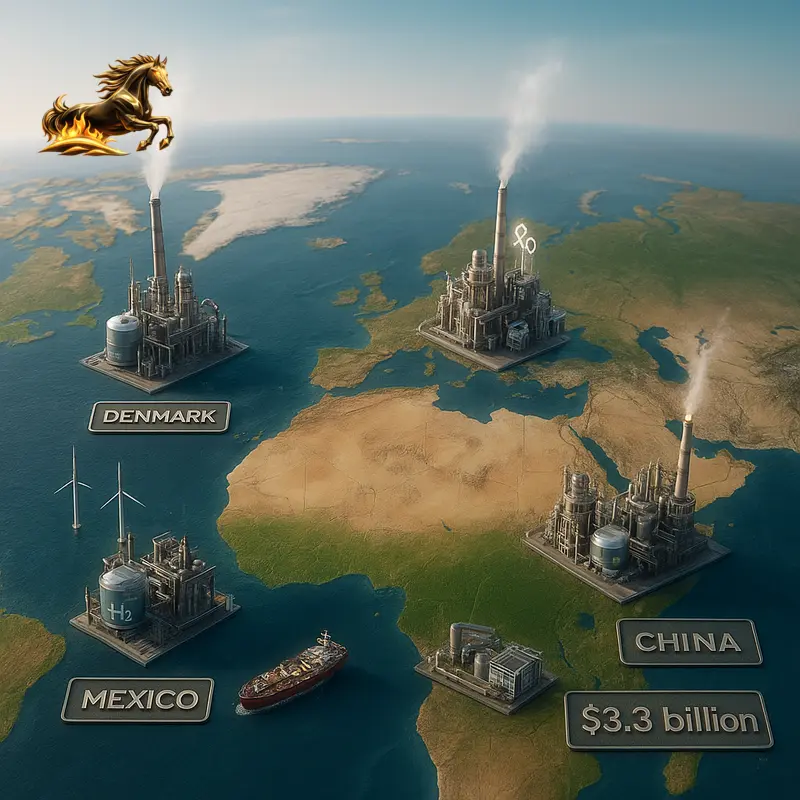
The 2026 Methanol Project Boom: How $3.3B Global Investments Are Fueling a New Energy Era
The global energy landscape is shifting rapidly. From Denmark’s shores and Mexico’s Pacific coast to vital industrial centers in Louisiana and Liaoning, methanol is emerging as a game-changer in the clean energy transition. No longer just a chemical feedstock, methanol’s versatility makes it a cornerstone in cutting carbon emissions across some of the toughest industries worldwide.
In 2026 alone, over $3.3 billion is being poured into methanol projects, marking the jump from speculative interest to large-scale industrial momentum. Production capacity worldwide is set to surge by more than 80%, with the first commercial methanol plants already up and running. This is more than growth—it’s a coordinated global push to green fuel and chemical supply chains. Here, we dive deep into the key projects, breakthrough technologies, and market forces powering the methanol revolution.
Understanding the Methanol Mandate: More Than Just a Chemical
Methanol’s evolution explains why it’s attracting focused investment. Traditionally, it served as an industrial base chemical, produced from fossil fuels like natural gas and coal, mostly for plastics and formaldehyde. Today, changing climate policies and energy security needs have redefined methanol as a promising, low-carbon fuel alternative.
Why Methanol is at the Heart of 2026’s Decarbonization Drive
- Fuel Flexibility: It combusts cleanly and powers internal combustion engines, fuel cells, and especially marine engines with minor modifications.
- Hydrogen Carrier: Unlike pure hydrogen, methanol is a liquid at ambient temperatures, making it safe and efficient to store and ship with existing infrastructure. It conveniently serves as a practical hydrogen carrier, convertible back to hydrogen where needed.
- Multiple Green Routes: Beyond traditional “gray” methanol, blue methanol (natural gas with carbon capture) and green methanol (from renewable sources) are rising fast, including:
E-methanol: Synthesized from green hydrogen and captured CO₂.
Bio-methanol: Derived from sustainable biomass and biogas. - Maritime Industry Adoption: With strict emissions rules from the International Maritime Organization, methanol is becoming the fuel of choice in new vessel designs. Shipping leaders like Maersk have heavily committed, ensuring robust, lasting demand.
This tidal wave of investment answers a fundamental question: how to power global transport and industry sustainably on a massive scale?
The Global Project Pipeline: Ambition Meets Action
The scale is staggering. The Methanol Institute’s late-2025 report tallies 252 renewable methanol projects targeting 45.1 million tons annually by 2030, alongside 18 blue methanol projects aiming to add another 11.2 million tons.
Experts temper expectations—factoring in financing, regulation, and infrastructure constraints, only 6 to 13 million tons per year seems realistic by 2030. Still, these projects shine a light on regional strategies and cutting-edge technologies.
North America: Policy-Driven Growth on a Dual Track
The U.S. leads with strong policy backing—from the Inflation Reduction Act to vast natural gas reserves—supporting 12 methanol projects projected to add over 10.2 million metric tons annually, boosting capacity by over 80%.
Key growth paths include:
- Blue Methanol Plants: Three proposed facilities pair natural gas feedstocks with carbon capture and storage for emission reductions.
- Green Methanol Projects: Six initiatives focus on e-methanol and bio-methanol, especially across biomass-abundant Louisiana.
- Export Powerhouses: Positioned on the Gulf Coast, these plants are geared to supply low-carbon fuels to global shipping routes.
This strategy sets the U.S. on course to be a leading exporter of both blue and green methanol.
Pacifico Mexinol, Mexico: The $3.3 Billion Game-Changer
The standout is Pacifico Mexinol near Ahome, Sinaloa—a massive $3.3 billion methanol complex slated to produce over 2.1 million tons per year by 2030.
Its hybrid design delivers:
- 1.8 million tons of blue methanol, using U.S. natural gas coupled with CCS.
- 350,000 tons of green methanol, sourced from renewable feedstocks.
Strategically located on Mexico’s Pacific Coast, it leverages affordable U.S. gas to serve vessels headed to Asia, sidestepping the Panama Canal—a smart alignment of resources and markets.
Pacifico Mexinol showcases how finance-ready mega-plants can mesh trade flows with decarbonization priorities.
China’s Green Methanol Hub: Local Scale, National Impact
China takes a different path—focusing on domestic green fuel production. Construction started on a green methanol complex in Kangping County, Liaoning, targeting an initial 100,000 tons per year, scaling to 500,000 tons.
Features include:
- Dedicated 100 MW wind power for producing green hydrogen.
- Gasification of up to 5 million tons of agricultural straw annually.
- A vertically integrated model leveraging local renewables and industrial infrastructure.
This embodies a homegrown strategy where integrated supply chains slash costs and boost scalability.
Denmark’s Kassø Plant: Proof in the Pilot
Dream big but prove it works. Denmark’s Kassø plant—developed by European Energy and Mitsui—is the world’s first commercial-scale e-methanol facility.
Highlights:
- Produces 46,000 tons per year of e-methanol.
- Uses renewable hydrogen combined with CO₂ captured from biogas and waste incineration.
- Commands off-take contracts from major firms like Maersk, Lego, and Novo Nordisk, proving strong market demand.
Kassø sets the gold standard for moving green methanol beyond pilot projects into commercially viable scale.
Blue vs. Green Methanol: Decoding the Technology Spectrum
2026’s diverse projects reveal two main pathways to decarbonization:
Blue Methanol: The Industrial Bridge
- Produced from natural gas via steam methane reforming combined with carbon capture and storage (CCS) that sequesters over 90% of carbon emissions.
- Pros: Lower capital costs, mature technology, and compatibility with existing gas infrastructure.
- Exemplified by export hubs like Pacifico Mexinol.
- Cons: Ongoing reliance on fossil fuels and needs for suitable carbon storage sites.
Green Methanol: The Renewable Frontier
Two key types:
-
E-Methanol:
– Combines green hydrogen (from renewables) with captured CO₂.
– Offers a true circular carbon lifecycle and acts as a drop-in fuel.
– Currently costlier due to green electricity prices and electrolyzer investments. -
Bio-Methanol:
– From gasifying sustainable biomass or upgrading biogas.
– Makes use of waste streams and can be economical when biomass is plentiful.
– Faces challenges in feedstock supply and certification.
The evolving methanol market embraces both blue and green paths—balancing rapid scale-up with long-term sustainability.
Demand Drivers: Shipping as the Leading Catalyst
- The International Maritime Organization’s emissions regulations have fast-tracked methanol-ready dual-fuel ship adoption.
- Methanol’s liquid form simplifies handling and infrastructure adjustments versus hydrogen or ammonia.
- It significantly cuts sulfur oxides, particulates, and nitrogen oxides, achieving near-zero carbon emissions if sourced renewably.
- Heavyweights like Maersk firm up demand with strong supply commitments, lowering investment risks.
Methanol’s appeal extends to manufacturers such as Lego and Novo Nordisk for green chemical production and supports power generation and blended fuel sectors, particularly in China.
Challenges Ahead on the Methanol Horizon
- Financing: High upfront costs and emerging technologies demand robust funding solutions despite favorable policies.
- Infrastructure: Coordinating fuel supply and vessel availability is essential to break the chicken-and-egg cycle, relying on long-term contracts.
- Feedstock Access: Renewable electricity and biomass availability are critical bottlenecks.
- Regulatory Frameworks: Clear global standards for carbon accounting and certification are still evolving but vital for market confidence.
The 2026 Takeaway: Methanol’s Moment Has Arrived
- Scale is tangible: Billion-dollar plants producing millions of tons confirm methanol’s role in industrial decarbonization.
- Tech pluralism: Blue, bio, and e-methanol will coexist, optimized by geography and resource availability.
- Shipping anchors growth: Maritime sector demand kickstarts supply chain development.
- Location strategy matters: From the U.S. Gulf Coast and Mexico’s Pacific shore to China and Northern Europe, the methanol economy is purpose-built.
- Execution is paramount: Navigating financing, permits, and construction will define the sector’s success.
For investors, policymakers, and industry leaders, the methanol economy is no longer an idea—it’s rapidly unfolding. The race to power a low-carbon future with methanol has officially begun.
FAQ
Q1: What are blue, green, e-, and bio-methanol?
- Gray methanol: Made from fossil fuels without carbon capture.
- Blue methanol: Natural gas-based with carbon capture and storage (CCS).
- Green methanol: Renewable variants including:
E-methanol: From green hydrogen plus captured CO₂.
Bio-methanol: From sustainable biomass or biogas.
Q2: Why is methanol vital for shipping decarbonization?
Methanol powers modified engines with minimal infrastructure change, sharply reduces emissions, and can reach near-zero carbon intensity when renewable. Major shipping companies’ vessel orders drive strong demand.
Q3: How much renewable methanol will operate by 2030?
Despite announcements exceeding 45 million tons, realistic projections estimate 6–13 million tons will be in operation due to permitting and financing challenges.
Q4: Is the U.S. focusing on blue or green methanol?
Both. The U.S. exploits its natural gas with CCS for blue methanol while simultaneously investing in green methanol—especially along the Gulf Coast.
Q5: What makes Denmark’s Kassø plant notable?
It’s the first commercial e-methanol plant globally, proving green methanol’s industrial viability and securing major corporate clients.
This comprehensive overview confirms methanol as more than a versatile molecule—it’s a pivotal pillar reshaping global energy toward sustainability. As these projects mature, methanol’s role in the new energy era will only strengthen.
