
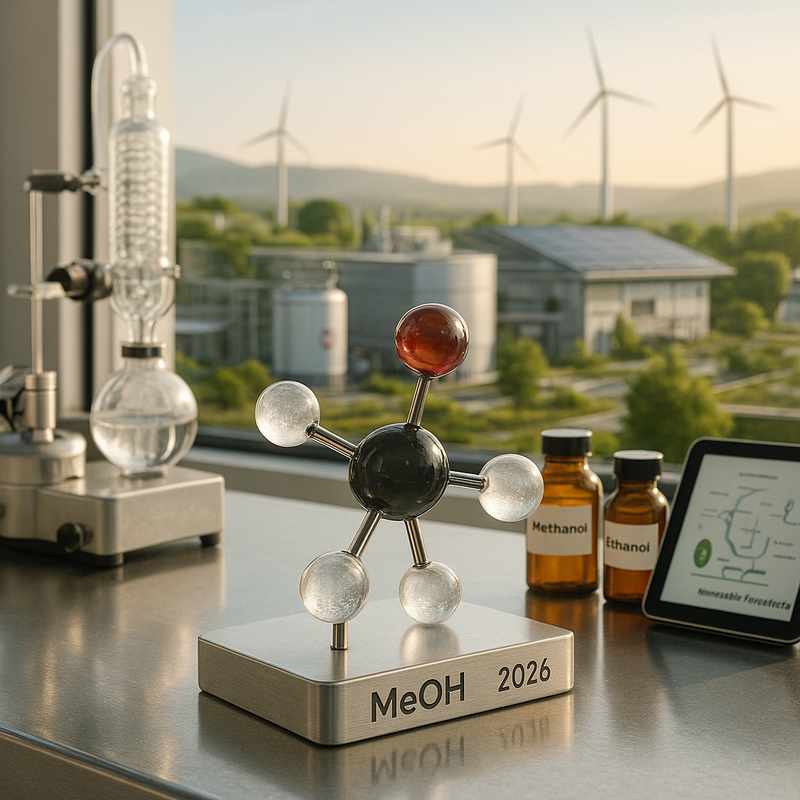
Understanding MeOH: The Future of Methanol in 2026
Introduction: What is MeOH and Why It Matters
Methanol, widely known by its chemical formula MeOH, is a key player in today’s industrial and environmental landscape. As we look towards 2026, methanol’s importance is growing, moving beyond traditional uses into cutting-edge energy applications and green chemistry breakthroughs. This post will dive into what methanol is, explore its current uses, highlight emerging trends in its production and application, and assess its economic and environmental impact going forward.
The Basics of Methanol
Methanol (CH₃OH) stands as the simplest form of alcohol, composed of one carbon atom attached to three hydrogens and a hydroxyl group. At room temperature, it presents as a clear, flammable liquid with a mild, sweet scent.
Key Properties:
- Chemical Structure: Methanol’s polar molecular arrangement allows it to serve effectively as a solvent in numerous chemical processes.
- Physical Traits: It boils at 64.7°C, and its density is 0.7918 g/mL, lighter than water.
- Solubility: Fully miscible with water and various organic solvents, methanol’s versatility is evident.
A clear grasp of these properties is vital to understanding why methanol is indispensable across industries.
Current Applications of Methanol
Methanol’s flexibility shines through its wide-ranging roles, many of which are gaining traction by 2026:
- Alternative Fuel: Methanol is increasingly utilized as a clean-burning fuel in vehicles and marine transport, and as a key ingredient in biodiesel production.
- Chemical Feedstock: It serves as a foundational raw material for producing formaldehyde, acetic acid, and plastics—cornerstones of manufacturing industries.
- Solvent Usage: Thanks to its excellent solvent properties, methanol is essential in labs and industrial chemical reactions.
- Energy Carrier: Innovative uses include methanol as a hydrogen carrier and fuel in emerging fuel cell technologies.
These applications underscore methanol’s integration into established and emerging energy and industrial sectors.
Trends Driving Methanol Production and Use
1. Renewable Energy Growth
The transition to renewable energy spotlight methanol as a sustainable fuel alternative. Production from biomass, agricultural residues, and carbon recycling offers a path to lower carbon emissions compared to fossil fuels.
2. Advances in Production Technology
Cutting-edge techniques like e-methanol synthesis—using renewable hydrogen and captured CO₂—are revolutionizing methanol production. Projects such as Horizon Europe’s THUNDER initiative focus on efficient one-pot electrolysis methods, boosting sustainability and cost-effectiveness.
3. Uptake in Transportation
As electric vehicles rise, methanol fuel cells provide a promising alternative to lithium-ion batteries, representing cleaner transportation options with reduced resource dependence.
Together, these trends highlight MeOH’s strategic value in the ongoing energy transition.
Economic Implications of Methanol (MeOH) in 2026
- Price Sensitivity: Methanol prices fluctuate with crude oil markets, production advances, and regional consumption patterns. Market leaders like Methanex provide real-time production and stock insights that help investors track market dynamics.
- Competitive Advantage: Compared to traditional fuels like gasoline, methanol typically has lower production costs. This affordability, coupled with increasing carbon pricing and green incentives, strengthens methanol’s market position.
Economically, methanol represents a competitive and attractive alternative fuel with substantial growth potential.
Environmental Considerations
- Lower Carbon Emissions: Burning methanol produces less CO₂ than conventional fossil fuels.
- Carbon Capture Integration: Methanol synthesis can incorporate carbon capture technologies, turning industrial carbon emissions into renewable fuel sources.
These advantages position methanol as a powerful tool in combating climate change.
Future Prospects: What Lies Ahead for Methanol?
1. Ongoing Technological Innovation
Research is steadily enhancing methanol production efficiency and affordability, with advances in catalysts and electrochemical methods lowering scaling barriers.
2. Policy and Regulation Support
Global clean energy priorities will likely drive stronger incentives and regulatory support for methanol adoption.
3. Expanding Applications
Methanol’s use is set to broaden into pharmaceuticals, advanced materials, and energy storage—beyond its traditional fuel and chemical roles.
These developments suggest methanol will play a pivotal role in sustainable industry and energy strategies.
Conclusion: Embracing Methanol’s Potential
As 2026 unfolds, methanol’s flexibility, economic benefits, and environmental strengths make it a cornerstone of future energy and chemical industries. Recognizing and leveraging the expanding roles of methanol will be key to driving cleaner, more sustainable technologies and markets.
Key Takeaways:
- Methanol is emerging as a versatile renewable fuel and vital chemical feedstock.
- Technological innovation and policy support are crucial for broad methanol adoption.
- Sustainable production methods like e-methanol are paving the way for a greener future.
Next Steps:
To stay informed on methanol advancements:
- Explore authoritative resources such as ScienceDirect and Biotage for up-to-date research.
- Track financial data on methanol producers like Methanex via Yahoo Finance.
- Join industry webinars and forums focusing on sustainable chemical technologies.
By engaging with the evolving methanol landscape, you can contribute to smarter decisions that foster environmental and economic progress.
