
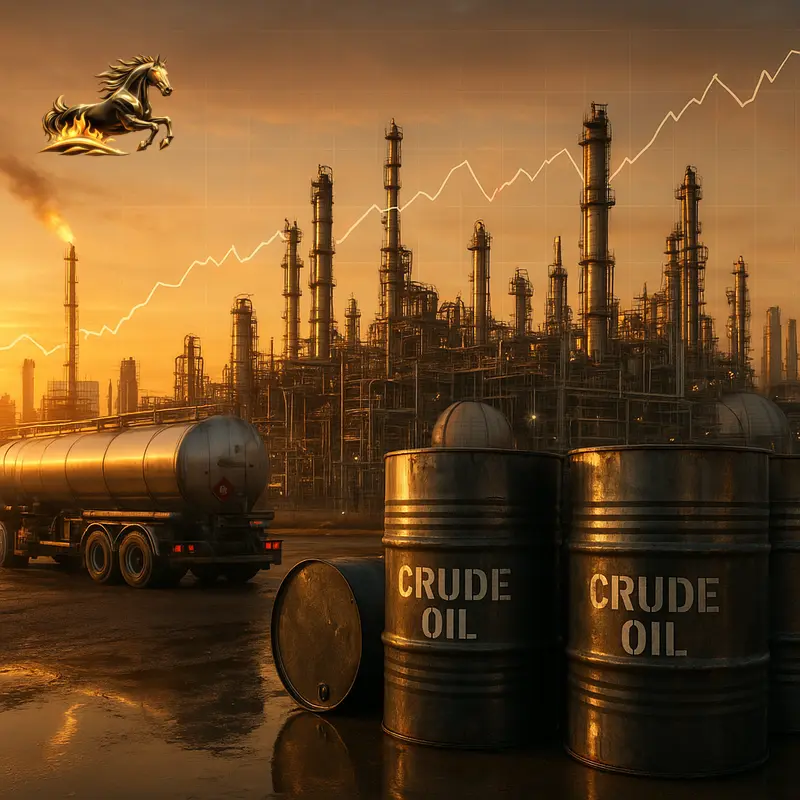
Navigating the Volatile World of Petroleum Prices in 2026: A Complete Guide for Businesses and Consumers
Every time you fill your car’s tank, pay an energy bill, or shop for groceries, petroleum price fluctuations leave their mark. In 2026, these swings go beyond market figures—they mirror complex global forces shaping economic policies and household budgets alike. Geopolitical tensions, supply disruptions, and evolving market dynamics have combined to create an unpredictable petroleum pricing landscape. This comprehensive guide dives into the key factors influencing petroleum prices today and offers actionable strategies for businesses and consumers to navigate this uncertainty confidently.
The Current Landscape: Understanding Petroleum Prices in 2026
The 2026 petroleum market is defined by sharp volatility and a significant “risk premium” baked into prices. While the global average price for gasoline hovers near $1.53 per liter, this masks steep fluctuations in crucial crude benchmarks like Brent and West Texas Intermediate (WTI). Recent geopolitical events highlight this volatility: following hopeful ceasefire talks between Israel and Lebanon, oil prices fell after six consecutive days of gains. This drop reflected a lowered geopolitical risk premium traders had factored into pricing.
Yet, such reprieves are often fleeting. Persistent supply constraints and geopolitical instability keep tightening availability, maintaining upward price pressure. The result is a continuous tug-of-war between market fears and actual supply realities.
Key takeaway:
In 2026, petroleum prices reflect not only supply and demand fundamentals but also ongoing recalibrations of geopolitical risks and supply challenges, demanding sharp attention from both businesses and consumers.
The Five Principal Drivers of Petroleum Prices Today
To grasp the complex price behavior of petroleum in 2026, it’s essential to look beyond classic supply-demand equations and consider these five critical drivers.
1. Geopolitical Flashpoints and the “Risk Premium”
Instability in the Middle East remains the top source of uncertainty impacting global oil prices. The Strait of Hormuz—a critical chokepoint handling nearly 20% of seaborne oil—remains highly sensitive. Even brief disruptions here trigger a risk premium that can add tens of dollars per barrel.
Forecasts from Barclays and Goldman Sachs warn that continued regional conflict could push Brent crude prices to $100–$120 per barrel. These expectations influence market sentiment, hedging strategies, and speculative trades, amplifying price swings far beyond actual supply changes.
2. Supply Disruptions and Production Challenges
Beyond geopolitical risks, tangible supply interruptions tighten markets further. Kuwait’s announcement that full oil output restoration may take 10–12 weeks signals extended shortfalls. Similarly, Russia’s decreased crude output—due to refinery maintenance and conflict-related disruptions—continues to restrict global supply, notably impacting Europe and Asia.
3. South America’s Emerging Role as a Supply Stabilizer
South America is stepping up as a vital counterbalance to traditional supply shocks. In 2026, Brazil, Guyana, and Venezuela collectively export about 155 million barrels, thanks to offshore developments and recovered production levels.
This Atlantic Basin growth helps stabilize prices by cushioning the impact of Middle East and Russian supply outages, providing alternative sources and routes.
4. OPEC+ Influence and Strategic Reserves Management
OPEC+, led by Saudi Arabia and Russia, remains a decisive force in shaping market supply through careful production adjustments balancing price support and demand response.
Meanwhile, strategic petroleum reserves (SPRs) in countries like the U.S. and China have evolved into tactical tools. Their timely releases can moderate price spikes, adding a layer of complexity that market participants must monitor closely.
5. Demand Dynamics: Economics and the Energy Transition
Demand for petroleum is directly influenced by global economic health. Strong economic growth fuels higher consumption across transportation, manufacturing, and petrochemical sectors, while recession concerns can dampen it.
At the same time, the accelerating energy transition—marked by electric vehicle growth, improved fuel efficiency, and net-zero goals—is reshaping long-term demand. This shift also affects investment choices in oil production, potentially limiting supply expansion amid changing market expectations.
Key takeaway:
Petroleum prices in 2026 are driven by a sophisticated mix of geopolitical uncertainty, supply constraints, new global producers, coordinated market management, and evolving demand shaped by economic and environmental factors.
What Petroleum Price Volatility Means for Consumers
The ripple effects of global crude price shifts vary regionally and influence consumer prices in multiple ways:
- United States: Gasoline prices generally track WTI crude trends but are also influenced by refinery capacity, inventories, and seasonal fuel blends.
- Europe: Brent crude sets the benchmark, but taxes often make up more than half of pump prices. Reduced Russian fuel imports have pushed diesel prices higher, impacting transport and heating costs.
- Asia: Countries like India and China blend long-term contracts with spot purchases. While government subsidies can cushion consumers, they come at economic costs.
Beyond the gas pump, petroleum price volatility impacts:
- Shipping and logistics costs, driving up goods prices
- Airline fuel expenses, leading to higher travel fares
- Costs for plastics and chemical manufacturing, inflating everyday products
- Inflationary pressures that challenge economic stability
Practical insight:
Recognizing petroleum’s broad influence helps households and businesses anticipate price changes and manage budgets proactively.
Looking Ahead: Key Trends Shaping Petroleum Prices Beyond 2026
- Persistent Geopolitical Uncertainty: Ongoing volatility linked to the Middle East, Eastern Europe, and critical maritime routes is expected to persist.
- Supply Diversification: Rising production from South America and Africa will reshape global supply networks, increasing market complexity.
- Accelerating Energy Transition: Renewable policies, electric vehicles, and carbon pricing will increasingly influence demand and investment.
- Investment Challenges: Recent underinvestment in oil exploration, driven by price instability and ESG concerns, may pose future supply risks if demand remains strong.
Strategies for Thriving Amid High Prices and Market Volatility
For Businesses:
- Diversify supply chains to reduce regional dependence
- Use hedging strategies to lock in fuel costs and manage risk
- Invest in energy efficiency and electrify fleets to cut fuel use
- Conduct scenario planning to prepare for price fluctuations
For Policymakers:
- Use strategic petroleum reserves judiciously to smooth shocks without compromising security
- Accelerate clean energy infrastructure to reduce vulnerability
- Promote market transparency to curb excessive speculation
For Consumers:
- Explore transportation alternatives like public transit, carpooling, and fuel-efficient vehicles
- Understand how petroleum prices indirectly affect household budgets
- Support energy-efficient choices for long-term savings
Key takeaway:
Being proactive and informed at every level helps mitigate the challenges posed by a volatile petroleum market.
Conclusion: Embrace Resilience in an Unpredictable Petroleum Market
The petroleum pricing landscape in 2026 rejects the notion of stability. Prices respond rapidly to geopolitical events, supply constraints, and shifting demand amid the global energy transition. Accepting volatility as a new norm empowers businesses, policymakers, and consumers to navigate this complexity successfully. By understanding the core drivers, observing supply trends closely, and embracing strategic flexibility, all stakeholders can manage risks and capitalize on opportunities in this challenging economic environment.
Adaptability and insight are now essentials—the era of steady, predictable oil prices has ended.
Frequently Asked Questions (FAQ)
- 1. What drives oil price volatility most right now?
- Geopolitical risks, especially in the Middle East near critical routes like the Strait of Hormuz, remain the biggest factor adding risk premiums to oil prices.
- 2. Why are South American countries important players in 2026?
- Brazil, Guyana, and Venezuela boost global oil supply by contributing roughly 155 million barrels annually, helping to offset disruptions elsewhere.
- 3. How does a drop in crude prices after peace talks affect consumers?
- Lower crude prices generally reduce gasoline and diesel costs within weeks, easing transportation and manufacturing expenses and helping moderate inflation.
- 4. What impact does Russia’s declining oil production have?
- It tightens global supply, especially in Europe and Asia, supporting higher prices and increasing market tension.
- 5. Will oil prices keep rising forever?
- Not necessarily. Though short-term spikes may persist due to geopolitical risks, new supply sources and the energy transition will keep the market volatile rather than steadily rising.
Mastering petroleum price volatility in 2026 means understanding complexity, anticipating market shifts, and building resilience—essentials that empower better decisions for businesses, policymakers, and consumers alike.
