
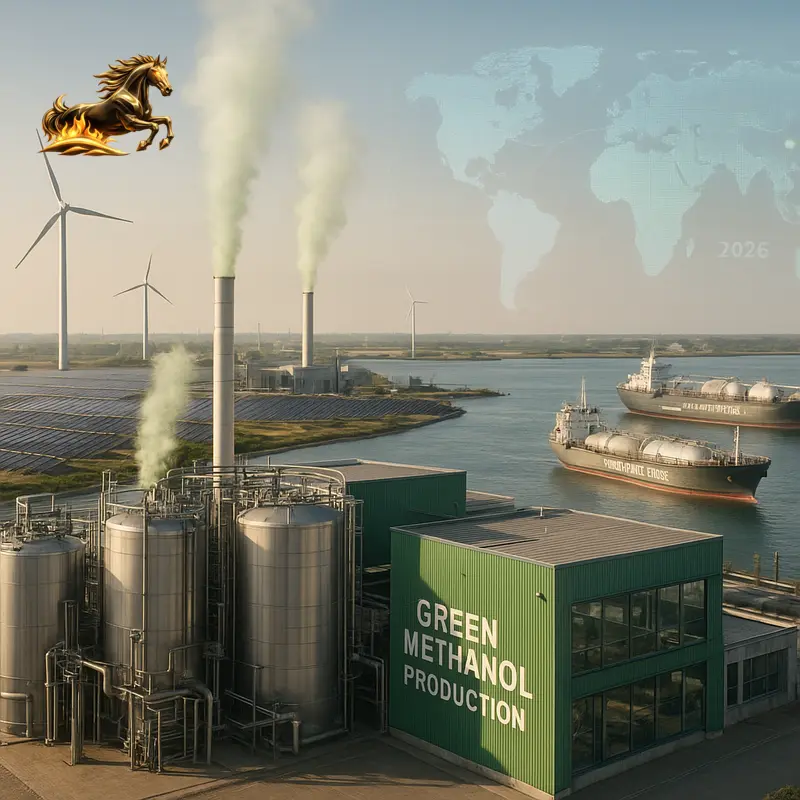
Methanol Projects in 2026: The Green Fuel Revolution
Transforming Global Energy
In 2026, the global energy landscape is rapidly evolving, driven by the rise of methanol as a clean, versatile fuel. While electric vehicles capture much of the spotlight, large-scale methanol projects are quietly revolutionizing sectors that have long been tough to decarbonize — shipping, manufacturing, and heavy industry. From China’s industrial hubs to Mexico’s coastal regions and global shipping lanes, these initiatives are helping build a new sustainable fuel economy. Understanding methanol’s expanding role is essential to grasping this pivotal global energy shift.
What Is Methanol and Why Is It Central to the Energy Transition?
Methanol (CH₃OH) has been a chemical industry staple — traditionally produced from fossil fuels like natural gas or coal and used in plastics and adhesives. But in 2026, methanol takes center stage as a clean fuel and an effective green hydrogen carrier. Its liquid form at room temperature makes storage and distribution simpler by using much of the existing fuel infrastructure.
The game-changer? The transition to low-carbon methanol:
- Green Methanol: Derived from sustainable biomass or biogas (biomethanol), or synthetically produced from captured CO₂ and green hydrogen powered by renewable electricity (e-methanol). This dramatically cuts lifecycle emissions.
- Blue Methanol: Produced from natural gas with captured and stored CO₂ emissions through Carbon Capture and Storage (CCS), offering a vital transitional fuel with a smaller carbon footprint.
With the International Maritime Organization’s (IMO) strict decarbonization targets, demand for green and blue methanol is surging. Its adaptability makes methanol essential where alternatives fall short, securing its spot as a cornerstone in the 2026 energy transition.
The Global Methanol Project Pipeline: Ambition Meets Reality
Renewable and low-carbon methanol projects have seen a surge in investment. By late 2025, the Methanol Institute tracked 252 renewable methanol projects aiming for a combined production capacity of 45.1 million tonnes per annum (Mtpa) by 2030, split almost evenly between e-methanol and biomethanol, plus another 11.2 Mtpa from blue methanol.
However, experts warn to temper expectations. Realistically, 2030 production could range between 6 and 13 Mtpa due to financing, technology, and supply chain hurdles. This underscores the complexity of scaling new energy solutions and positions 2026 as a pivotal year for moving projects from planning to construction.
Spotlight on Key Methanol Projects Driving 2026
China’s Liaoning Green Methanol Facility
As the world’s largest methanol producer, China is shifting focus toward sustainability. The 100,000-tonne-per-year green methanol plant in Liaoning province combines wind energy with biomass gasification. This plant is part of a larger 500,000-tonne green fuel hub that also includes sustainable aviation fuel and green ammonia, showcasing China’s commitment to a domestic clean fuels supply chain and reducing fossil fuel dependence.
Pacifico Mexinol: Navigating Social and Geopolitical Challenges
The $3.3 billion Pacifico Mexinol project in Sinaloa, Mexico, backed by U.S. investors, aims to produce 2.1 million tonnes annually of mixed green and blue methanol. Despite securing key offtake agreements and natural gas contracts, construction paused in April 2026 due to protests from indigenous communities over incomplete consultations mandated by ILO Convention 169 and environmental concerns. This highlights the crucial role of community engagement and social license, alongside financial and technical viability, in project success.
Hapag-Lloyd and the Power of Offtake Agreements
Collaborations like Southern Energy Renewables’ partnership with German shipping giant Hapag-Lloyd demonstrate how firm offtake agreements strengthen project financing and risk mitigation. Along with carbon credit expertise, this approach aligns supply chain players, builds market confidence, and supports sustainability certification—forming a blueprint for successful methanol project development.
Key Drivers Behind Methanol’s Rapid Growth
Stricter Maritime Emissions Regulations
The IMO’s roadmap to net-zero by 2050 and tighter emissions limits pressure shipowners to find practical fuel solutions. Methanol’s compatibility with existing engines and infrastructure offers an effective path to comply without costly retrofits.
Corporate Net-Zero Commitments
Globally, companies are embedding net-zero goals in operations, demanding low-carbon feedstocks for chemicals and materials. Methanol projects offer pathways to decarbonize supply chains in manufacturing, packaging, and consumer goods.
Hydrogen Carrier and Energy Security Benefits
Transporting green hydrogen is challenging. Methanol serves as a liquid organic hydrogen carrier (LOHC), safely storing and transporting hydrogen in liquid form—unlocking new opportunities for exporting renewable energy and shifting global energy geopolitics.
Overcoming Challenges on the Road to Scale
- Cost of the Green Premium: Green and blue methanol currently cost more than grey methanol. Bridging this gap requires technological innovation, scaling electrolyzers and CCS, and supportive policies.
- Feedstock Availability: Producing e-methanol demands abundant renewable electricity and sustainable CO₂. Biomethanol needs biomass supply chains that don’t compete with food or harm ecosystems.
- Infrastructure Development: Though existing infrastructure helps, dedicated bunkering and distribution networks for green methanol need significant investment.
- Trust and Certification: Transparent certification systems for carbon intensity and sustainability are vital to market confidence but are still evolving.
What to Watch in 2026
- Final Investment Decisions (FIDs): Approval of large-scale projects signals investor trust.
- Policy Developments: Regulations like the EU’s FuelEU Maritime and expanding carbon pricing will heavily influence feasibility.
- Cost Reductions: Advances in electrolyzers, CCS, and direct air CO₂ capture could boost e-methanol competitiveness.
- Community Engagement Success: Projects that effectively partner with local communities will set the standard for viable developments.
Conclusion: Methanol Powering a Sustainable Energy Future
Methanol projects launching in 2026 represent more than industrial milestones—they are the foundation of a decarbonized global economy. By enabling clean shipping, greener manufacturing, and new energy trade routes, methanol bridges today’s fossil fuel systems and tomorrow’s renewables.
Despite challenges, regulatory momentum, corporate demand, technological progress, and capital investment align to propel methanol’s rise. Stakeholders—from investors to policymakers—must engage actively in this transition. The success of 2026 will set the pace for the green fuel revolution reshaping global energy.
Key Takeaways
- Methanol is a vital clean fuel for hard-to-decarbonize sectors like shipping and a sustainable chemical feedstock.
- The global project pipeline is large but faces financial, technological, and social hurdles.
- Case studies from China, Mexico, and Europe highlight the importance of technology, secured offtake, and community engagement.
- The “green premium” remains a cost challenge but is improving with scale and policy support.
- 2026 will reveal how the industry navigates early-stage challenges toward industrial decarbonization.
Next Steps for Readers
- Industry Pros: Explore methanol bunkering, engine retrofits, and sustainability certification standards.
- Investors: Focus on project pipelines with firm offtake and strong ESG practices.
- Observers: Follow flagship projects like Pacifico Mexinol and Liaoning for market insights.
- Further Reading: Consult the Methanol Institute and IRENA for in-depth analysis.
Frequently Asked Questions (FAQ)
1. What differentiates green methanol from blue methanol?
Green methanol comes entirely from renewable sources, including biomethanol and e-methanol. Blue methanol is produced from natural gas with carbon emissions captured and stored, offering a lower-carbon but not zero-carbon option.
2. Why is methanol preferred as a marine fuel?
Methanol’s liquid state simplifies storage and handling, making it safer and compatible with existing bunkering infrastructure. It can be used in modified conventional engines, helping ships meet emissions targets with minimal design changes.
3. Is the 45 Mtpa production capacity by 2030 achievable?
This ambitious figure represents the entire project pipeline. Realistic operational capacity is expected between 6 and 13 Mtpa due to financial and technical challenges.
4. What led to Pacifico Mexinol’s setback?
Indigenous community protests over insufficient consultation and environmental concerns halted construction, highlighting the necessity of meaningful community engagement.
5. How will green methanol become cost-competitive?
Cost reductions will come from cheaper renewable electricity, advances in carbon capture, efficient biomass sourcing, and supportive policies like carbon pricing and subsidies.
The year 2026 promises to be a defining moment for methanol’s role in the global energy transition. As projects mature and markets grow, methanol’s potential as a green fuel and hydrogen carrier comes closer to full realization — reshaping industries and fueling a more sustainable world.
