
International Crude Oil Price Today: Decoding Volatility in 2026
Introduction
In 2026, crude oil prices remain a powerful force shaping the global economy. Any sudden price move instantly ripples through financial markets, shifts currency values, and forces businesses and governments to rethink strategies. More than just numbers, oil prices act as a real-time gauge of geopolitical tensions, economic strength, and energy security worldwide.
This article dives deep into today’s international crude oil price, uncovering the key drivers behind recent shifts, the bigger picture shaping 2026’s energy landscape, and what it means for investors, companies, and policymakers. With geopolitics evolving fast, energy transition accelerating, and markets growing more complex, understanding these forces is essential.
Market Snapshot: Why Are Prices Moving Today?
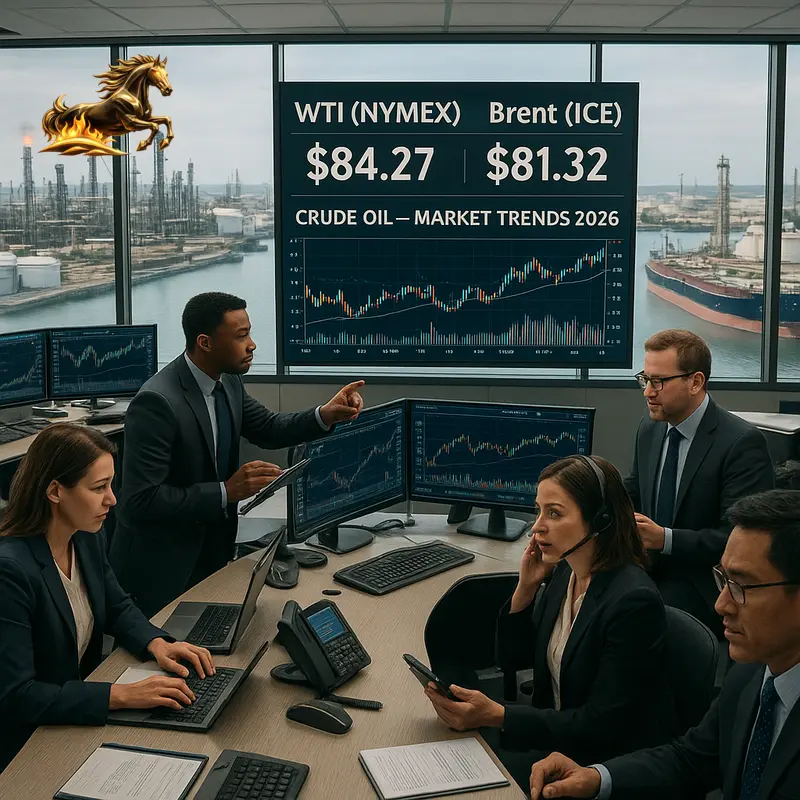
Today, Brent and West Texas Intermediate (WTI) crude prices dropped about 5–6%, reflecting a market tuned more to geopolitics than immediate supply and demand changes.
The main trigger is rising optimism around a potential U.S.-Iran diplomatic deal. Such progress suggests a future lift on sanctions, allowing more Iranian oil exports and easing global supply strains. It also calms tensions near the Strait of Hormuz—a vital chokepoint handling 20-30% of seaborne oil—cutting a key geopolitical risk premium baked into prices.
This pullback pushed Brent crude below the significant $100-per-barrel mark—the lowest in two weeks—signaling traders’ shift from fearing shortage to anticipating greater supply.
The impact is felt globally. Oil-importing countries like India benefit from lower inflation and improved trade balances. The Indian Rupee strengthens, and stock markets rally, especially energy-sector shares up by as much as 6%. For refiners, reduced crude costs boost profit margins.
Yet, experts warn this is a correction, not a reversal. Prices stay well above pre-conflict levels, reflecting ongoing supply tightness and geopolitical uncertainty.
The 2026 Price Landscape: Beyond Today’s Headlines
Today’s volatility plays out amid three major, interconnected forces:
1. Geopolitical Fragmentation
Energy markets are still shaped by complex global politics. Apart from U.S.-Iran relations, fractured alliances, sanctions, and key maritime chokepoints like Hormuz and Malacca keep prices sensitive. OPEC+, now a wider coalition, manages supply but faces internal fiscal and political pressures.
2. The Energy Transition’s Dual-Speed Reality
While decarbonization pushes ahead, underinvestment in traditional oil fields—driven by ESG concerns—has tightened supply. The outlook shifts from “peak demand” to a “demand plateau,” with emerging markets’ growth offsetting declines in developed countries. Meanwhile, advances in alternative energies cap long-term oil price gains by accelerating substitution when prices rise.
3. Financialization and Algorithmic Trading
Oil prices increasingly react to algorithmic trading and high-frequency market moves driven by news and macro signals. This amplifies swings, as in today’s sharp adjustment of the geopolitical risk premium, temporarily decoupling prices from physical fundamentals.
Combined, these factors ensure crude oil remains a highly reactive, complex asset in 2026.
Analyzing the Major Benchmarks: WTI vs. Brent
West Texas Intermediate (WTI)
Primarily from Texas, WTI is a “light, sweet” crude prized for low sulfur and refining ease. Priced at Cushing, Oklahoma, it’s influenced heavily by U.S. domestic supply, inventories, refinery demand, and export capacity. In 2026, WTI price movements also respond to global arbitrage, with dips encouraging exports to narrow regional price gaps.
Brent Crude
Sourced from the North Sea, Brent is also light and sweet, serving as the global benchmark for waterborne crude oil. Brent prices mirror international geopolitical risks, OPEC+ production decisions, and demand from Asia and Europe. Brent’s recent drop below $100 signals a recalibration of risks and supply expectations internationally.
The Brent-WTI Spread
The difference between Brent and WTI reflects regional demand and logistical factors. A widening spread shows stronger overseas demand or U.S. supply bottlenecks; the current narrowing suggests growing U.S. competitiveness globally.
Regional Price Impacts and Variations
Benchmark prices only tell part of the story; regional factors cause real cost variations for refiners and consumers worldwide.
Asia-Pacific
China and India drive global demand growth. India’s import prices and policies react keenly to headline oil prices—lower prices ease fiscal strain, allowing subsidies and stockpiling. China’s strategic reserves during price dips help reinforce supply security.
Europe
Europe’s decarbonization and emissions rules curb oil demand growth, influencing price sensitivity differently from emerging markets. Regional security concerns spur supply diversification, benefiting non-sanctioned producers.
North America
The U.S. shale sector’s flexibility puts a cap on prolonged price spikes. Gulf Coast export infrastructure efficiently links U.S. production to global markets, impacting benchmark spreads.
Middle East & OPEC+
For Gulf producers, oil revenue is vital for national budgets. OPEC+ supply adjustments often reflect fiscal breakeven points, making these benchmarks essential for market interpretation.
How Key Sectors and Consumers Are Affected
Today’s price drop brings a mixed bag:
- Oil-Importing Countries enjoy lower inflation, stronger currencies, better trade balances, and reduced subsidy burdens.
- Transportation sees immediate fuel cost relief, boosting profitability for airlines, shipping, and trucking.
- Energy Companies face mixed effects: upstream producers see revenue declines, especially high-cost operations, while refiners and marketers benefit from wider margins.
- Investors and Traders navigate heightened volatility, requiring strategic sector rotation and hedging to seize market shifts.
Forecasting the Path Ahead: Prices in 2026 and Beyond
Short-Term (3-6 Months)
Geopolitics will dominate near-term pricing. A finalized U.S.-Iran deal could depress prices further as exports rise; failure or conflict could quickly restore risk premiums. Watch U.S. inventory reports, OPEC+ announcements, and China’s economic data for clues.
Long-Term (2027-2030)
Ongoing supply constraints from underinvestment and a demand plateau shaped by energy transition efforts suggest sustained volatility within a high price range. Prices will likely oscillate between the marginal costs of U.S. shale and levels that spur accelerated shifts to alternative energy.
Practical Guidance: Staying Ahead in a Volatile Market
To handle ongoing crude oil price volatility:
- Businesses should diversify intelligence, apply scenario planning, and consider hedging strategies to reduce risk.
- Investors must differentiate energy exposures with an eye on transition trends and macroeconomic indicators.
- Consumers and Individuals benefit from relying on official data and expert insights, recognizing the difference between headline-driven volatility and fundamental shifts.
Conclusion
The international crude oil price on May 25, 2026, underscores oil’s enduring importance and the intricate blend of geopolitics, economics, and technology that shape today’s markets. This sharp price correction—sparked by positive signs in U.S.-Iran diplomacy—reflects a market balanced between acute sensitivity and persistent structural tightness.
Moving forward, grasping the complexity and regional nuances of oil pricing—and planning strategically—remains crucial for business resilience, smart investing, and effective policymaking. Staying informed and adaptable is key to navigating the opportunities and risks of today’s oil market landscape.
Frequently Asked Questions (FAQ)
Prices dropped about 5–6% due to optimism over a U.S.-Iran diplomatic deal likely to increase Iranian oil exports and reduce risks to supply near the Strait of Hormuz. This lowered the geopolitical risk premium and triggered a market sell-off.
WTI is a U.S. benchmark from Cushing, Oklahoma, influenced by domestic supply and logistics. Brent is a global benchmark from the North Sea, reflecting international geopolitical risks and global demand. The spread between them highlights regional market factors.
Lower crude prices benefit oil-importing countries’ equity markets by easing inflation and improving economic outlooks. Upstream energy stocks often fall, while downstream refiners, airlines, and transportation sectors usually see gains.
No. Experts see this as a temporary correction linked to geopolitical developments. Structural supply constraints and ongoing risks keep the oil price floor elevated, maintaining volatility at high levels.
Retail fuel prices usually lag crude oil price drops by several weeks due to inventories, refining, and local pricing policies, with timing varying by region and tax structures.
