

International Crude Oil in 2026: The Market’s Crucial Balancing Act
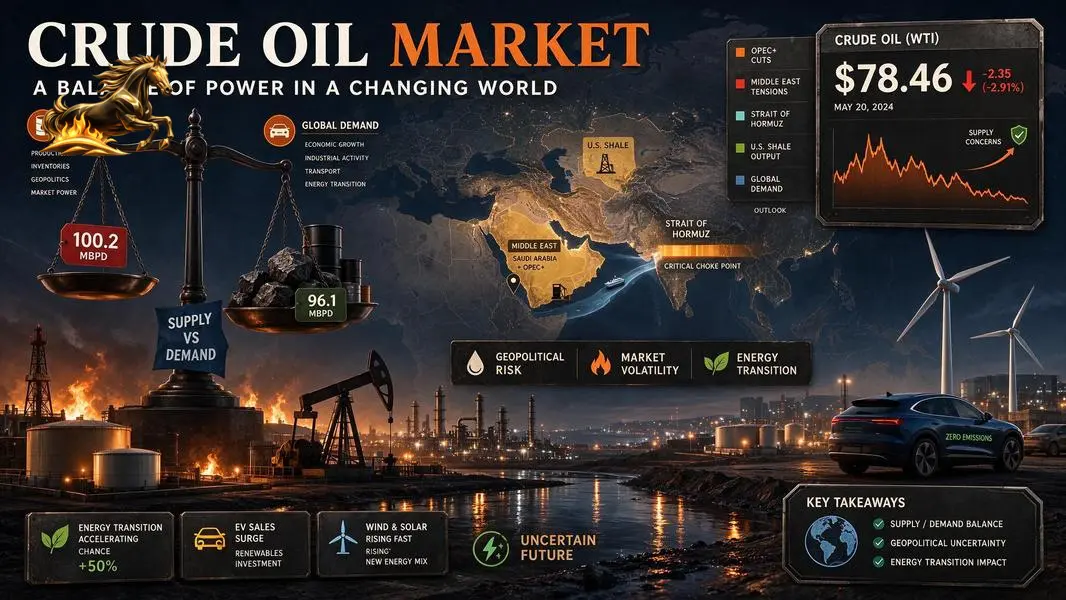
Few commodities have the power to shape economies like international crude oil. From pump prices to global trade flows, oil remains the lifeblood of modern industry. As we look ahead to 2026, the market stands at a crossroads—battling oversupply, geopolitical flashpoints, and the accelerating energy transition.
The 2026 Oil Landscape: Key Trends at a Glance
- 🔹 Supply surplus ahead: The IEA predicts an excess of 1.7–2.0 million bpd by late 2026—earlier than projections.
- 🔹 Brent crude fluctuates: Prices dipped below $90/barrel as tensions eased, but volatility persists.
- 🔹 Middle East production rebounds: Saudi-led OPEC+ output increases, deepening supply concerns.
- 🔹 Strait of Hormuz disruptions continue: Recent tanker incidents highlight persistent risks.
- 🔹 WTI hovers near $85.48: The U.S. benchmark reflects domestic shale resilience.
The message is clear—the market is transitioning from scarcity-driven spikes to surplus-driven softness, though geopolitical shocks remain an ever-present threat.
Why a Supply Surplus Changes Everything
The New Market Reality
The IEA’s revised 2026 surplus forecast signals a major shift. When supply outstrips demand:
- ✅ Inventories build up, pressuring prices downward.
- ✅ Export competition heats up, forcing discounts.
- ✅ Shipping costs decline as available tankers increase.
Traders now obsess over visible crude oil flows rather than potential shortages—a stark change from the post-pandemic scramble for barrels.
Geopolitics vs. Market Fundamentals
Even amid Middle East tensions, actual supply disruptions have been limited. The result? Traders now prioritize hard data over fear, explaining why:
- 🔻 Brent fell despite regional instability.
- 🔻 Physical markets show more resilience than headlines suggest.
But don’t become complacent—the next Hormuz crisis could swing sentiment overnight.
Price Volatility: The New Normal for Crude Oil
Brent vs. WTI: A Tale of Two Benchmarks
- 📍 Brent crude – Global benchmark, swayed by shipping disruptions and OPEC+ policy.
- 📍 WTI crude – Driven by U.S. shale output, inventories, and pipeline flows.
The widening Brent-WTI spread tells a story—when Brent lags, global markets loosen.
A Look Back at Oil’s Wild Price Swings
| Year | Avg. Brent Price | Key Market Driver |
|---|---|---|
| 2019 | ~$57 | Stable, low volatility |
| 2020 | Negative (April crash) | Pandemic demand destruction |
| 2022-2024 | Peaked above $124 | Russia-Ukraine war supply shock |
| 2026 | ~$90 (current) | Surplus vs. geopolitics tug-of-war |
The lesson? Oil markets today react faster—and harder—to every signal.
Who’s Driving Supply in 2026?
1. OPEC+ (Saudi Arabia Leads the Way)
- Higher production signals less urgency to prop up prices.
- Saudi flexibility remains crucial—any output shift sends ripples worldwide.
2. U.S. Shale (The Ultimate Swing Producer)
- Rapid response time stabilizes global markets.
- If prices drop too low, drillers pull back; if they rise, output rebounds.
3. Non-OPEC Rising Stars
- Brazil, Guyana, Canada chip away at OPEC’s dominance.
- Result? No single player controls the market anymore.
Demand Shifts: Where’s the Oil Going?
Slowing But Still Steady Growth
- 📍 China’s economic slowdown dampens import needs.
- 📍 European industry struggles, cutting fuel consumption.
- Yet global transportation and petchems keep demand afloat.
Energy Transition: Evolution, Not Revolution
- ⚡ EVs chip away at gasoline—but not quickly enough to crash oil demand.
- ⚡ Aviation and plastics still rely heavily on crude.
- ⚡ Investment is shifting long-term, but short-term demand remains robust.
Geopolitics: The Wildcard That Won’t Disappear
Strait of Hormuz: The World’s Oil Artery
- 20% of global trade flows through here.
- One major incident could spike insurance, reroute tankers, and send prices soaring.
Sanctions & Shadow Fleets Reshape Trade
- Iran, Venezuela, and Russia exploit covert shipping networks.
- Creates regional price gaps and logistical headaches.
U.S. Shale as the New Stabilizing Force
America isn’t just a producer—it’s now a swing exporter, countering OPEC’s influence.
What This Means for Businesses & Investors
- 📌 Traders: Watch inventory data, refining margins, and freight rates.
- 📌 Airlines/Shipping: Enjoy lower fuel costs but hedge against sudden spikes.
- 📌 Oil-dependent economies: Brace for softer revenues—diversification is key.
Bottom Line: Oil’s 2026 Outlook
- Supply glut looms—but don’t dismiss quick reversals.
- Geopolitics still matter—especially in the Strait of Hormuz.
- Demand slows but doesn’t collapse—oil remains essential.
- Energy transition is coming… slowly.
- Volatility is here to stay—traders must stay nimble.
Final Thought
2026 won’t be the year oil fades away—it’ll be the year markets adapt to a new balance of surplus, risk, and transition.
What’s your 2026 oil forecast? Drop your thoughts below!
(Want in-depth energy insights? Subscribe to our market updates.)
