

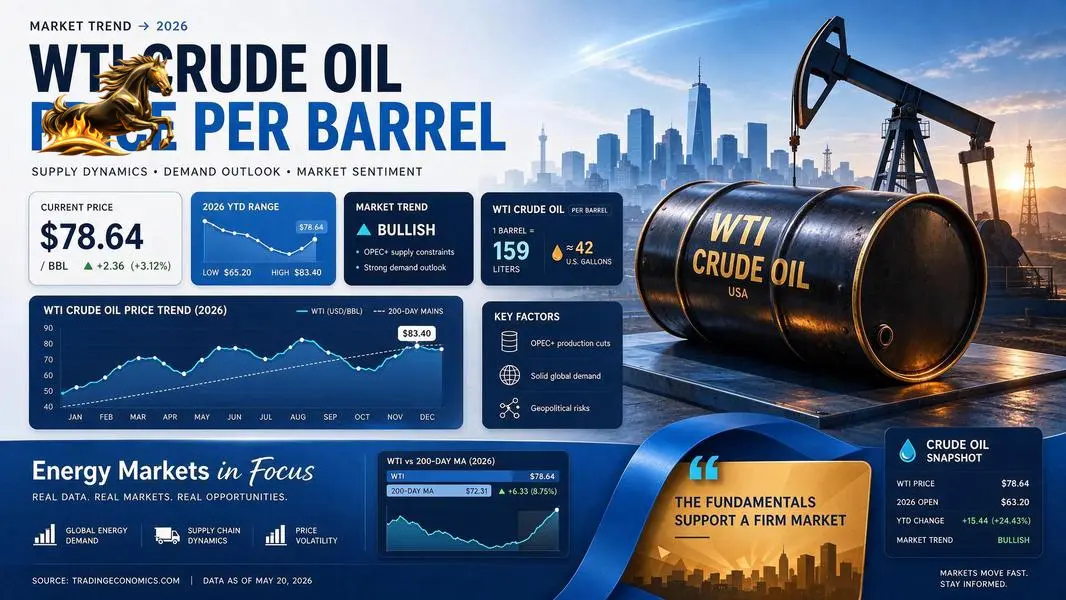
Current Price of WTI Oil per Barrel in 2026: Why WTI Is Hovering Near $85
Key Takeaways
- Current Price (Mid-November 2026): WTI crude oil is trading between $85 and $89 per barrel, down from early November highs but up 40% year-over-year.
- Key Drivers:
- Supply: Easing concerns about Strait of Hormuz disruptions have trimmed risk premiums.
- Demand: China’s refinery activity slowed, signaling weaker consumption.
- Geopolitics: Ongoing tensions in the Middle East keep prices elevated.
- Market Impact: Higher oil prices affect gasoline costs, transportation expenses, inflation, and energy sector valuations.
What Is WTI Oil and Why Is It Important?
Definition & Significance
WTI (West Texas Intermediate) is a premium U.S. crude oil benchmark known for its light, sweet quality, making it ideal for refining into gasoline and diesel. It plays a pivotal role in:
- Energy markets (futures contracts, refinery economics).
- Consumer fuel prices (via refining margins).
- Corporate earnings (oil producers, airlines, shipping companies).
- Economic indicators (inflation, trade balances).
| WTI vs. Brent Crude |
|---|
| WTI: U.S.-focused, priced at Cushing, Oklahoma. |
| Brent: Global benchmark (Europe, Middle East, Africa). |
| Spread: Brent typically trades higher due to international shipping costs. |
The Current Price of WTI Oil in Mid-November 2026
Price Snapshot
| Metric | Price ($/bbl) | Context |
|---|---|---|
| Markets Insider (Nov 16) | $85.06 | Real-time futures quote. |
| EIA Spot (Nov 11) | $89.62 | Official U.S. benchmark. |
| Early-November Peak | $94.37 | Pre-Hormuz supply relief. |
| Year-to-Date Average | $86.84 | 2026 trend vs. 2025 ($60.87). |
Interpretation: Prices have eased slightly but remain historically high, reflecting ongoing market volatility.
Why WTI Prices Shifted: Key Factors
1. Middle East Supply Stability
- Strait of Hormuz Flows: Improved shipping security has reduced fears of disruptions, pulling prices down by $4.75/bbl.
- Risk Premiums Unwind: Traders have scaled back speculative bets as physical supply stabilized.
2. China’s Refining Slowdown
- October refinery activity dropped 8.1% year-over-year, indicating softer demand.
- As the world’s largest oil consumer, China’s economic slowdown impacts global crude prices.
Conclusion
The current price of WTI oil per barrel (~$85–89) highlights a market balancing easing supply concerns with persistent geopolitical risks. While prices have cooled from early November highs, they remain elevated compared to historical levels—a reminder of the energy market’s inherent volatility.
FAQ
Q: Why did WTI prices drop recently?
A: Improved Middle East supply flows and weaker Chinese demand have softened prices.
Q: How does WTI affect gasoline prices?
A: Indirectly—refining margins, taxes, and distribution also significantly impact fuel costs.
Q: Is $85/bbl high for WTI?
A: Yes, compared to 2025 ($60.87), though it’s below early-November 2026 peaks (~$94).
