
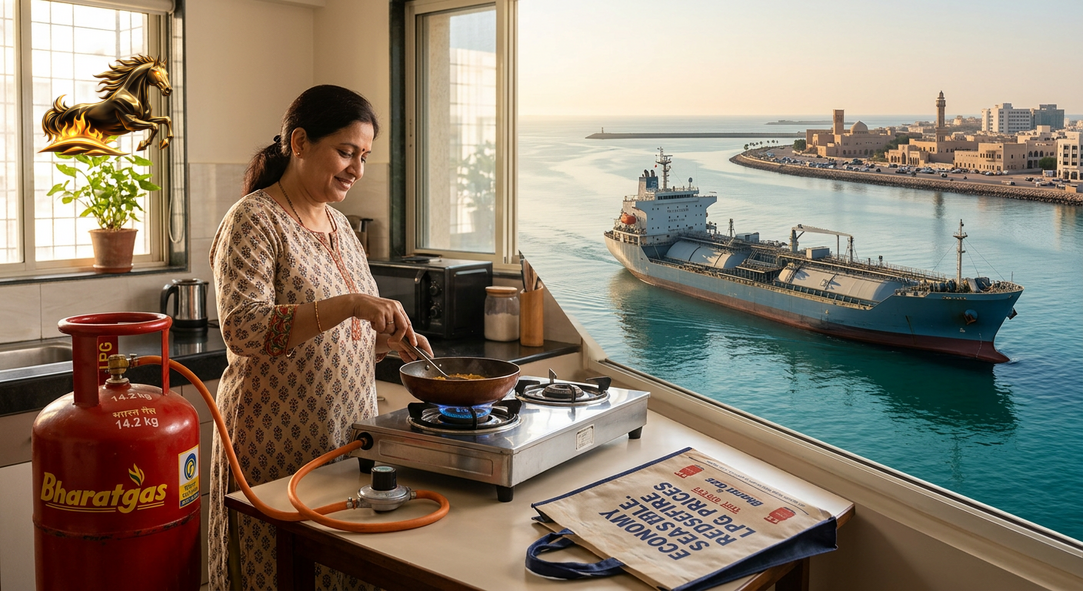
How a Middle East Ceasefire Is Cooling India’s Cooking Gas Prices
A cooking gas cylinder in an Indian kitchen might seem like just another household expense. But behind its price is a complex web of global forces—naval risks in the Gulf, tanker insurance costs, crude oil benchmarks, refinery economics, and diplomatic developments in the Middle East—all thousands of kilometres away.
This intricate connection is exactly what India is witnessing right now.
After months of tight supplies and rising costs, a fragile ceasefire in the Middle East has started to reopen vital shipping lanes. This shift is calming global energy markets and easing pressure on India’s liquefied petroleum gas (LPG) supply. While it doesn’t cause an instant drop in household cylinder prices, it meaningfully cools the upward price pressures and supply shortages challenging millions of consumers.
Commercial users like restaurants, hotels, caterers, and small food businesses are already seeing relief: commercial LPG prices are softening as shipments flow more freely and oil marketing companies regain supply flexibility. For households, the benefits will unfold more gradually—improved availability, less risk of sudden price spikes, and reduced strain on government subsidies.
This story shows how geopolitical events far away directly influence everyday essentials like cooking gas in Indian homes—and highlights the deep link between India’s inflation and global energy security.
Why Are India’s Cooking Gas Prices Cooling?
Several key factors have come together to ease cooking gas price pressures in India:
- The Middle East ceasefire lowered the immediate risk of wider conflict.
- Shipping through the Strait of Hormuz and Gulf routes is becoming more predictable.
- Global crude oil and LPG prices softened as traders priced in lower disruption risks.
- Previously delayed or rerouted LPG shipments are resuming normal flow.
- Indian oil companies rebuilt supply confidence and relaxed emergency restrictions on commercial LPG.
- Reduced input costs improved oil marketing companies’ margins, lessening the need to raise retail prices.
Put simply, the chain looks like this:
Ceasefire → Safer Shipping → Lower Risk Premium → Better LPG Availability → Softer Prices in India
Though this may sound abstract, it quickly affects restaurant menus, catering operations, hotel expenses, food inflation, and household budgets alike.
Why Is India So Sensitive to Middle East Energy Disruptions?
India is a major energy consumer but depends heavily on imports for crude oil and LPG. According to the Petroleum Planning and Analysis Cell (PPAC), India imports most of its crude and a large portion of its LPG supply.
The price of LPG cylinders in India hinges on:
- International LPG benchmark prices
- Crude oil price trends
- Freight and shipping costs
- Currency exchange rates, especially the rupee-dollar rate
- Import terminal availability and refinery output
- Government subsidies and pricing policies
- Margins of public-sector oil companies
When multiple factors shift simultaneously—like during a Middle East conflict—the combined impact can be severe.
Given that Gulf countries supply major portions of the world’s crude oil and LPG, disruptions there ripple through global markets, pushing prices higher worldwide, including in India.
The Strait of Hormuz: A Vital Passage for Energy Flows
At the center of this is the Strait of Hormuz, a narrow sea passage between Iran and Oman connecting the Persian Gulf to the Arabian Sea.
This chokepoint is one of the most critical energy corridors globally, with a large share of oil and liquefied natural gas shipments passing through or near it. The U.S. Energy Information Administration calls it a key oil transit chokepoint.
Even the threat of disruption here sends global energy prices up, as shipping companies incorporate higher freight rates and insurance premiums well before any actual blockade occurs.
Shipping risks—such as attacks, mines, insurance issues, or rerouting—lead to:
- Longer voyage times
- Higher freight charges
- Increased insurance costs
- Shipping delays or avoidance of certain ports
All of these push up the cost of energy deliveries to India and beyond.
How the Crisis Affected India’s LPG Market
1. Unreliable LPG Cargoes
Shipments faced delays and detours. Even without full stoppages, timing uncertainties caused temporary shortages at Indian ports and bottling plants.
2. Commercial Users Felt the Squeeze First
Restaurants, hotels, caterers, and small businesses—who buy commercial LPG tied more directly to market pricing—encountered higher costs and tighter supplies first.
3. Emergency Restrictions on Commercial Supply
To protect household cooking gas needs, emergency rationing or restrictions lowered commercial LPG availability, further squeezing businesses.
4. Price Volatility Increased
Market uncertainty led traders to bid up crude oil and LPG prices, fearing more severe disruptions.
The Turning Point: A Fragile Ceasefire
The ceasefire lowered the immediate risk of continued conflict and shifted market sentiment:
- Tankers resumed predictable shipping routes.
- Freight and insurance costs eased.
- Crude and LPG prices softened as risk premiums declined.
These factors allowed Indian oil companies to restore supply, ease restrictions, and start lowering commercial LPG prices.
How Global Energy Price Changes Impact India’s LPG Market
LPG pricing in India passes through multiple stages before reaching the consumer:
- International LPG benchmark prices move.
- Import costs adjust (including commodity price, freight, insurance, port fees, currency conversion).
- Refining and oil company economics shift.
- Commercial LPG prices respond quickly.
- Household LPG prices follow more slowly, influenced by subsidies and policies.
- Supply availability stabilizes as imports normalize.
Even small improvements in each stage add up across millions of cylinders, reducing overall costs.
Why Commercial Users See Relief Sooner
Commercial LPG prices reflect global market changes much faster than subsidised household cylinders. That’s why restaurants, caterers, and hotels feel easing prices first.
Lower LPG costs help them:
- Avoid passing fuel cost hikes to customers
- Maintain menus and hours
- Stabilize cash flow and staffing
For many small food businesses operating on tight margins, this can mean the difference between surviving or shutting down.
The Connection Between LPG Prices and Food Inflation
Although cooking gas isn’t the largest inflation component, it impacts food prices by:
- Adding fuel costs in restaurant cooking and food processing
- Raising logistics, cold storage, and packaging expenses indirectly
- Prompting menu price increases during fuel cost surges
When geopolitical shocks push fuel and LPG prices higher simultaneously, food inflation challenges intensify for both consumers and policymakers.
Why the Ceasefire Isn’t a Permanent Fix
While the ceasefire provides needed relief, it doesn’t erase the risks:
- The truce could break, sparking renewed tensions.
- The Strait of Hormuz remains a vulnerable chokepoint.
- Global LPG demand may surge again.
- Currency fluctuations can increase import costs despite global price drops.
- Domestic policies affect how international price changes translate to retail prices.
The current cooling of prices offers breathing room, not insulation from future shocks.
What This Means for Indian Households and Businesses
Households
- Better gas availability and fewer supply interruptions.
- Lower risk of sudden price hikes supports monthly budgeting.
- Price benefits depend on government subsidy and pricing policies.
Businesses
- Restaurants, caterers, hotels, and cloud kitchens benefit from lower commercial LPG prices right away.
- Relief helps stabilize foodservice costs and employment.
- Food manufacturers and street vendors gain from decreased fuel expenses.
Lessons on India’s Energy Security
This crisis underscores the urgency for India to:
- Diversify energy import sources
- Expand strategic crude oil and LPG reserves
- Upgrade infrastructure: import terminals, storage, pipelines, bottling plants
- Promote cleaner, affordable cooking fuel alternatives
- Design targeted, fiscally sustainable subsidy policies
Why Global Events Affect India’s Prices Faster Than Ever
Thanks to financialization, real-time tanker tracking, rapid insurance repricing, and instant communication, energy price changes transmit rapidly. Conflicts thousands of kilometres away can impact Indian fuel prices within days—or even hours.
What Policymakers and Consumers Should Watch
- Crude oil and Middle East LPG benchmark prices
- Freight and insurance shipping costs
- Rupee-dollar exchange rate
- LPG import volumes and domestic inventory
- Commercial cylinder price revisions
Consumer awareness and government policy agility are crucial to mitigating supply risks and managing prices.
Conclusion: Geopolitics and Your Kitchen Stove
India’s cooking gas prices are easing because the Middle East ceasefire reduced risk premiums, stabilized shipping routes, and softened global energy prices. Indian oil companies are restoring supplies and cutting commercial LPG costs.
Businesses see relief first; households benefit gradually via better availability and price stability.
This highlights a vital reality:
Geopolitical events in the Middle East deeply affect India’s energy costs—and, in turn, the kitchens and food economy of millions.
Achieving lasting price stability demands ongoing efforts in diversification, infrastructure, subsidy reform, and clean energy transition.
For now, the cooling of LPG price pressures is welcome news for India’s households, businesses, and inflation management.
Further Reading
- BBC coverage on Iran conflict impacts on India’s LPG supplies
- Asia energy market analysis amid Middle East tensions (BBC)
- U.S. Energy Information Administration on the Strait of Hormuz
- Argus Media commentary on gas markets post-ceasefire
- India Petroleum Planning and Analysis Cell data on petroleum consumption and pricing
Understanding how a ceasefire thousands of kilometres away can ease the simmering costs of cooking gas in India reminds us of our world’s interconnected nature—and the powerful ties between geopolitics and everyday life.
