
body {
font-family: -apple-system, BlinkMacSystemFont, “Segoe UI”, Roboto, Oxygen,
Ubuntu, Cantarell, “Open Sans”, “Helvetica Neue”, sans-serif;
color: #222;
line-height: 1.6;
background: #fff;
padding: 20px 15px;
max-width: 900px;
margin: auto;
}
h1 {
color: #0b3d91;
border-bottom: 3px solid #0b3d91;
padding-bottom: 10px;
font-weight: 700;
}
h2 {
margin-top: 2.5em;
color: #0b3d91;
font-weight: 600;
border-bottom: 1px solid #ccc;
padding-bottom: 6px;
}
h3 {
margin-top: 1.8em;
color: #0b3d91;
font-weight: 600;
}
p, li {
font-size: 1rem;
margin-bottom: 1em;
color: #333;
}
ol {
padding-left: 20px;
margin-bottom: 1.5em;
color: #444;
}
strong {
color: #0b3d91;
}
blockquote {
border-left: 4px solid #0b3d91;
padding-left: 15px;
margin: 1.5em 0;
color: #555;
font-style: italic;
background: #f9fafe;
}
hr {
border: none;
border-top: 1px solid #ccc;
margin: 2em 0;
}
a {
color: #0b3d91;
text-decoration: none;
}
a:hover {
text-decoration: underline;
}
ul.resource-list {
padding-left: 20px;
margin-top: 0.5em;
}
ul.resource-list li {
margin-bottom: 0.6em;
}
Crude Oil Prices and the U.S. Dollar: A Comprehensive Analysis for 2026
Introduction
As we navigate through 2026, understanding the intricate relationship between crude oil prices and the U.S. dollar (USD) remains essential in today’s global economic landscape. Crude oil isn’t just a vital energy source; it’s a cornerstone of international trade and financial markets. For investors, policymakers, and businesses alike, grasping how crude oil prices interact with the USD is key to making well-informed decisions. This deep dive unpacks the driving forces behind crude oil pricing, traces the historical role of the USD in oil markets, and explores what the future may hold.
The Basics of Crude Oil Pricing
What Influences Crude Oil Prices?
Several intertwined factors affect crude oil prices:
- Supply and Demand Dynamics
Price shifts stem from disruptions in supply — whether geopolitical tensions, OPEC decisions, or natural events affecting extraction. On the demand side, industrial growth and changing energy consumption patterns play significant roles. - Geopolitical Tensions
Political instability in oil-rich regions or new regulations impacting drilling can cause rapid price swings driven by market speculation and uncertainty. - Economic Indicators
Economic expansions typically boost oil consumption globally, especially in developing markets, while recessions dampen demand and suppress prices. - Technological Progress
Advances like hydraulic fracturing have broadened supply, reshaping traditional market dynamics and pressuring prices. - Currency Exchange Rates
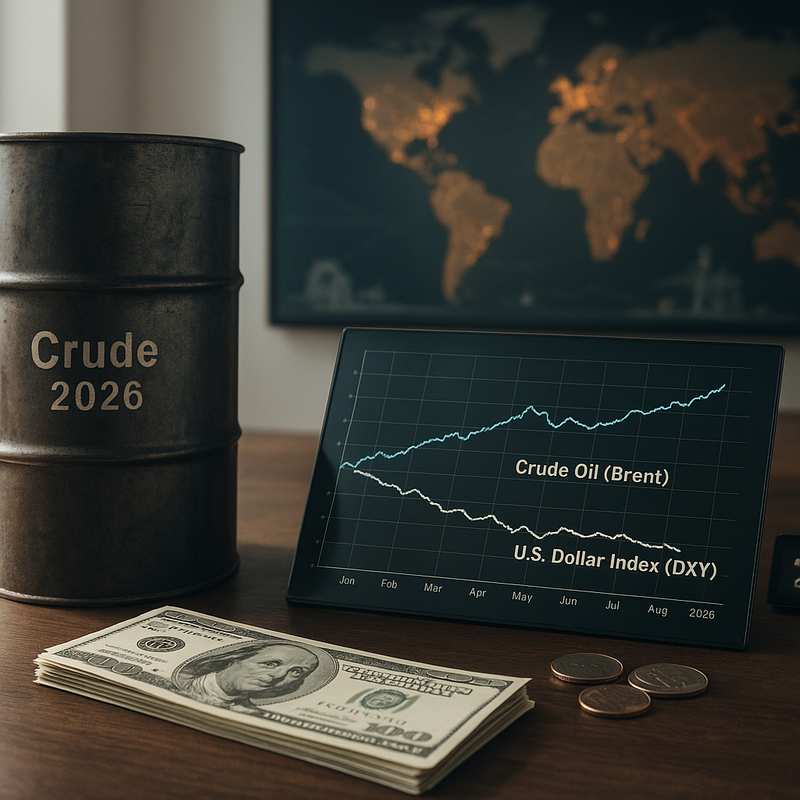
Since crude oil is predominantly priced in USD, fluctuations in the dollar’s value against other currencies directly impact oil prices. A weaker USD generally drives oil prices higher, making oil costlier in other currencies, and vice versa.
Key Crude Oil Benchmarks
Oil prices are primarily tracked through two benchmarks:
- West Texas Intermediate (WTI): Reflects U.S. market prices and often influences North American trends.
- Brent Crude: The global benchmark widely used across Europe and Asia.
As of April 2026, WTI crude stands near 96.57 USD per barrel, shaped by these complex influences.
Insight: Knowing these core drivers offers vital perspective on crude oil’s fluctuating market and helps anticipate future price changes.
How the U.S. Dollar Impacts Crude Oil Prices
Decoding the USD-Oil Link
The U.S. dollar and crude oil prices consistently show an inverse relationship, driven by several key factors:
- Foreign Exchange Dynamics: Since oil is priced in USD, a weaker dollar means higher dollar-denominated oil prices, increasing costs for holders of other currencies. Conversely, a stronger dollar tends to push oil prices down.
- Inflation and Investment Trends: When the dollar weakens, inflation concerns often rise, prompting investors to turn to commodities like oil as hedges, which can push prices upward.
Real-World Example
During the turbulent early 2020s, especially amid the COVID-19 pandemic, USD volatility closely affected oil prices. Investors frequently treated oil as a safe haven or investment, causing prices to swing in response to dollar fluctuations.
Research, including studies from the European Central Bank, confirms this inverse relationship remains statistically significant across most market conditions.
Insight: Understanding currency influences is critical for anyone involved in oil markets or global trade, providing a clearer view of price movements.
Historical Background: The USD and Crude Oil
The Petrodollar Era
A pivotal development occurred in the 1970s with the creation of the petrodollar system—where oil-exporting nations agreed to price their oil exclusively in USD. This cemented the dollar’s status as the world’s dominant reserve currency and shaped decades of global trade.
Key historical milestones include:
- 1973 Oil Crisis: The Arab oil embargo sharply increased prices and tested the petrodollar framework.
- 2008 Financial Crisis: Turbulence in financial markets caused large swings in oil prices and highlighted the interplay of currency and money supply shocks.
Contemporary Context
While talks of shifting oil pricing to euros or emerging digital currencies have intensified, by 2026, the USD remains firmly entrenched. Market depth, liquidity, and reserve currency status continue to uphold the petrodollar’s dominance.
Insight: The legacy of the petrodollar system profoundly influences how oil pricing and the USD interact today.
Looking Ahead: Trends and Forecasts
Future of Crude Oil Prices
Several factors will likely shape oil markets going forward:
- Ongoing Volatility: Geopolitical risks and technological shifts will keep prices fluctuating.
- Energy Transition: While renewables gain ground, oil demand remains significant during this gradual shift.
- Rising Emerging Market Demand: Growing economies in Asia and Africa will exert upward pressure on oil consumption and prices.
The USD’s Future Role in Oil Markets
Despite the rise of alternative currencies, the USD’s role looks secure but faces potential challenges:
- Currency Diversification: Strategic geopolitical moves may gradually encourage using other currencies for oil trade.
- Monetary Policy Impacts: U.S. Federal Reserve decisions on interest rates will continue influencing the dollar’s value, indirectly affecting oil prices.
Insight: Monitoring geopolitical developments and monetary policies is essential to understand the evolving USD-oil pricing dynamic.
Conclusion
The interplay between crude oil prices and the U.S. dollar in 2026 remains a cornerstone of global economics. Understanding the multifaceted factors driving oil prices, alongside the dollar’s pivotal influence, equips stakeholders to navigate this complex landscape effectively.
Key Takeaways
- Supply-demand, geopolitics, economic cycles, technology, and currency fluctuations shape crude oil prices.
- The U.S. dollar stands as the main currency in oil pricing, maintaining a strong inverse relationship with oil prices.
- Future markets will witness volatility, ongoing energy transitions, and continued USD influence with emerging shifts possible.
Recommendations for Stakeholders
To thrive in oil and financial markets, staying updated on market trends, geopolitical events, and monetary policies is essential. Leveraging reliable data platforms and expert analysis can provide the edge needed to anticipate shifts in oil prices and currency movements.
