
Crude Oil Live Price Today: Unlocking the 2026 Market Surge and What Lies Ahead
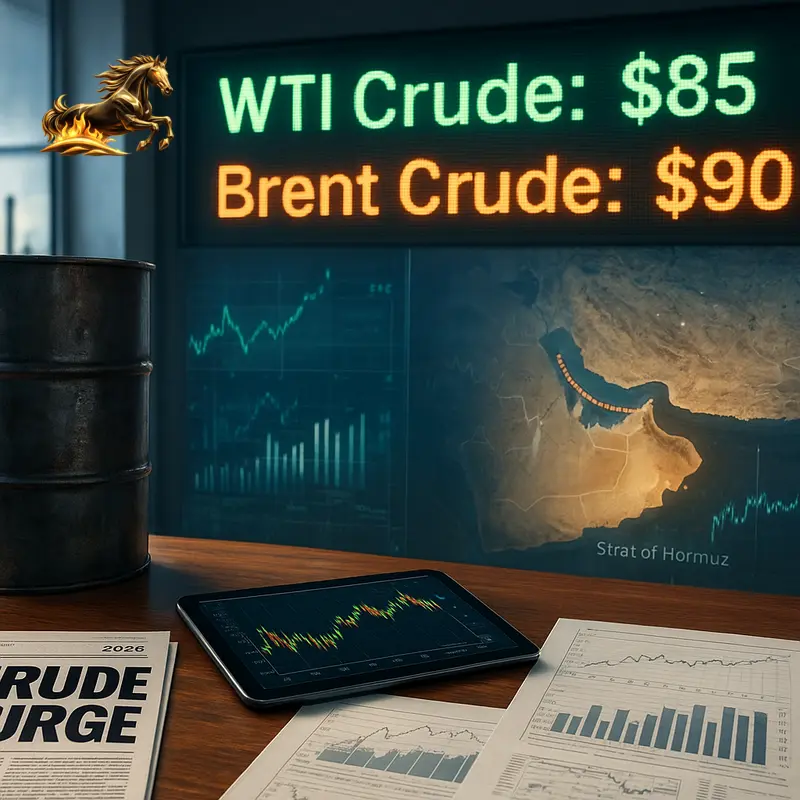
The live crude oil price grabs global attention instantly, impacting everything from investors’ portfolios to the price you pay at the pump. In 2026, the market is riding a significant surge: West Texas Intermediate (WTI) crude is trading near $85.2 to $85.7 per barrel, while Brent crude has climbed decisively above the $90 mark, hovering around $89 to $90 per barrel. This isn’t just a fleeting blip—it reflects escalating geopolitical tensions and a transforming energy landscape that anyone connected to the global economy must understand.
Live Market Snapshot: Geopolitical Shocks in Focus
Today’s market saw WTI crude jump over 2% in a single session, with Brent crude surpassing $90, spotlighting heightened risks tied to the Persian Gulf. The main trigger? Renewed U.S.-Iran tensions, including strikes on Iranian missile sites, have put the Strait of Hormuz—the critical shipping lane carrying nearly 20% of global oil exports—squarely in focus.
Though current supply and demand fundamentals remain intact, traders are pricing a “risk premium” — an added cost in oil prices to hedge against potential future disruptions. Simply put, the heating oil prices today stem more from fears of what might happen, rather than actual supply shortages.
Key Insight: Today’s crude oil price surge is driven primarily by geopolitical risk rather than immediate supply issues, highlighting the market’s sensitivity to developments in crucial energy transit zones.
Decoding Oil Pricing Fundamentals in 2026
To grasp the full picture behind today’s live crude oil price action, it’s crucial to understand the fundamental factors shaping oil pricing in 2026.
Brent vs. WTI: The Benchmark Battle
- Brent Crude: Extracted from the North Sea, Brent serves as the global benchmark for roughly two-thirds of international crude trades. Its premium over WTI reflects transportation costs and its exposure to geopolitically sensitive regions, especially Middle Eastern seaborne supplies.
- West Texas Intermediate (WTI): Primarily U.S.-produced, WTI acts as the main North American benchmark. It generally trades lower due to geographic insulation and the flexibility offered by robust U.S. shale production.
Today’s widening Brent-WTI spread underscores how geopolitical risks around Middle East shipping routes disproportionately impact Brent, in contrast to WTI’s more domestically shielded position.
The Core Forces Shaping Oil Prices
- Supply Dynamics: OPEC+ production decisions and U.S. shale output remain key. Shale’s agility in adjusting quickly contrasts OPEC+’s strategic quotas.
- Demand Drivers: Consumption growth in emerging markets like China and India continues, albeit moderated in places by rising electric vehicle adoption and renewables.
- Geopolitical Risk Premium: Current U.S.-Iran tensions inject uncertainty, prompting traders to factor in a premium for potential supply disruptions.
Summary: Crude oil prices today reflect a mix of fundamental supply-demand realities and psychological premiums tied to geopolitical uncertainties.
2026 Context: A Market at a Crossroads
The crude oil market in 2026 is caught between the legacy of traditional energy and a rapidly evolving future.
Geopolitics and Global Energy Security
The Strait of Hormuz remains a critical chokepoint, where disruptions send shockwaves through global energy markets. Meanwhile:
- The U.S., now a top oil exporter, still values steady global prices.
- Saudi Arabia seeks to diversify its economy while capitalizing on high oil revenues.
- Emerging producers like Guyana and Brazil reshape supply dynamics.
The Green Transition and Tech Innovations
Advances in extraction support steady supply, but accelerating renewable energy and EV uptake are reshaping long-term demand—creating a tension between short-term tight markets and longer-term shifting curves.
Bottom Line: Today’s oil price reflects enduring geopolitical tensions alongside technological and environmental change reshaping global energy.
Strategies for Navigating Crude Oil Price Volatility
For Traders and Investors
- Risk Management: Leverage futures, options, and hedging tools to manage exposure.
- Market Analysis: Track spreads, futures curves, and volumes to tease out fundamental versus speculative moves.
- Portfolio Diversification: Increase exposure to renewable energy and tech sectors for resilience.
For Businesses and Policymakers
- Cost Implications: Rising oil prices elevate overall costs and influence inflation and monetary policies.
- Operational Planning: Adopt efficient procurement and energy management strategies to handle price swings.
- Energy Security: Accelerate renewable development and diversify supply chains to reduce vulnerabilities.
Takeaway: Effective risk management and strategic planning are vital amid volatile oil prices.
Looking Ahead: 2026 Scenarios to Watch
Two clear paths shape the near future:
- Upside Risks: Escalation triggers real supply disruptions via the Strait of Hormuz, pushing Brent beyond $100 per barrel, fueling inflation and economic strains.
- Downside Risks: De-escalation stabilizes markets, with prices retreating as fundamentals and flexible U.S. shale supply regain dominance.
Most likely, volatility will remain elevated—prices will dance to the tune of geopolitical news, calling for constant vigilance.
Pro Tip: Stay flexible and prepared for multiple outcomes.
Conclusion: Beyond the Price Tag
Today’s crude oil live price isn’t just a number—it’s a window into the complex interplay of supply and demand, geopolitics, and technological transformation. The 2026 surge underscores oil’s continued strategic relevance even as the world moves toward a low-carbon future.
Navigating this evolving energy landscape requires up-to-the-minute data, a firm grasp of geopolitical risk, and an eye on the green transition shaping tomorrow’s markets.
Your Next Moves
- Stay Informed: Rely on trusted live price platforms like Investing.com or Bloomberg.
- Think in Scenarios: Assess whether price changes reflect fundamentals, geopolitics, or financial flows.
- Evaluate Risks: Understand your exposure and consider hedging to protect your interests.
- Look Ahead: Keep tabs on renewable energy trends that will influence the energy mix long term.
In today’s complex and volatile crude oil market, informed and proactive engagement is your best strategy to turn uncertainty into opportunity.
FAQ
1. Why is Brent crude currently pricier than WTI?
Brent prices factor in risks to seaborne supplies from geopolitically tense regions like the Middle East, making it more sensitive to regional conflicts compared to the geographically insulated WTI.
2. Is the current price spike solely due to Iran tensions?
While U.S.-Iran tensions are the immediate spark, a relatively tight supply-demand backdrop amplifies the price impact from geopolitical concerns.
3. How long might a geopolitically-driven oil price spike last?
Duration depends on actual disruptions materializing; without supply impacts, the premium may fade quickly, but real shortages could keep prices elevated for months.
4. How do rising oil prices affect consumers?
Increased oil costs raise fuel and transportation expenses, pushing up prices for goods and services and often contributing to inflation.
5. Will oil price volatility ease as renewables expand?
Long-term volatility may decline with reduced oil dependence, but during the energy transition, uncertainty can keep price swings elevated.
