
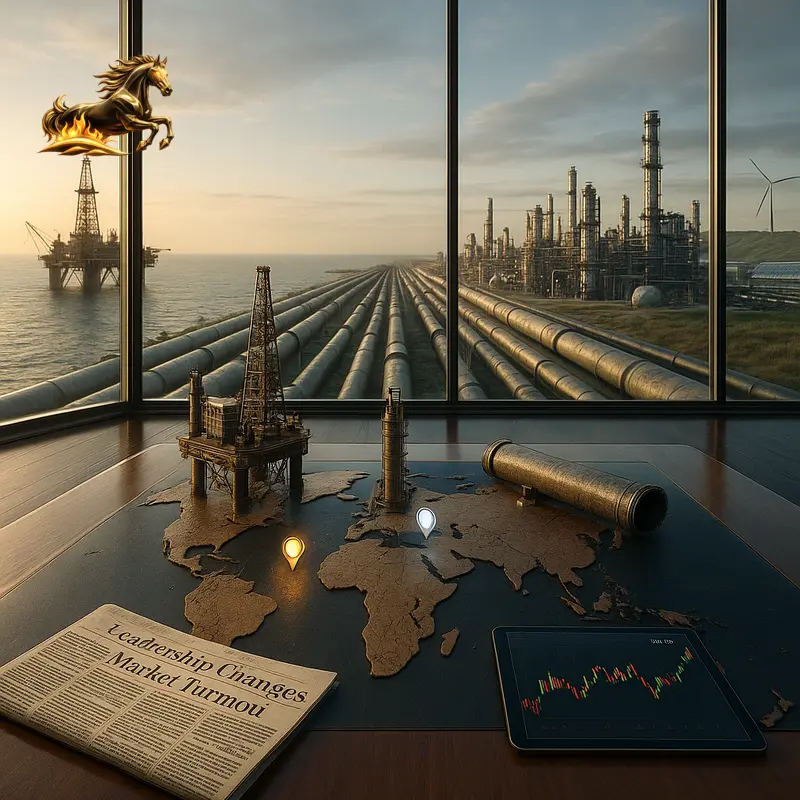
Crude Oil Companies in 2026: Titans Navigating a Tectonic Shift
The crude oil industry in 2026 is no longer a slow-moving giant lumbering through the energy landscape. Instead, it resembles a high-stakes arena defined by rapid geopolitical shifts, leadership changes, and strategic realignments against a backdrop of volatile prices. As crude oil oscillates on the global stage—fueled by supply disruptions and resilient demand—crude oil companies are redefining their role, not merely as resource extractors but as pivotal players in an evolving global energy order. Recent developments, such as Occidental’s leadership transition and Chevron’s push into Iraq, are more than routine updates; they signify deeper transformations shaping the future. This article explores the key players, market dynamics, and emerging challenges and opportunities poised to determine which crude oil companies will thrive amid uncertainty.
The 2026 Global Oil Arena: A Snapshot of Power and Flux
In 2026, the crude oil sector exists at a crossroads, balancing between being an economic lifeline and confronting accelerating energy transitions. Demand remains robust in emerging economies like India and China, yet the industry faces tightening environmental regulations and evolving geopolitics. Prices recently surged past $120 per barrel, triggered by regional supply shocks, creating a paradox: producers enjoy record cash flows, but this also intensifies the push toward alternatives and subjects companies to greater scrutiny.
Strategic responses vary widely across the industry. National Oil Companies (NOCs) like Saudi Aramco wield outsized influence through low production costs and spare capacity, effectively acting as market stabilizers. Leading International Oil Companies (IOCs), including ExxonMobil and Shell, perform complex balancing acts—extracting value from established hydrocarbons while rapidly investing in future-facing energy businesses. Today’s decisions—ranging from trimming portfolios in mature basins to strategic acquisitions in resource-rich regions—are reshaping the competitive landscape of crude oil companies.
Takeaway: In 2026, market volatility demands crude oil companies combine operational agility with long-term strategic vision, managing legacy assets and emerging opportunities alike.
The Undisputed Titans: The World’s Leading Crude Oil Companies
Saudi Aramco: The Strategic Reserve of the World
Producing around 10% of global daily oil output at some of the world’s lowest costs, Saudi Aramco’s role extends well beyond that of a commercial entity. Its ability to adjust production to balance markets makes it a global economic stabilizer. In 2026, Aramco is investing heavily downstream into petrochemicals, aiming to maximize returns on every barrel amid uncertain demand. Its influence ripples through geopolitical diplomacy, with production decisions impacting inflation and economic growth worldwide.
China Petroleum & Chemical Corp (Sinopec): The Asian Energy Powerhouse
Sinopec operates the largest refining capacity globally, powering China’s industrial engine. Its strategy closely aligns with national energy security, securing long-term crude supplies through global investments and contracts spanning Africa to South America. Beyond refining, Sinopec is advancing petrochemical applications—transforming crude oil into essential materials for manufacturing and consumer goods—key to understanding Asian demand and global crude oil trade patterns.
ExxonMobil and Chevron: The American Oil Giants
ExxonMobil and Chevron dominate U.S. production through vast Permian Basin operations and ambitious offshore projects in Guyana. ExxonMobil focuses on vertical integration and large-scale investments across shale and petrochemicals. Meanwhile, Chevron has built a reputation for portfolio agility. Chevron’s 2026 negotiations to acquire a stake in a major Iraqi oilfield highlight a strategic pivot toward resource diversification, balancing Western Hemisphere assets with Middle Eastern reserves—a move fraught with both opportunity and geopolitical risk.
Gazprom and Rosneft: The Eurasian Energy Pillars
Despite sanctions and shifting trade dynamics, Russian energy giants Gazprom and Rosneft maintain significant sway. Rosneft has redirected exports toward Asia, developing pipelines and securing contracts in China and India. Gazprom anchors Russia’s natural gas sector. Their operations showcase resilience and adaptation, affirming Russia’s sustained role as a leading energy exporter amid complex geopolitical tensions.
Summary: The global crude oil landscape remains dominated by a select group of titans, each leveraging unique assets and strategies to navigate geopolitical pressure and market complexity.
Breaking News: Strategic Moves Defining May 2026
Recent developments highlight how top crude oil companies are adapting rapidly to market and geopolitical shifts.
- Leadership Transition at Occidental Petroleum: With CEO Vicki Hollub retiring and COO Richard Jackson stepping in, Occidental stands at a strategic crossroads amid elevated U.S. prices. Hollub’s tenure featured transformative acquisitions and pioneering carbon capture projects. Jackson’s leadership will reveal whether operational efficiency or deeper energy transition commitments will take precedence.
- bp’s UK North Sea Portfolio Review: bp’s plan to divest mature, costly North Sea assets mirrors an industry-wide trend of portfolio refinement—to free capital for growth in lower-carbon ventures and more profitable regions.
- ConocoPhillips and Geopolitical Risks: ConocoPhillips’ decision to exclude Qatari volumes due to regional instability underscores the premium placed on risk management and the value of stable U.S. shale operations as a reliable growth engine.
- Chevron’s Iraqi Negotiations: Chevron’s pursuit of a stake in a major Iraqi field signals a high-reward strategy to secure low-cost reserves despite operational risks, aiming to boost production amid a volatile market.
- Keystone Light Pipeline Approval: The U.S. government’s approval of the Keystone Light pipeline underlines a supportive infrastructure policy environment focused on strengthening North American energy security—despite ongoing environmental debates.
Insight: These initiatives underscore proactive portfolio management, geopolitical navigation, and infrastructure investment as essential strategic levers in 2026.
Major Market Trends Reshaping Crude Oil Companies
The Demand Dichotomy: East vs. West
Global oil demand is splitting geographically. While consumption plateaus or declines in North America and Europe due to electrification and regulation, demand surges in India, Southeast Asia, and parts of Africa. This divergence means near-term “peaking” demand rather than steep declines, pushing crude oil companies to adopt region-specific strategies.
OPEC+ in a Fragmented World
OPEC+ retains a dominant role in supply management, but internal fractures complicate cohesion. Balancing diverse members’ fiscal needs with U.S. production growth keeps markets volatile—requiring crude oil companies to anticipate sharp price swings.
The Unavoidable Green Imperative
Sustainability is now a core business driver. Crude oil companies are investing heavily in:
- Operational Decarbonization: Methane detection, electrifying facilities, and accelerating carbon capture deployment.
- Portfolio Diversification: Expanding into renewables, biofuels, hydrogen, and EV infrastructure.
This dual approach reflects an industry integrating environmental imperatives into its strategic core.
Critical Challenges for Crude Oil Companies
- Geopolitical Instability and Supply Security: Conflicts, sanctions, and nationalist policies threaten production stability—requiring sophisticated risk assessment and diplomatic engagement.
- Capital Conundrum: Discipline vs. Opportunity: Balancing investor demands for returns with the pursuit of growth needs disciplined financial stewardship.
- Technological Disruption and Talent War: Success depends on attracting expertise in AI, data analytics, green tech, while sustaining traditional exploration and engineering capabilities.
Where Opportunity Lies: The Path Forward in 2026
- Harnessing Technology: Digital innovations boost efficiency, safety, and emissions control—enabling cleaner, lower-cost production.
- Strategic M&A and Partnerships: Consolidation, legacy asset divestment, and alliances in carbon capture and renewables are redefining industry footprints.
- Petrochemicals and Diversification: As fuel demand plateaus, petrochemicals remain a resilient growth pillar, anchoring steady revenue streams.
Key Takeaways and Your Next Steps
The crude oil industry in 2026 demands strategic agility to navigate geopolitical volatility, energy transition pressures, and market uncertainties. Leading crude oil companies are reshaping portfolios and priorities to balance profitability with sustainability.
Consider these questions when evaluating crude oil companies:
- How well balanced is their commitment to traditional hydrocarbons versus energy transition investments?
- Do they actively manage geopolitical risks to secure supply?
- How disciplined and opportunistic is their capital allocation toward growth and shareholder value?
Next steps for professionals and investors:
- Analyze Strategic Plans: Review major crude oil companies’ long-term visions and capital deployment.
- Monitor Policy and Infrastructure: Track regulatory shifts and infrastructure projects impacting market dynamics.
- Understand the Value Chain: Gain insight into refining, petrochemicals, and logistics to assess industry health beyond upstream operations.
Mastering these complexities empowers you to navigate risks and capitalize on opportunities in one of the global economy’s most pivotal sectors.
FAQ: Crude Oil Companies in 2026
Q1: With renewable energy growth, are crude oil companies still profitable in 2026?
Yes. Elevated oil prices amid supply constraints and steady demand sustain strong cash flows. Profitability hinges on cost management and strategic capital allocation balancing oil projects and energy transition ventures.
Q2: What is the biggest immediate risk for crude oil companies?
Geopolitical instability remains paramount. Supply disruptions in key regions can sharply impact prices. Longer-term, energy transition challenges loom if companies fail to adapt.
Q3: Why are companies like bp selling North Sea assets?
To streamline portfolios by divesting mature, high-cost fields and reallocating capital toward lower-carbon and higher-growth opportunities.
Q4: How important are petrochemicals for crude oil companies today?
Extremely important. Petrochemicals provide stable, growing demand, offsetting fuel consumption shifts and anchoring revenue resilience.
Q5: What does Chevron’s Iraqi oilfield pursuit reveal about industry strategy?
It highlights geographic and resource diversification’s value—balancing steady production with higher-risk, high-potential opportunities for long-term growth.
In 2026, crude oil companies stand at a decisive inflection point—balancing the demands of volatile markets, evolving energy transitions, and complex geopolitics. Understanding these dynamics is crucial to anticipating the future and identifying where innovation and resilience will create lasting value.
