
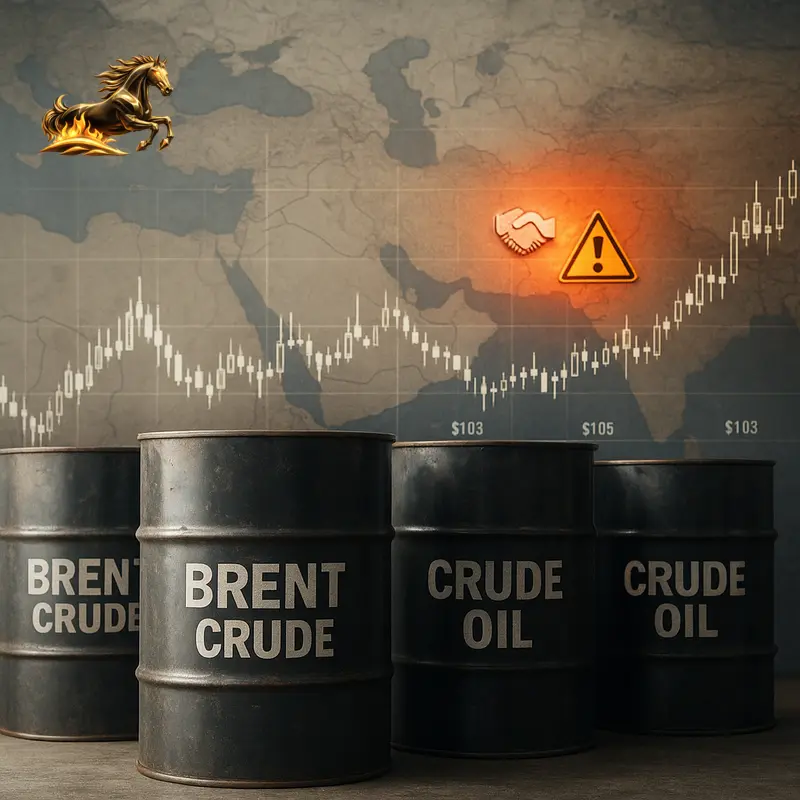
Brent Crude Today: Navigating Price, Geopolitics, and Market Dynamics in 2026
Picture one number that shapes your commute costs, everyday essentials, and global economic stability. That’s the price of Brent crude oil. As of May 2026, Brent is trading steadily above $100 per barrel, fluctuating between $103 and $106. This figure isn’t just about supply and demand; it’s a complex story of geopolitical tensions, supply bottlenecks, and worldwide economic pressure. Understanding why Brent crude sits here now reveals the challenges influencing the world economy today.
What is Brent Crude and Why Does Its Price Matter?
Brent crude is the global benchmark for oil, setting prices for nearly two-thirds of the world’s traded crude oil. Extracted from the North Sea, it acts as a vital reference point for contracts, investments, and economic forecasts.
Price shifts in Brent impact many layers:
- Consumers feel the pinch at the pump and in heating bills.
- Industries like transportation and manufacturing face rising costs.
- Economies struggle with inflation, budgets, and trade imbalances.
- Geopolitics use oil pricing as both leverage and a flashpoint.
Simply put, Brent crude’s pricing is a direct gauge of economic health and geopolitical stability.
The Current Price Snapshot: Persistent Pressure Around $104
On May 23, 2026, Brent crude steadies near $104 per barrel, holding between $103 and $106. Despite a recent 4–6% price dip over the week, prices remain well above $100. What’s driving this?
Two opposing forces:
- Geopolitical risks and supply disruptions keep prices elevated.
- Market optimism about diplomatic breakthroughs tempers price spikes.
This delicate balance reflects both immediate realities and hopeful future developments.
Five Key Factors Shaping Brent’s Current Price
1. Strait of Hormuz Closure: The Critical Supply Bottleneck
- Impact: Limits Middle East crude shipments, forcing reliance on pricier alternatives.
- Market effect: Prevents prices from falling below the $100 floor.
- Long-term risk: Talks of a permanent toll system could raise costs indefinitely.
2. U.S.-Iran Negotiations: Hope and Market Swings
- Volatility driver: Diplomatic announcements cause rapid price shifts.
- Market dynamic: Prices swing between risk pricing and relief expectations.
3. Iran’s Nuclear Policy: Hardening Negotiations
- Implication: Longer stalemates, sustained geopolitical risk.
- Price effect: Support for prices remaining above $100 per barrel.
4. Market Sentiment and Speculation: Trading Between Fear and Hope
- Bullish spikes: Triggered by conflict escalations.
- Bearish corrections: Reflect hopeful diplomacy.
This mood swing creates the noticeable $103–$106 range.
5. Broader Economic and Energy Trends
- Global recovery: Keeps oil demand firm.
- OPEC+ production: Steady but overshadowed by geopolitical risks.
- Energy transition: Gradually limits long-term demand growth.
Understanding these trends frames today’s price in a wider economic context.
What Does $104 per Barrel Mean in Real Life?
Global Economy & Inflation
- Central banks grapple with inflation and interest rates.
- Consumers face tighter budgets due to surging energy costs.
- Oil-exporting countries enjoy revenue gains; importers see deficits worsen.
Industries and Businesses
- Transportation sectors (airlines, shipping, trucking) confront higher fuel expenses.
- Manufacturing and petrochemicals incur rising input costs.
- Energy companies benefit but face region-specific operational risks.
Investors and Markets
- Energy stocks and oil futures experience sharp moves.
- Equity markets shift with oil price uncertainty.
- Oil-exporting nations’ currencies strengthen relative to importers’.
Navigating Brent Crude: What to Know Now
The market balances a clear price floor created by Hormuz’s closure with optimism for diplomatic breakthroughs. Expect ongoing volatility driven by newsflow and geopolitical developments. Meanwhile, a long-term risk premium remains baked into prices due to structural uncertainties, including possible permanent tolls.
Looking Ahead: Possible Brent Price Scenarios
- Fast Diplomatic Solution: Strait reopens quickly, prices drop to $80–$90, easing supply worries but not fully erasing risk.
- Prolonged Deadlock: Strait closure lasts months, Brent hovers between $100 and $110 amid ups and downs.
- Conflict Escalation: Talks fail, broader conflict unfolds, sending prices soaring past $120, threatening global growth.
Conclusion: Brent Crude Price Mirrors Today’s Complex World
Brent crude hovering near $104 per barrel reflects more than market fundamentals—it captures a global tug of war between geopolitics, supply risks, and economic hopes. For businesses, investors, and policymakers, reading these signals is crucial to navigating an energy landscape shaped by immediate disruptions and the prospect of peace.
Frequently Asked Questions (FAQ)
Q1: Why is the Strait of Hormuz so crucial for oil prices?
It channels about 20% of global oil supply; its closure tightens supply and pushes prices up.
Q2: Why do prices fall 4–6% in a week despite maintaining high levels?
Price drops reflect market optimism on diplomacy, while sustained highs price ongoing supply risks.
Q3: How does Iran’s enriched uranium policy affect oil pricing?
It complicates talks, prolongs uncertainty, and keeps geopolitical risk premiums high.
Q4: What is a risk premium in oil pricing?
An extra cost included to cover uncertainties like supply disruptions beyond normal market factors.
Q5: What should investors and businesses do now?
Expect volatility, diversify, and closely watch diplomatic developments—some elevated prices risks may persist.
Understanding Brent crude’s price today means grasping a pivotal global moment. This knowledge equips you to make savvy decisions amid an unpredictable energy market in 2026.
