
WTI Crude Price Today: Navigating a Volatile Market Fueled by Geopolitics and Tight Supply
June 2026
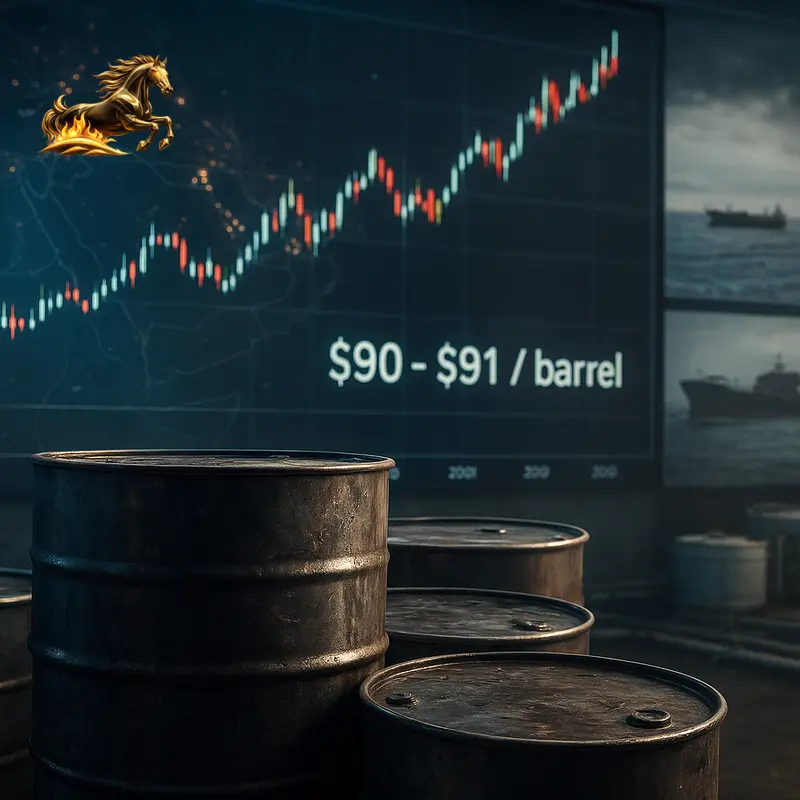
Tracking the West Texas Intermediate (WTI) crude oil price lately means witnessing sharp swings. After a steep drop earlier this week, WTI crude bounced back to trade around $90–$91 per barrel. This rebound clearly highlights how geopolitical tensions are driving the market, overshadowing worries about a large-scale strategic reserve release. Today’s volatility isn’t just routine—it’s a complex dance of conflict, limited supply, and strategic policies in motion. For businesses, investors, and consumers alike, understanding these forces is crucial for navigating the 2026 energy landscape.
As of this morning, front-month WTI contracts stand near $91.32, with Bloomberg confirming similar figures close to $90.5 for July futures. Sitting at the upper edge of recent trading ranges, this rebound follows a sharp fall. The wild price swings show how oil markets balance physical supply interruptions, speculation, and geopolitical risks. Let’s dive deeper into the key factors shaping today’s WTI crude oil prices and what the future may hold.
What Is WTI Crude Oil and Why Does Its Price Matter?
West Texas Intermediate (WTI) is a light, sweet crude primarily used as a benchmark for U.S.-produced oil. Its low sulfur content and density make refining into gasoline and other products easier and cheaper. While Brent Crude dominates global benchmarks, WTI is critical for reflecting North American market conditions and pricing U.S. production.
The WTI crude price is more than just an energy cost indicator — it’s an economic barometer affecting manufacturing, transportation, inflation, and financial markets. Even amid accelerating renewable energy transitions, global oil demand remains strong in 2026. So, fluctuations in WTI prices ripple through economies and industries worldwide, signaling broader geopolitical and economic stability.
Current WTI Price Volatility: What’s Driving It?
The WTI market in mid-2026 is highly reactive, pricing in notable risk premia linked to ongoing global events:
- Trading Range: Between $90 and $92 per barrel.
- Weekly Movement: Following a sharp pullback, WTI and Brent are now poised for their first weekly gain in three weeks, suggesting initial stabilization.
- Recent Swings: Prices plunged 12% intraday on news of a massive strategic reserve release, then bounced back 6% as supply concerns resurfaced.
- Technical Thresholds: Analysts watch $89 as crucial support and point to $100 per barrel as a psychological resistance level.
These fluctuations reflect mixed signals: emergency crude supply on one side, escalating Middle East conflict and threats to physical supply on the other.
Geopolitical Risks: The Middle East Conflict Driving Prices Up
The prime driver behind today’s elevated WTI prices is the heightened geopolitical risk premium stemming from the escalating Iran-Israel conflict.
Iran-Israel Tensions and Regional Fallout
The risk premium centers on:
- Direct Military Actions: Israeli strikes targeting sites in Iran and Lebanon have intensified beyond prior proxy confrontations.
- Iran’s Retaliatory Stance: Tehran signals readiness for prolonged conflict, including potential attacks on U.S. assets in the region.
- Ceasefire Challenges: Hezbollah’s rejection of ceasefire offers and diplomatic stalemates suggest the conflict will persist, adding uncertainty.
The Strait of Hormuz: A Critical Bottleneck Threatened
A major wild card is the Strait of Hormuz, an essential passage for 20–30% of global seaborne oil shipments. Key points include:
- Current conflict forced exporters to cut over 6 million barrels per day.
- Any disruption or closure would cause a severe supply shock.
- Threats alone prompt price surges; a prolonged blockade could push WTI well above $120 per barrel.
This looming supply bottleneck keeps risk premiums elevated and fuels price volatility.
Strategic Petroleum Reserve Releases: A Moderating Force
To temper surging prices, the International Energy Agency (IEA) is pushing for the largest coordinated strategic petroleum reserve release ever—surpassing 2022’s 182 million barrels. This proposal triggered the recent sharp 12% price drop but lingering doubts about scale and timing enabled partial recovery as supply risks stayed front and center.
This dynamic highlights the tug-of-war between geopolitical-driven price spikes and policy moves aimed at cushioning the market.
OPEC+ Strategy Amid Volatile Markets
OPEC+ continues a cautious response by incrementally increasing production for the fourth consecutive month despite turmoil:
- Keeping prices near $90 discourages rapid U.S. shale expansion.
- Demonstrating restraint avoids exploiting crisis conditions.
- Testing if demand holds firm against persistent geopolitical risks.
Market watchers eagerly await the upcoming OPEC report for cues on supply-demand balance in a disrupted landscape.
Underlying Fundamentals Supporting Today’s Prices
Beyond headlines, longer-term fundamentals influence WTI pricing:
- Global Economy: Developed economies wrestle with energy transitions and debt, while emerging markets grow oil consumption.
- Oil Demand: Resilient demand especially in aviation and petrochemicals, bolstered by Asia’s economic growth.
- Currency Impact: A strong U.S. dollar affects oil affordability globally.
- Energy Transition: Rising electric vehicle adoption and renewable investments gradually reduce fossil fuel dominance.
- Technological Advances: AI-driven shale optimization enhances efficiency and cost-effectiveness.
Together, these shape both supply capabilities and medium-term demand trends.
What This Means for Market Participants
- Volatility: Sharp price swings call for agile risk management; unhedged positions face uncertainty.
- Futures Curve: Widening spreads complicate storage and hedging strategies.
- Energy Stocks: Higher, sustained crude prices boost cash flow and returns, though volatility persists.
- Refiners: Cost pressures balanced by strong product demand and crude slate shifts.
WTI Price Outlook for the Rest of 2026
Key influences on WTI pricing ahead include:
- Potential to break the $100 per barrel barrier if Middle East tensions escalate or supply disruptions deepen.
- Strategic reserves acting as a price floor, preventing dips below the mid-$80s.
- OPEC+ production choices tilting the market toward balance or further tightness.
- Emerging market demand and stockpiling efforts shaping global inventory levels.
Practical Advice for Stakeholders
Businesses and Investors:
- Hedge proactively to manage risk amid volatile pricing.
- Diversify energy portfolios and boost efficiency.
- Monitor geopolitical developments closely to anticipate shocks.
Policymakers:
- Employ strategic reserves carefully to avoid distorting market signals.
- Focus on energy security through diversified supplies and renewables.
Consumers:
- Understand how crude prices affect fuel and utilities.
- Budget for fluctuations and consider energy-saving measures.
Conclusion: A Crucial Moment in the Energy Market
Today’s WTI crude price, hovering in the low $90s, mirrors a world balancing geopolitical turmoil, economic uncertainty, and the energy transition. This tug-of-war between conflict-driven premiums and policy moderation means the path forward depends on diplomatic progress, government action, and producer strategies. Staying informed is vital not just for investors and businesses, but for anyone affected by the global economy and energy costs. Volatility reflects deeper realities — and those who listen closely will be best positioned for what lies ahead.
Frequently Asked Questions (FAQ)
Q1: What is the current WTI crude price?
A1: As of June 2026, WTI crude trades around $90 to $91 per barrel, showing recovery after recent declines amid ongoing geopolitical risks.
Q2: Why did WTI prices fall sharply recently?
A2: Prices dropped about 12% in one session following announcements of a historic coordinated strategic petroleum reserve release designed to boost supply.
Q3: What’s driving today’s high and volatile WTI prices?
A3: The main factor is a heightened geopolitical risk premium from the Iran-Israel conflict and threats to oil shipments passing through the Strait of Hormuz.
Q4: How is OPEC+ responding to this volatility?
A4: OPEC+ is cautiously increasing production quotas for the fourth month in a bid to stabilize the market and limit excessive price surges.
Q5: Could WTI prices surpass $100 per barrel this year?
A5: Yes. If the Middle East conflict deepens and disrupts supply at the Strait of Hormuz, WTI prices could break and hold above the $100 level.
This detailed update clarifies a highly dynamic WTI crude oil market in 2026—shaped by geopolitical tension, strategic reserves, and shifting fundamentals. Staying informed is your best strategy for navigating this critical energy terrain.
