
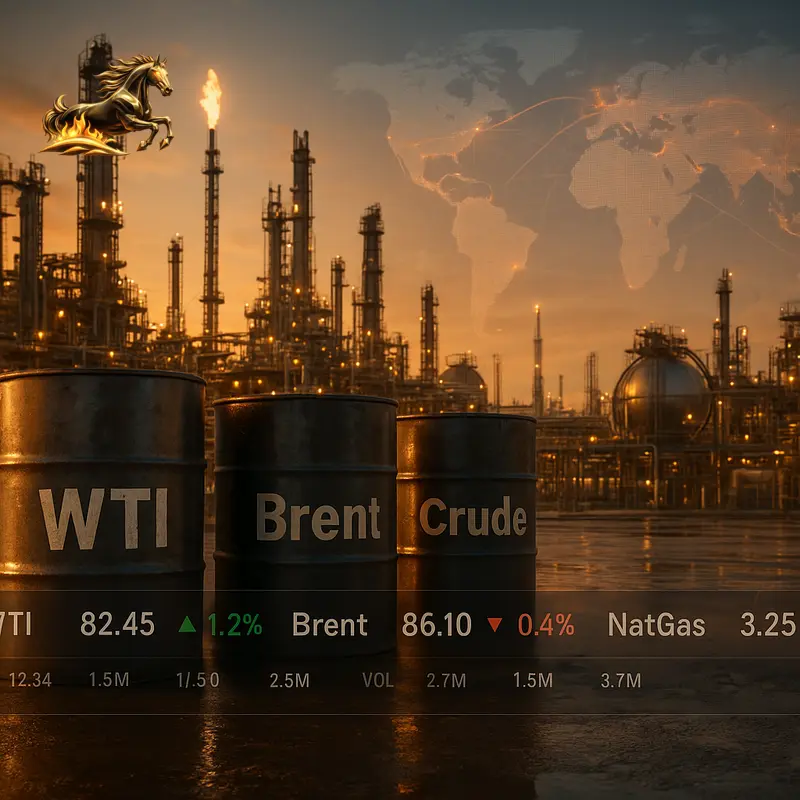
WTI vs. Brent Crude in 2026: Navigating the Global Oil Market Benchmarks
Oil prices are more than just numbers on a screen—they act as a pulse checking the global economy’s vitality and direction. In 2026, understanding the two main oil benchmarks—West Texas Intermediate (WTI) and Brent Crude—is crucial for anyone involved in energy markets, policymaking, or investments. Beyond headline-grabbing geopolitical events and the shift toward cleaner energy, the ongoing interplay between WTI and Brent underpins billions in trade, shapes national energy strategies, and impacts everyday prices like gasoline. Grasping what sets these benchmarks apart offers a clear lens into global supply chains, risk management, and strategic planning in today’s complex energy landscape.
This article breaks down the core differences between WTI and Brent, examines recent shifts influencing their price relationship, and explores what lies ahead for stakeholders in 2026.
What Are WTI and Brent? The Fundamentals
Before diving into market dynamics, it’s important to know that WTI and Brent aren’t just crude oils—they’re key benchmarks that standardize pricing amid a fragmented global market.
Crude Oil Benchmarks Explained
Think of a benchmark as a reference crude oil grade used to set prices. Since crude quality, origin, and transportation costs vary widely, benchmarks create transparency and simplify contracts. Other crude oils are priced relative to these standards.
- West Texas Intermediate (WTI): Sourced mainly from Texas, Louisiana, and North Dakota, WTI is delivered to Cushing, Oklahoma’s major hub. Known for being light and low in sulfur, it’s favored by U.S. refiners for producing gasoline and other valuable products.
- Brent Crude: This global benchmark blends oils extracted mainly from the North Sea off the UK and Norway. Slightly higher in sulfur but still light and sweet, Brent’s offshore production and direct tanker shipments tie it closely to international markets.
Key Differences in Quality and Logistics
Location and transport heavily shape how WTI and Brent trade.
- Delivery & Access: WTI is landlocked, reliant on pipelines to Cushing, which can cause bottlenecks and local price dips. In contrast, Brent flows offshore directly onto tankers—making it more responsive to global demand.
- Quality: Both are premium grades, with WTI being marginally lighter and sweeter, sometimes justifying a higher price. However, logistical constraints can offset this edge.
- Market Focus: WTI mainly reflects North American supply and demand, while Brent serves as the global barometer sensitive to events in Europe, the Middle East, Africa, and Asia.
In short: WTI and Brent are complementary yet distinct pricing anchors shaped by geography, quality, and infrastructure.
The Price Spread: What WTI vs. Brent Tells Us
The price difference between WTI and Brent—known as the spread—offers valuable insights about regional supply, infrastructure, and geopolitical risks.
How the Spread Has Evolved
Traditionally, WTI traded at a discount to Brent because landlocked transport added costs. But this spread shifts due to various factors:
- U.S. Shale Boom: Surging domestic shale production flooded Cushing, causing pipeline bottlenecks that widened WTI’s discount to Brent by over $20 per barrel at times.
- Infrastructure Gains: New pipelines and Gulf Coast export terminals helped narrow that gap, occasionally pushing WTI prices above Brent when U.S. demand surged or global Middle East supplies were disrupted.
- COVID-19 Effects: The 2020 demand crash and full storage at Cushing led to WTI futures briefly turning negative—an unprecedented plunge not mirrored by Brent, thanks to its diverse global outlets.
What the Spread Signals in 2026
- A narrowing spread or WTI premium signals strong U.S. exports asserting influence in the global market.
- A widening discount points to localized oversupply or pipeline constraints.
- Rising Brent premiums often hint at heightened geopolitical tensions, especially in the Middle East.
Bottom line: The WTI-Brent spread is a real-time barometer of market health and geopolitical risks.
Market Forces Shaping 2026
Several pivotal events and trends are shaping how WTI and Brent interact this year:
Middle East Tensions & Strait of Hormuz Risks
Conflicts between the U.S. and Iran spotlight the Strait of Hormuz, a vital oil chokepoint.
- Brent Takes the Hit: Brent prices factor in direct exposure to any threat here, often carrying a risk premium.
- WTI Reacts More Indirectly: While less directly exposed, WTI prices swing on global risk sentiment, spiking or dipping accordingly.
- Geopolitics in Action: Sudden shifts—like canceled strikes—show how politics swiftly drive both benchmarks but with differing sensitivity.
U.S. Waivers on Russian Crude Imports
Ongoing waivers for Russian crude since 2022 have reshaped flows, notably through discounted Urals imports into India.
- This affects Brent by balancing demand and putting downward pressure on global prices.
- It also introduces more pricing complexity, fragmenting traditional benchmarks.
Strategic Reserves: India and UAE Expansion
To improve energy security, India and the UAE are expanding crude storage significantly.
- These strategic reserves help smooth out supply shocks and stabilize Brent-linked prices.
- Such buffers create a more resilient regional energy landscape.
In essence: Geopolitical risks, policy shifts, and infrastructure investments continue to redefine the WTI-Brent relationship.
The Green Shift and Tech Impact
- ESG Push: Reduced capital for new oil projects could tighten future supplies for both benchmarks.
- Tech Gains: Advanced drilling and carbon capture improve efficiency, favoring light, sweet crudes like WTI and Brent.
These factors will shape which oils remain competitive in the energy transition era.
Geopolitical Risks: Different by Benchmark
- Brent reflects global geopolitical hotspots—North Sea, Middle East, Africa—making it more volatile during international crises.
- WTI faces mostly North American-specific risks like regulations and infrastructure but is increasingly influenced by global price trends.
Knowing these distinctions enhances market forecasting.
Investment Strategies for 2026
- Choose hedges aligned with physical market exposure, whether WTI or Brent.
- Trade spreads by anticipating supply-demand and geopolitical disruptions.
- Diversify portfolios with different benchmark-linked assets and renewables to mitigate transition risks.
- Monitor key signals like Cushing inventories, Strait of Hormuz tanker flows, U.S. export volumes, and global strategic reserves.
An informed, flexible strategy rooted in benchmark nuances maximizes opportunities.
Looking Ahead: Will WTI and Brent Keep Their Crown?
- Asian Indices: Shanghai crude futures and regional markers like Dubai and Oman are growing in prominence.
- U.S. Export Benchmarks: Gulf Coast ports could launch new pricing standards reflecting evolving trade patterns.
While WTI and Brent dominate now, the landscape may become more diverse.
Conclusion: Mastering the Dual Benchmarks of 2026
WTI and Brent remain two distinct yet intertwined pillars of the global oil market—each shaped by geography, logistics, politics, and innovation. Their ongoing interaction reflects broader energy sector shifts and geopolitical realities.
Key Points to Remember:
- WTI is the trusted American benchmark, shaped by domestic factors.
- Brent is the global gauge, sensitive to geopolitical risks.
- Geopolitics and policies continue to tweak supply flows and pricing.
- Energy transition and tech advancements will influence long-term prospects.
- Adapting strategies to benchmark-specific signals is vital for success.
Understanding these benchmarks unlocks the global oil market’s pulse in 2026 and beyond.
FAQ
Q: Why does Brent usually cost more than WTI?
Brent benefits from offshore production and direct tanker exports, reducing transport costs compared to landlocked WTI, which depends on pipelines. This often keeps Brent priced higher, though exceptions exist.
Q: Which benchmark is more sensitive to Middle East conflicts?
Brent is more sensitive as it reflects oil linked closely to Middle Eastern exports. Disruptions near the Strait of Hormuz add risk premiums to Brent, while WTI reacts more indirectly.
Q: How has the U.S. shale boom changed the WTI-Brent dynamic?
The shale surge increased U.S. supply, initially widening WTI’s discount due to bottlenecks. Infrastructure improvements and export growth have since tightened or even inverted the spread.
Q: What does an increasing Brent premium usually mean?
It signals higher geopolitical risk affecting Brent’s supply regions or U.S. oversupply depressing WTI prices relative to Brent.
Q: Could other benchmarks challenge WTI and Brent?
Yes. Growing Asian benchmarks like Shanghai futures and Middle Eastern markers may gain more influence over time. New U.S. export benchmarks could also arise as market structures evolve.
Keeping pace with the evolving WTI and Brent benchmarks is key to understanding and navigating the global oil market’s challenges and opportunities in 2026.
