
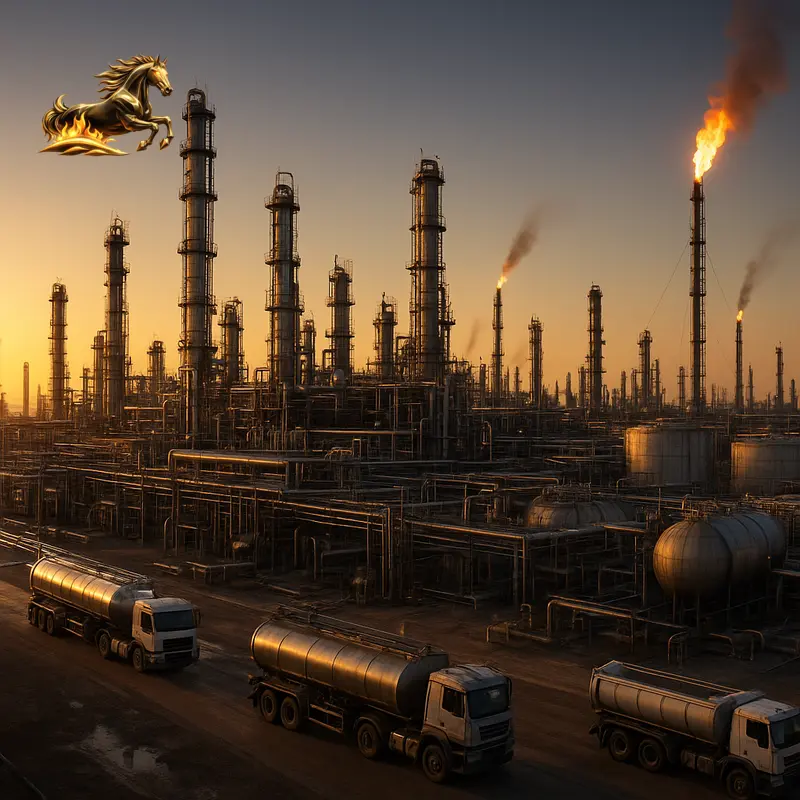
The Price of Oil in 2026: A Deep Dive into Today’s Market Dynamics and Future Trajectory
Understanding why a barrel of oil trades above $105 in 2026 goes far beyond watching a number tick up on a screen. This price captures a complex mix of geopolitical tensions, shifting economic forces, and an ongoing energy transition. It signals global risk levels, inflation pressures, and investment flows. In this analysis, we break down what’s driving today’s oil price surge, explore its impact on the broader economy, and look ahead at what consumers, investors, and policymakers can expect.
Today’s Price Snapshot: Oil Markets Surge
By mid-2026, West Texas Intermediate (WTI) crude oil hovers around $105–106 per barrel — an 11% jump in just a month and a staggering 70% increase compared to last year. Brent crude mirrors this rise, though the WTI-Brent price gap is widening due to regional supply-demand differences.
What was once seen as a fleeting spike above $100 is now viewed as a new baseline. Experts forecast WTI prices reaching around $124.23 per barrel over the next year, signaling persistent demand and sustained supply pressures.
Key takeaway: The elevated oil price marks a possible structural reset, not just a passing fluctuation, in global oil valuation.
Why Oil Prices Are Soaring in 2026: The Main Drivers
Several factors combine to push oil prices to current highs. Let’s unpack them.
1. Geopolitical Tensions & Strait of Hormuz Risk
The Strait of Hormuz remains a fragile chokepoint for global oil flow. Recent military escalations and threats have heightened fears of supply disruptions. Markets price in these dangers as a “risk premium,” triggering sharp daily and monthly oil price jumps.
Insight: Geopolitical risks at critical transit points have an immediate, powerful effect by increasing the market’s risk assessment.
2. A New Price Floor Emerges
Historically, oil prices above $100 were crisis-driven spikes. Now, the market treats $100+ as a lasting floor. Tight supply fundamentals and evolving market psychology support this shift.
Producers, consumers, and investors are adapting—changing hedging, investment, and fiscal strategies to a world where high oil prices may persist.
Insight: Markets and industries are settling into a “new normal” of sustained oil price elevation.
3. WTI-Brent Price Spread Highlights Regional Disparities
The growing gap between U.S. WTI and global Brent prices reflects regional supply-demand imbalances, infrastructure bottlenecks, and Brent’s higher sensitivity to Middle East risks. This influences global trade flows, refinery margins, and trader strategies.
Insight: Local infrastructure and geopolitical exposure create uneven pricing in global oil markets.
4. Investor Behavior & ETFs Amplify Volatility
Oil-focused Exchange-Traded Funds (ETFs) like USO, UCO, and SCO attract both retail and institutional investors, intensifying price swings through feedback loops beyond physical supply-demand patterns.
Insight: Financial markets now amplify oil price volatility, driven by sentiment and speculative flows.
5. Oil Prices Fuel Inflation
A 70% year-over-year oil price surge directly pushes up gasoline, diesel, and energy costs worldwide. This feeds into broader inflation, affecting transportation, manufacturing, and household expenses.
Central banks face tougher decisions balancing growth and inflation amid these energy shocks.
Insight: Rising oil costs are a key driver of global inflationary pressure.
Oil in 2026: Embedded in a Bigger Energy Shift
Price dynamics today tie into a broader energy supply and demand transformation.
Technology & Supply Resilience
Technological advances, like hydraulic fracturing, have expanded North American supply, providing some cushion. Still, technology can’t fully offset geopolitical risks or infrastructure limits.
Green Transition & Policy Changes
Despite near-term demand strength, the push for renewables and net-zero targets gradually dampens long-term oil use. The tension between short-term price spikes and long-term decarbonization goals shapes the market.
Post-Pandemic Demand Shifts
Emerging markets’ rapid industrial growth keeps demand strong, while advanced economies see uneven consumption. This complicates forecasts and price stability.
Insight: Today’s supply-demand balance reflects immediate geopolitics alongside long-term sustainability trends.
Who Feels the Impact? Economic Implications
Consumers & Households
Higher fuel prices mean costlier commutes, heating, and goods transport — squeezing household budgets worldwide. Inflation driven, in part, by energy costs dampens purchasing power.
National Economies
Oil exporters gain from stronger revenue, supporting budgets and development. Importers grapple with trade deficits, inflation, and tough policy decisions.
Businesses & Industries
Rising oil prices increase operating costs across transport, manufacturing, and logistics. This pushes greater investment in efficiency and renewable alternatives, quickening the energy transition.
Regional Perspectives
United States
The U.S., a major producer and consumer, benefits from high WTI prices but faces rising domestic costs. Energy independence policies and strategic reserves influence global stability.
Middle East
Dominant in production and transit control, the region gains from high prices but also manages volatility and diversification pressures.
Emerging Markets
Fast-growing economies like India and China maintain strong oil demand, investing strategically to secure supplies and shape future global patterns.
What’s Next? Forecasting Oil Prices
Near-term outlook points to continued price strength and volatility, with $100+ becoming the norm. Over the medium to long term, balancing supply risks and green transition goals will keep prices fluctuating, making stability unlikely.
Investors, businesses, and policymakers should prepare for ongoing shocks and market shifts.
Practical Advice for Stakeholders
- Investors: Diversify energy portfolios, including oil, infrastructure, and renewables; understand ETF impacts.
- Businesses: Hedge fuel costs effectively; invest in energy efficiency and renewables for competitive edge.
- Policymakers: Balance short-term relief with long-term transition support; consider inflation dynamics carefully.
- Consumers: Boost energy efficiency habits; stay informed to manage financial impact.
Conclusion: More Than a Number
The $105 per barrel price in 2026 tells a complex story of geopolitical strain, economic adjustment, and the energy transition’s challenges. It shapes risk perceptions, supply-demand fundamentals, investor sentiment, and policy debates.
Grasping this figure’s context is crucial for smart business, investment, and governance decisions. The era of stable, cheap oil has shifted to one defined by volatility and transformation, demanding constant global economic and political vigilance.
Key Takeaways
- Geopolitical risks, especially in the Strait of Hormuz, heavily push oil prices up.
- The market now treats $100+ oil as a potential new long-term floor.
- The 70% annual price increase significantly stokes global inflation.
- Investor-driven ETFs magnify oil price volatility.
- The future balances supply uncertainties with the green energy transition.
FAQ
Q1: Why is oil so expensive in 2026?
Heightened geopolitical risks, strong post-pandemic demand, and a shift in market psychology treating $100+ oil as normal cause the high prices.
Q2: What’s the difference between WTI and Brent prices?
WTI is the U.S. benchmark; Brent is global. Price differences reflect regional supply constraints, infrastructure bottlenecks, and geopolitical risk exposure.
Q3: How do high oil prices affect consumers?
They raise fuel and energy costs, pushing up transportation and goods prices, which adds to inflation and squeezes household budgets.
Q4: Will oil prices keep rising?
Many analysts predict continued strength, possibly reaching $124 per barrel in the next year due to ongoing supply pressures and geopolitical uncertainty.
Q5: How can oil-importing countries protect themselves?
Through long-term contracts, renewable investments, strategic reserve management, and policies that cushion consumers—each with pros and cons.
This detailed overview empowers you to navigate the evolving oil market in 2026 with confidence, helping you make informed decisions amid global economic change.
