
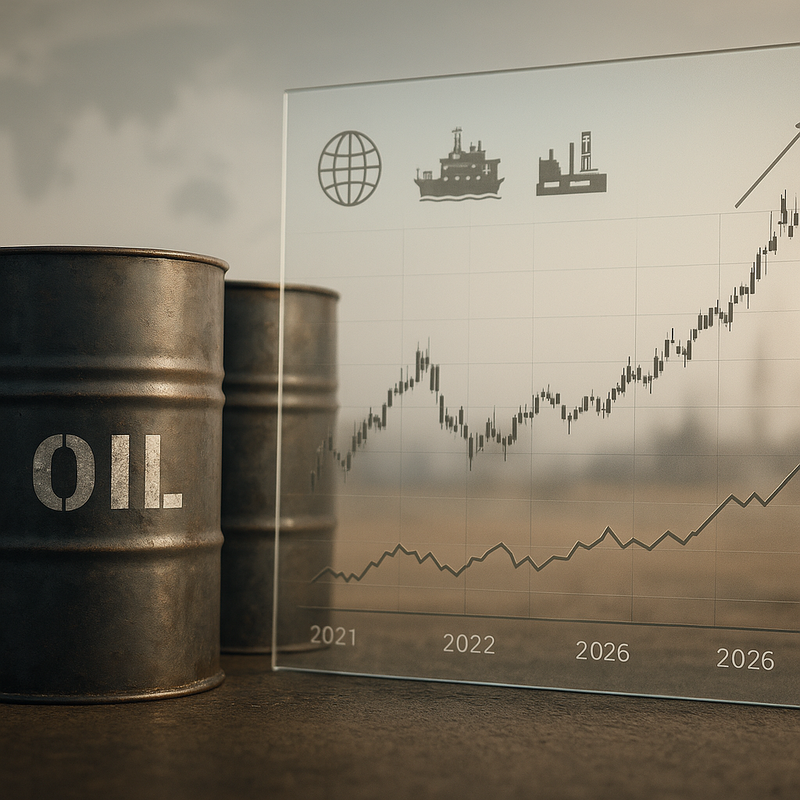
The Crude Oil Price Rate: Understanding Trends and Predictions for 2026
Crude oil prices wield enormous influence over the global economy, touching everything from manufacturing expenses to the cost you pay at the gas pump. As 2026 approaches, understanding the trends driving crude oil prices is more important than ever for businesses, governments, and consumers. This guide breaks down the key factors—historical trends, supply and demand dynamics, geopolitical events, and technological innovations—that shape crude oil pricing. Armed with this insight, you’ll be better prepared to anticipate how the market might evolve in the coming years.
Introduction: Why Crude Oil Prices Matter
Often called “black gold,” crude oil is the backbone of modern economies, powering transportation, industry, and electricity generation. Fluctuations in oil prices ripple across sectors, influencing inflation, trade balances, and consumer spending. Recent years have seen extreme price swings, highlighting the need to understand the complex forces at work.
Looking to 2026, several critical factors will impact crude oil prices:
- Inflationary Pressures from geopolitical tensions and economic uncertainties continue to push prices upward globally.
- Supply Chain Adjustments reflecting the aftershocks of the COVID-19 pandemic and OPEC+ production strategies contribute to ongoing volatility.
- Environmental Policy Shifts emphasize climate action and renewables, gradually reshaping fossil fuel demand.
By keeping these in mind, stakeholders can better navigate potential future price movements.
Historical Context of Crude Oil Prices
Understanding Price History
Historical pricing sheds light on future possibilities:
- Pre-2000: Prices mostly hovered between $20 and $30 per barrel.
- 2008 Financial Crisis: Brent crude surged above $140 per barrel amid soaring demand and tight supply.
- Post-Crisis Years: An oversupply combined with slowing demand, notably from China, brought prices down near $30 per barrel by 2016.
- 2020 Pandemic Shock: COVID-19 abruptly collapsed demand, even pushing oil prices into negative territory—a first in history.
Oil Market Dynamics in the 2020s
In the post-pandemic era, oil prices continue to be highly volatile due to:
- OPEC+ Coordination aimed at stabilizing supply-demand balance.
- Economic Recovery boosting demand as global activities resume.
- Geopolitical Unrest involving Russia and the Middle East intermittently disrupting supply.
These dynamics highlight the ongoing complexity influencing crude oil price movements.
The Supply and Demand Dynamics
How Supply Influences Prices
Supply-side factors play a pivotal role:
- OPEC+ Production Decisions directly impact availability and pricing.
- U.S. Shale Oil Output shaped by technological advances and policies, contributing flexibility to global supply.
- External Disruptions including political instability, natural disasters, and sanctions can sharply tighten supply.
Understanding these forces aids in anticipating price fluctuations driven by supply limitations.
Demand Side Considerations
On the demand front:
- Global Economic Growth propels industrial energy consumption, especially in developing nations.
- Energy Transition toward renewables and EVs implies future declines in crude oil use, though the speed of transition remains variable.
- Consumer Behavior Changes, like remote work and improved fuel efficiency, also influence oil demand.
Tracking these trends is crucial for forecasting future crude oil needs.
Geopolitical Influences on Crude Oil Prices
The Role of Geopolitics
Political stability significantly affects oil markets:
- Middle East Conflicts can rapidly disrupt global supply due to the region’s oil dominance.
- U.S.-China Relations influence energy demand and trade flows between the two largest economies.
- Sanctions on Nations such as Iran and Venezuela restrict exports, tightening global supply further.
Acknowledging these geopolitical factors deepens insight into unexpected supply shocks and price swings.
Technological Advancements and Their Implications
Innovations in Energy Production
Technology continues to reshape oil’s future:
- Enhanced Extraction Techniques, like hydraulic fracturing and horizontal drilling, unlock new reserves and boost production.
- Renewable Energy Improvements in solar, wind, and battery tech steadily reduce oil’s long-term demand outlook.
Environmental Considerations
Sustainability efforts impact the oil sector:
- Corporate Carbon Reduction Initiatives drive decreased fossil fuel consumption.
- Regulatory Policies enforce stricter emissions rules and promote cleaner energy sources.
These trends indicate that environmental priorities will increasingly influence crude oil price behavior.
Forecasting Crude Oil Prices for 2026
Current Market Trends
As of 2026, West Texas Intermediate (WTI) crude oil is trading around $112.06 per barrel, reflecting ongoing market complexity. Key factors shaping prices include:
- Robust Economic Recovery, supporting steady or rising demand.
- OPEC+ Production Coordination balancing supply and demand.
- Influence of Energy Transition gradually tempering oil consumption growth.
Potential Price Scenarios
- Bullish Scenario: OPEC+ production cuts amid strengthening demand could push prices above $130 per barrel.
- Bearish Scenario: Economic slowdown, geopolitical shocks, or rapid renewable adoption might drive prices down toward $75 per barrel.
- Stable Scenario: A balanced energy mix may stabilize prices between $90 and $110 per barrel.
These scenarios illustrate the range of outcomes dependent on global developments.
Conclusion: Preparing for the Crude Oil Market in 2026
Crude oil prices in 2026 will be shaped by the intersection of supply and demand forces, geopolitical developments, technological breakthroughs, and environmental policies. By understanding these elements, businesses, governments, and consumers can better navigate a market that remains vital yet increasingly complex.
Key Takeaways
- Crude oil prices mirror broader economic and geopolitical currents.
- Supply constraints, demand recovery, and energy innovations will drive future pricing.
- Staying alert to OPEC+ moves and global political shifts is critical for accurate forecasts.
Moving Forward
Stay informed with trusted sources:
By staying connected to up-to-date data and analysis, you’ll be well-equipped to respond thoughtfully to the evolving crude oil market.
Understanding crude oil pricing trends and their driving forces is essential to anticipating changes in this crucial energy sector—one that the global economy depends on more than ever as we advance to 2026.
