
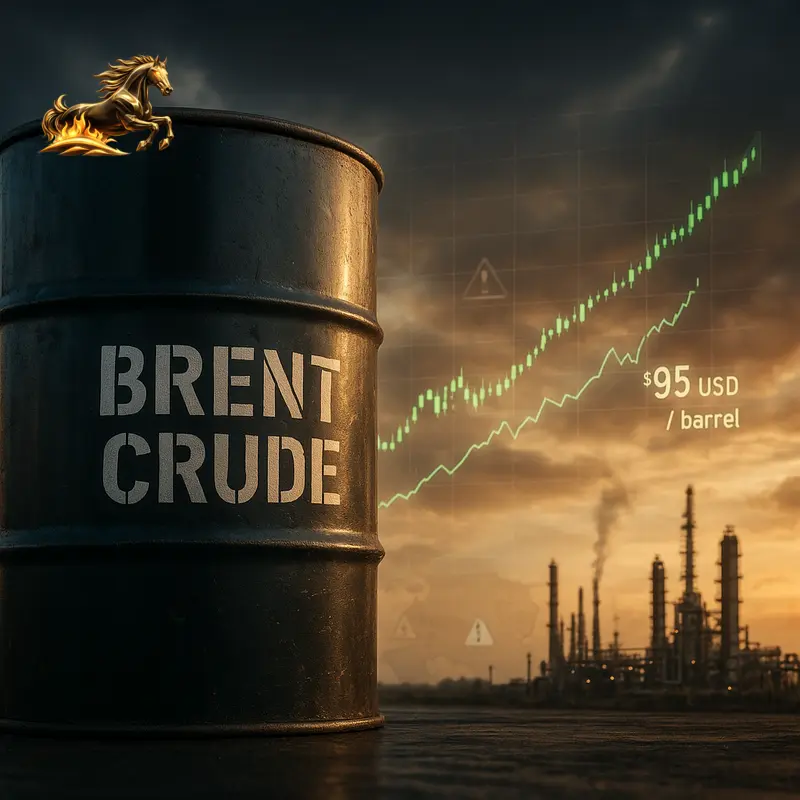
Brent Crude Price Today in USD: Why the Surge to $95 Matters for 2026
Oil prices are a global economic bellwether—and right now, Brent crude is making waves. As of September 2026, Brent crude is trading between $90 and $95 per barrel in USD, climbing sharply to multi-month highs. This jump isn’t just about market jitters; it’s driven by mounting geopolitical tensions, supply worries, and the shifting currents of the global energy landscape. Whether you’re an investor, policymaker, or everyday consumer, grasping what’s behind today’s Brent crude price spike is key to navigating the road ahead.
Let’s break down why Brent is pushing above $91 and chasing $95 per barrel. From Middle East conflicts and critical shipping chokepoints to strategic military moves, geopolitical risks are front and center. We’ll also zoom out to consider broader economic trends, industry shifts, and the accelerating energy transition shaping 2026 and beyond.
Market Snapshot: Brent Crude Price Today
As of early September 2026, Brent crude is buzzing with volatility but clearly trending upward.
- Trading Economics reports Brent crude at $95.07 per barrel, marking a 5% jump from yesterday.
- That’s a whopping 37.5% increase year-on-year, reinforcing this rally isn’t just a blip.
- Daily spikes of 4-5% typically hint at breaking geopolitical developments rather than slow-moving supply-demand changes.
- Price differences across Bloomberg, MarketWatch, and Yahoo Finance mostly come down to split-second timing in this fast-paced market.
In short: Brent crude prices today reflect heightened risk and expectations of tighter supply.
What’s Heating Up Brent Crude now?
The driving force behind today’s surge centers on renewed Middle East volatility—a region critical to global oil flows.
Middle East Tensions at the Core
Fresh clashes and shaky ceasefire deals have traders worried about serious supply interruptions. The Middle East handles a large chunk of the world’s seaborne oil exports, so any threat to production or shipping routes sends prices sharply higher.
Ceasefire Ends: U.S.-Iran Relations Worsen
The expiration of a 60-day ceasefire between the U.S. and Iran without renewal has ramped up fears. This fragile peace had kept open conflict at bay, but now uncertainty around Iranian exports and regional stability is driving price gains.
Strait of Hormuz: The Critical Chokepoint
Around 20% of global oil shipments pass through this narrow waterway. Reports of reduced or threatened traffic here amplify worries of supply disruptions—and the market is reacting swiftly.
U.S. Military Strikes Raise the Stakes
Recent U.S. strikes on Iranian targets have added fuel to the geopolitical fire, pushing up the “risk premium” baked into oil prices. When conflicts escalate, buyers pay more to guard against supply shocks.
Bottom line: The current Brent crude price rally is all about geopolitical risk tightening supply outlooks—especially in the volatile Middle East.
Looking Beyond Today: What Keeps Brent Crude Prices Elevated?
While today’s spike grabs attention, it rides on long-standing forces shaping oil markets in 2026.
1. Persistent Geopolitical Instability
Political turmoil, sanctions, and regional conflicts in key producers like the Middle East, Russia, and Venezuela continuously unsettle supply. History shows prices move fast in response, reflecting fragile global supply chains.
- Nations strategically releasing or hoarding petroleum reserves add another layer of price influence.
2. Global Economic Demand and Currency Effects
Oil demand is tied to economic health:
- Inflation trends and central bank policies shape growth and consumption.
- The U.S. dollar’s strength affects how affordable oil is worldwide.
- Rising demand in Asian emerging markets offsets efficiency gains and demand curbs in developed countries.
- Fears of recession can swiftly dampen demand expectations, balancing price pressures.
3. OPEC+ Production Decisions
OPEC and allies remain key supply gatekeepers:
- Their quotas and output tweaks aim to balance markets but also limit spare capacity.
- This low spare capacity means even small disruptions cause big price swings.
4. Energy Transition and Technology
The shift toward cleaner energy influences prices too:
- High oil prices boost investments in renewables and electric vehicles, sending signals that fossil fuels face mounting competition.
- Tech advances improve extraction costs and usage efficiency.
- Policies like carbon pricing and stricter fuel standards steadily shape future demand.
In essence: Brent crude prices dance to a complex tune of geopolitical risk, economic shifts, cartel moves, and the global energy transition.
What High Oil Prices Mean for the Economy and Environment
With Brent near $95 per barrel, the ripple effects reach far beyond fuel pumps.
Economic Impact
- Rising crude costs push up transportation and logistics prices, squeezing consumer and business budgets.
- Supply chains get pricier, stoking inflation through higher production and agricultural costs.
- Consumers often cut back on non-essentials as fuel costs bite into disposable income.
Winners and Losers
- Winners: Oil-exporting countries and energy services firms gain from higher revenues; renewables become more competitive.
- Losers: Transport sectors, petrochemical industries, and low-income households face increased financial pressure.
Environmental and Strategic Shifts
- Price spikes spur energy efficiency and accelerate clean energy adoption—yet may also encourage extraction of harder-to-reach fossil fuels.
- Energy security concerns drive diversification efforts and renewables expansion.
- Petrodollar flows continue to affect geopolitical power dynamics.
Bottom line: High Brent crude prices bring economic challenges but also fuel the transition toward sustainable energy futures.
What Lies Ahead? Brent Crude Price Outlook for 2026 and Beyond
Predicting oil prices is tricky, but current trends help sketch likely scenarios.
Near-Term (Next 3–6 Months)
- Price hikes: Escalated Middle East conflicts or shipping disruptions may push prices over $100 per barrel.
- Price relief: Diplomatic breakthroughs could ease tensions, dropping prices into the $85–90 range.
- Ongoing volatility: Expect sharp swings as markets digest fresh geopolitical developments.
Long-Term Trends
- Oil demand may stabilize as electrification and efficiency grow, limiting price spikes.
- Supply risks due to investment shortfalls keep prices vulnerable to shocks.
- OPEC+ will balance production to manage price stability and strategic risks.
- Climate policies add uncertainty, often capping fossil fuel demand growth.
Strategic Tips
- Investors: Diversify and actively manage geopolitical and market risks.
- Businesses: Invest in supply chain resilience and energy efficiency to control costs.
- Policymakers: Focus on energy security and supporting vulnerable populations during the transition.
Key takeaway: Flexibility and smart planning are essential to thrive amid Brent crude’s uncertainties.
Conclusion: Navigating Brent Crude’s Complex Landscape
Brent crude’s current price near $90–95 per barrel reflects geopolitical tensions, supply worries, and the sweeping global energy transition. This volatile environment calls for vigilance and thoughtful strategy across business, policy, and investment.
- Geopolitical risks, especially in the Middle East, remain the main drivers of price swings.
- Limited spare capacity magnifies sensitivity to disruptions.
- High prices impose economic burdens but also accelerate energy transition.
- Resilience through diversification, hedging, and innovation is vital as market dynamics evolve.
Understanding these forces transforms Brent crude’s price from just a number into a strategic compass for the fast-changing global economy.
FAQ
Q1: Why do Brent crude prices differ across websites?
A: Prices update rapidly during volatile times. Variations come down to data timing and sources, causing quotes to vary by several dollars moment to moment.
Q2: What is the “geopolitical risk premium”?
A: It’s the extra price buyers pay today to insure against potential supply disruptions due to political conflict, pushing prices up even if no immediate shortage exists.
Q3: Do high oil prices speed up renewable energy adoption?
A: Absolutely. More expensive fossil fuels make renewables and electric vehicles more attractive, encouraging investment and faster adoption.
Q4: How can consumers lessen the impact of rising oil prices?
A: Measures like reducing car use, improving home energy efficiency, using public transit, and budgeting for higher fuel costs help ease the burden.
Q5: Could the oil price surge trigger a recession?
A: It’s a significant risk. Historically, sharp oil price jumps have led to economic slowdowns by raising costs and curtailing spending. The outcome depends on how long prices stay high and broader economic conditions.
Keeping an eye on Brent crude prices in 2026 provides vital insights into global energy, economy, and geopolitics. Staying informed and adaptable helps all stakeholders turn challenges into opportunities in this pivotal era.
