

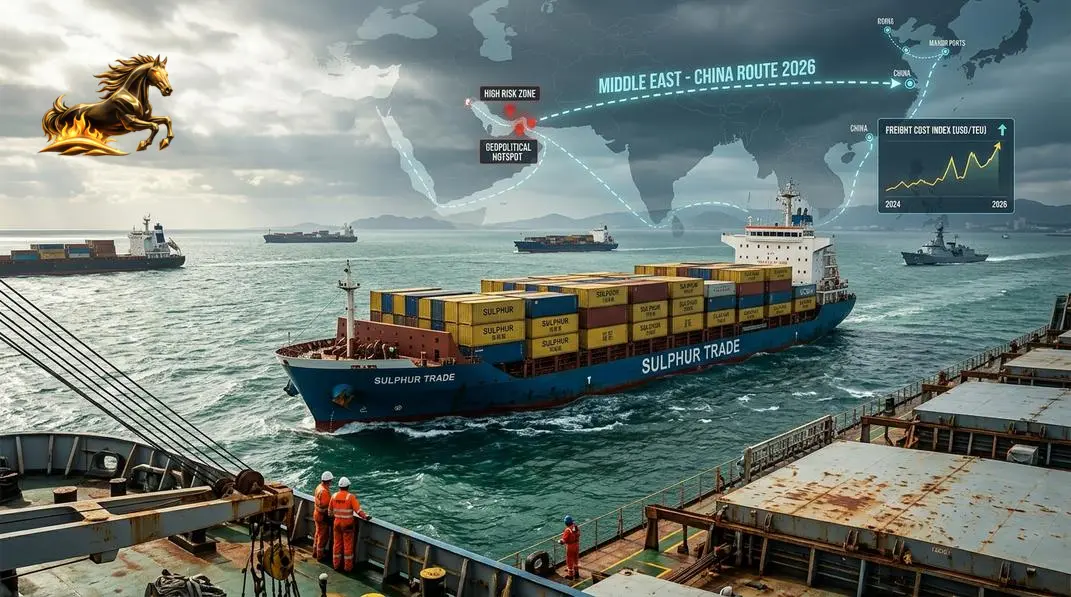
Navigating the Surge: Your Essential 2026 Guide to Sulphur Freight Costs to China
In 2026, the sulphur shipping landscape is anything but stable. Freight costs for delivering sulphur to China have surged past the $1,000 per tonne mark, reflecting more than just commodity price swings. For industries spanning fertilizers, chemicals, and beyond, freight expenses have become a top-tier strategic factor—no longer a mere line item in budgets but a vital element influencing supply chain success. This guide dives deep into the complex forces driving rising sulphur freight costs to China and offers actionable insights to help you stay ahead in this shifting marketplace.
Unlocking Sulphur Freight Costs: Beyond the Basics
Freight cost is the charge to transport a metric tonne of sulphur from a Free-On-Board (FOB) loading port—often in the Middle East—to Chinese discharge ports. Buyers face the Cost and Freight (CFR) price, which combines FOB commodity charges plus freight fees. Yet, in 2026, extra premiums and surcharges have layered additional complexity atop this simple formula.
From Yesterday to Today: How Freight Rates Have Shifted
Historically, sulphur freight from the Persian Gulf to China tracked predictably with global dry bulk rates and fuel prices. The early 2020s shook this pattern, exposing vulnerabilities in the supply chain. While some normalization followed, 2026’s freight baseline remains elevated, fueled by continued geopolitical tensions and stricter regulatory pressures.
Data from mid-2026 shows freight for 30,000–35,000 tonne vessels ranges between $150 and $160 per tonne—well above pre-pandemic levels. Throughout the year, it hovered mostly between $125 and $170 per tonne, underscoring a structurally higher cost environment fundamentally changing sulphur trade economics.
Why Freight Shapes the CFR Landed Price Dramatically
Take June 2026, for example: QatarEnergy’s price hike plus freight rates of $154–170/t pushed delivered sulphur near $960–975/t CFR before insurance. Conversely, when Kuwait Petroleum Corporation cut FOB prices by $45/t in October, the persistent $150–160/t freight portion kept CFR pricing stubbornly high at roughly $970–980/t. This tug-of-war clearly shows high freight costs can cancel out supplier price cuts, keeping landed costs elevated for Chinese importers.
Key Drivers Behind the Surge in Sulphur Freight Costs
Several intertwined factors have fueled freight cost spikes in 2026. Understanding these drivers is essential for managing risk and optimizing shipping strategies.
1. Geopolitical Hotspots and War Risk Premiums
The Strait of Hormuz remains a vital shipping chokepoint for Middle Eastern sulphur exports. Ongoing regional instability waves major surcharges:
- War Risk and Security Fees: Shipping firms levy steep premiums to cover conflict-related risks.
- Marine Insurance Hikes: Insurance surcharges in this corridor often top $200 per tonne, alone causing landed costs to soar beyond $1,070/t CFR.
- Operational Challenges: Potential delays and rerouting hikes indirect costs and limit vessel availability.
2. Stringent Environmental Rules and Decarbonization Costs
New maritime emission rules come with a price tag:
- Carbon Intensity Indicators (CII): Ships lagging in efficiency face constraints or costly upgrades, shrinking usable fleets.
- Fuel Transitions: Switching to low-sulphur fuels or alternatives (like LNG, ammonia) raises operational expenses passed to shippers.
- EU Emissions Trading System (ETS) Impact: Though centered in Europe, ETS influences global fleet availability, tightening shipping capacity internationally.
3. China’s Sustained Industrial Demand
China’s appetite for sulphur remains strong due to:
- Sulphuric Acid Production: Critical for fertilizers and metal processing, driving robust demand.
- Direct Agricultural Use: Elemental sulphur employed in soil treatment further supports import levels.
- Inelastic Demand: China’s focus on food security and industrial stability maintains steady import volumes, underpinning freight and price floors.
4. Legacy Supply Chain Bottlenecks and Port Delays
Though pandemic-era congestion has eased, challenges remain:
- Fleet Constraints: Environmental mandates and regulations have reduced available compliant vessels.
- Port Turnarounds: Labor and procedural slowdowns prolong vessel stays, increasing fleet needs.
What This Means for Industries and Global Markets
Higher sulphur freight costs ripple far beyond shipping invoices, impacting multiple sectors and economies.
Industry Impact
- Fertilizer Producers: Increasing sulphur costs drive up phosphoric acid inputs, pushing fertilizer prices and affecting global food security.
- Mining & Metals: Elevated sulphuric acid costs challenge extraction and refining economics.
- Chemical Manufacturers: Persistent high prices may slow innovation or capacity expansion.
Changing Trade and Procurement Patterns
To combat rising costs, importers are:
- Diversifying Suppliers: Exploring alternatives like Canadian or Central Asian sources to reduce dependency and stabilize freight costs.
- Investing in Logistics: Securing long-term freight contracts or dedicated vessels to lock in pricing.
- Seeking Vertical Integration: Some end-users consider direct sulphur production involvement to control supply and costs.
Broader Economic Consequences
Sulphur’s inflationary effect touches food, metals, and industrial product prices worldwide. For developing nations reliant on imports, this fuels trade balance pressures and complicates subsidy programs.
Strategic Moves to Adapt and Thrive
Adapting to this elevated cost environment demands proactive, multifaceted strategies.
Recommendations for Buyers and Importers
- Data-Driven Decision Making: Use analytics to forecast freight trends and hedge exposure alongside commodity price hedging.
- Source & Route Diversification: Evaluate total landed cost—not just FOB price—when choosing suppliers, accounting for freight variances.
- Innovative Contract Designs: Negotiate deals with freight cost sharing, caps, or integrated logistics to stabilize pricing.
For Shipping and Logistics Providers
- Clarify Pricing: Transparency on war risk, insurance, and surcharges builds shipper confidence.
- Fleet Upgrades: Invest in eco-friendly, compliant vessels for competitive edge and route flexibility.
- Collaborative Risk Management: Partner with insurers and security experts to create bundled, all-inclusive freight packages for high-risk corridors.
Policy and Government Actions
- Diplomatic Stability Efforts: Secure critical trade routes through dialogue and tension reduction.
- Commodity Stockpiles: Build strategic sulphur reserves to buffer supply and price shocks.
- Support Green Shipping: Foster green corridors and clean fuel infrastructure to ease maritime decarbonization.
Closing Thoughts: Embrace the New Freight Reality
The 2026 surge in sulphur freight costs to China has redefined the economics of this vital commodity trade. Freight is now a decisive factor shaping landed prices and competitive positioning. Freight surcharges can wipe out supplier price cuts, underscoring the need for integrated sourcing and shipping strategies.
Mastering detailed freight cost components—war risk, insurance, environmental premiums—and building resilience through diversification and innovative contracts will empower stakeholders. While challenges loom large, they also offer savvy businesses a chance to convert freight volatility into strategic advantage.
FAQ
Q1: Why have sulphur freight costs to China spiked since 2020?
Ongoing geopolitical risks with high war risk/insurance surcharges, tighter environmental regulations increasing operational costs, and steady Chinese industrial demand have driven freight costs well above historical levels.
Q2: Which additional cost most impacts CFR prices?
Marine war risk insurance—especially for transit through the Strait of Hormuz—often surpasses $200 per tonne, significantly boosting landed costs.
Q3: Does lowering FOB prices guarantee cheaper sulphur in China?
Not always. The persistent high freight cost component can neutralize FOB price reductions, keeping CFR prices elevated.
Q4: Are non-Middle Eastern sulphur sources viable?
Alternatives like Canada and Central Asia exist, but bring logistical complexity and longer shipping distances. Total landed cost evaluation is crucial before switching sources.
Q5: How can companies manage sulphur freight cost volatility?
By diversifying suppliers, leveraging freight risk analytics, negotiating long-term freight-inclusive contracts, and maintaining strategic inventories to smooth short-term fluctuations.
