
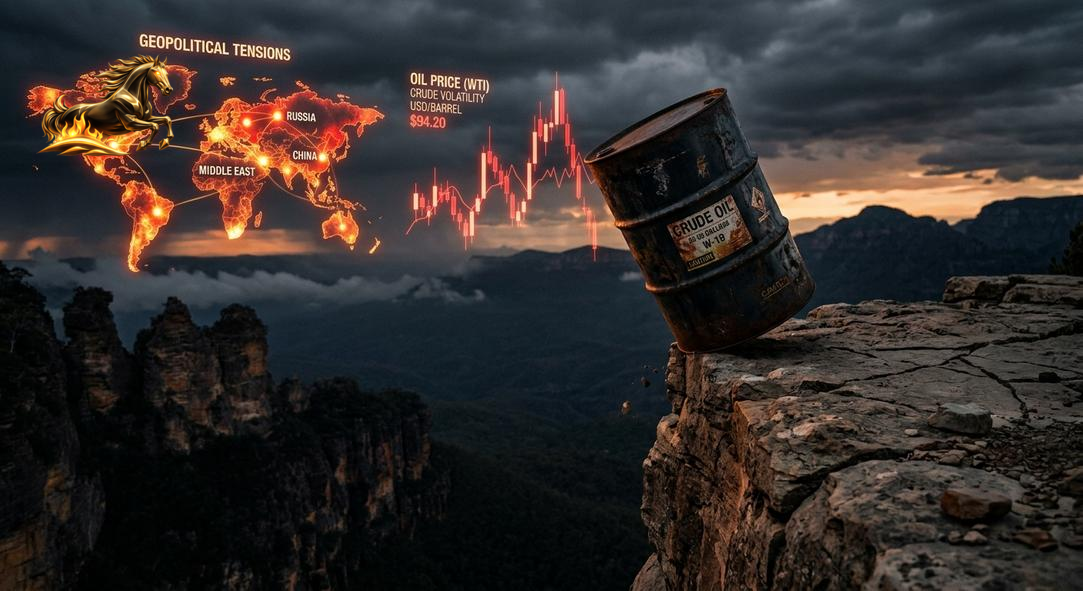
Oil Markets on Edge as Global Tensions Spike:
Oil markets rarely wait for certainty before reacting. Instead, they quickly respond to risk, fear, and shifts in trader positioning—anticipating a future where today’s supply chains might break down. This explains why crude prices can jump sharply the moment geopolitical tensions arise, even before a single barrel is stopped. When conflict threatens major producing regions, vital shipping routes, or energy infrastructure, traders ask not just, “Has supply been disrupted?” but “What if it is?” That possibility alone can sway Brent, WTI, freight rates, inflation forecasts, and investor sentiment within hours.
Right now, multiple factors collide to make global oil markets extraordinarily sensitive: geopolitical flashpoints, fragile shipping corridors, OPEC+ production policies, uneven global demand, inflation worries, and speculative futures positioning. This mix means markets can rapidly pivot on news headlines—then retrace if physical supply stays stable.
For investors, businesses, and policymakers, one takeaway is clear: oil-price risk hinges on confidence, not just crude volumes. When confidence wavers, volatility inevitably rises.
Why Oil Markets React Fast to Global Tensions
Oil isn’t just a commodity—it powers transportation, manufacturing, agriculture, logistics, petrochemicals, and even military operations. So, shifts in crude prices ripple through:
- Diesel and gasoline costs
- Airline and shipping fuel expenses
- Chemical and plastics production costs
- Food distribution pricing
- Inflation expectations
- Central bank policies
- Corporate earnings forecasts
- Emerging-market currencies
Given this wide-reaching impact, oil markets respond fast to geopolitical events. Even without immediate supply disruption, the increased risk alone drives prices. Financial markets look at probabilities: if traders sense pipelines might be attacked, tankers delayed, sanctions hardened, or producers adjusting output, they build in a “risk premium.” This premium is the extra cost buyers pay to hedge uncertainty.
Consider the Strait of Hormuz, where roughly 20% of global petroleum liquids flow, per the U.S. Energy Information Administration. Any threat here triggers swift price moves—even if tankers continue unhindered.
Bottom line: Oil prices react not only to actual disruptions but also to the perceived risk of disruptions.
Three Layers of Oil-Price Pressure
When tensions flare, oil prices reflect three key forces:
- Physical supply risk
- Financial market positioning
- Macroeconomic spillover concerns
Understanding these layers clarifies why oil can spike quickly on headlines—and sometimes fall back.
1. Physical Supply Risk
Markets watch for threats to crude and refined products flowing through:
- Oil fields
- Refineries
- Export terminals
- Pipelines
- Tanker routes and ports
- Storage facilities
- Shipping insurance availability
Because oil trades globally, disruption anywhere echoes worldwide. Brent crude, the international benchmark, is especially sensitive to seaborne shipping risks. WTI, the U.S. benchmark, tends to reflect domestic conditions. The Brent-WTI spread often signals if shocks are global or regional.
2. Financial Market Positioning
Oil futures feature financial players—hedge funds, banks, algorithms—quickly adjusting positions amid geopolitical risks. Some buy futures to hedge supply fears; others cut shorts to limit exposure. This can amplify price swings independent of actual supply.
Prices may leap on breaking news but retreat if disruptions don’t unfold.
3. Macroeconomic Spillover Concerns
Oil-price changes don’t stay confined to energy markets. Rising crude pushes up inflation via transportation and fuel costs, affecting bond yields, stocks, currencies, and corporate margins.
Institutions like the IMF and World Bank stress that energy price volatility from geopolitical shocks can boost inflation and slow growth globally.
Insight: Oil is not just a commodity but a powerful macroeconomic signal.
Brent, WTI, Freight, and Inflation: Understanding the Full Picture
Focusing only on crude prices misses the broader story. Key gauges include:
- Brent Crude: Reflects international seaborne supply risk, especially in the Middle East.
- WTI Crude: Mirrors North American supply and demand; reacts differently if risk is local.
- Brent-WTI Spread: A widening Brent premium signals rising global supply concerns versus U.S. conditions.
- Freight and Insurance: Conflict risks push tanker insurance and shipping costs higher, raising oil delivery expenses despite steady supply volumes.
- Refined Products: Gasoline, diesel, and jet fuel prices may diverge from crude if refining or inventories tighten.
- Inflation Expectations: Higher oil feeds into consumer and business price expectations, shaping wages, pricing, and monetary policy.
Summary: Multiple pricing signals work together to reveal market tensions.
Why “Supply Risk” Moves Prices Before Shortages Appear
Oil futures price in expected future supply and demand—not just current inventory. If tensions imply possible disruption, market participants act early:
- Refineries lock in supplies
- Traders increase futures holdings
- Shipping firms raise rates or reroute
- Insurers hike premiums
Each step lifts prices well before any actual shortage occurs. This is forward-looking risk management, not speculation.
Key point: Waiting for confirmed disruptions can be costly; markets price in risk proactively.
Historical Patterns: Spikes Often Fade Without Disruption
Geopolitical events cause sharp oil price jumps, but persistence depends on actual supply:
Spikes fade if:
- Production remains steady
- Export routes stay open
- Strategic reserves reassure markets
- OPEC+ supports supply
- Demand eases
- Diplomacy calms tensions
- Speculative trades unwind
Spikes persist if:
- Physical disruptions occur
- Infrastructure is damaged
- Sanctions limit exports
- Spare capacity is tight
- Inventories are low
- Demand holds strong
- Multiple risk zones collide
Ultimately, markets ask: are barrels flowing or not?
OPEC+’s Influential Role Amid Tensions
OPEC+ (Saudi Arabia, Russia, UAE, others) guides coordinated output policies that can ease or heighten price pressures.
Market watchers track:
- Continued production cuts or easing
- Quota compliance
- Spare capacity to offset shocks
- Political factors affecting cooperation
OPEC+ signals help determine whether risk premiums swell or shrink.
Demand Fundamentals Still Matter
Despite geopolitical headlines, oil demand remains critical.
Global demand growth varies: China’s economic shifts, EV adoption, efficiency gains, and sectoral differences all affect consumption. Petrochemicals, aviation, and emerging markets keep demand resilient.
Strong demand amplifies supply-risk price moves; weakening demand tempers them.
Key Shipping Chokepoints to Watch
Global oil exports depend on a few narrow maritime passages vulnerable during crises:
- Strait of Hormuz: Carries ~20% of global petroleum liquids; tensions here spike markets instantly.
- Bab el-Mandeb: Connects Red Sea to Gulf of Aden; vital for Europe-Asia trade.
- Suez Canal & SUMED Pipeline: Link Middle East with Europe and Atlantic; blockages force costly detours.
- Turkish Straits (Bosporus/Dardanelles): Crucial for Black Sea exports; regional conflicts can disrupt flows.
- Strait of Malacca: Major energy corridor for Asia; disruptions impact China, Japan, South Korea, and neighbors.
The Ripple Effect: Oil Volatility and Broader Markets
- Stocks: Energy firms gain; fuel-heavy sectors suffer, affecting overall sentiment.
- Bonds: Inflation fears push yields higher; growth worries encourage safe-haven flows, creating mixed signals.
- Currencies: Oil exporters’ currencies often strengthen; importers’ weaken.
- Safe Havens: Gold, U.S. Treasuries, and the dollar attract investors amid geopolitical strains.
- Emerging Markets: Face currency drops and inflation risks, especially if reliant on imported fuels.
Practical Tips for Businesses Managing Oil Volatility
Oil price swings influence real costs. Preparation beats prediction.
- Assess fuel exposure: Freight, vehicles, packaging, suppliers, utilities, travel.
- Stress-test margins: Model 10%, 20%, 30% fuel cost increases.
- Review contracts: Look for fuel surcharges or energy price clauses.
- Diversify logistics: Create alternate routes and inventory buffers, especially near risky shipping lanes.
- Communicate proactively: Keep customers informed about possible pricing or delivery shifts to maintain trust.
What Investors Should Track
Avoid reacting to every headline. Focus on fundamentals:
- Supply routes: Are chokepoints clear? Tanker traffic normal? Insurance costs rising?
- Production: Monitor OPEC+, U.S. shale, sanctions, geopolitical events.
- Inventories: Watch crude and product stock levels.
- Demand: Check refinery runs, transport fuel use, manufacturing, global growth.
- Futures positioning: Analyze speculative and hedging flows for market sentiment clues.
Embrace Preparation Over Prediction
Oil markets are famously unpredictable, influenced by politics, conflict, weather, technology, and policy. Savvy players prioritize preparedness: diversification, risk limits, strategic hedging, and flexible plans.
Clear communication about uncertainty builds credibility—better than hype or false certainty.
Final Thoughts
Geopolitical tensions elevate supply disruption risk, pushing oil prices to price in risk premiums ahead of shortages. Key insights center on:
- Stability of supply routes
- Producer output trends
- Demand strength amid uncertainty
Headline oil-price spikes can be rapid but may not last. Stable supply and diplomacy calm markets; real disruptions fuel volatility across energy, transport, inflation, currencies, and finance.
For investors, businesses, and policymakers alike, the smartest move is preparation—not presumption.
By grasping these dynamics, stakeholders can navigate oil market tensions with clarity, resilience, and confidence.
