
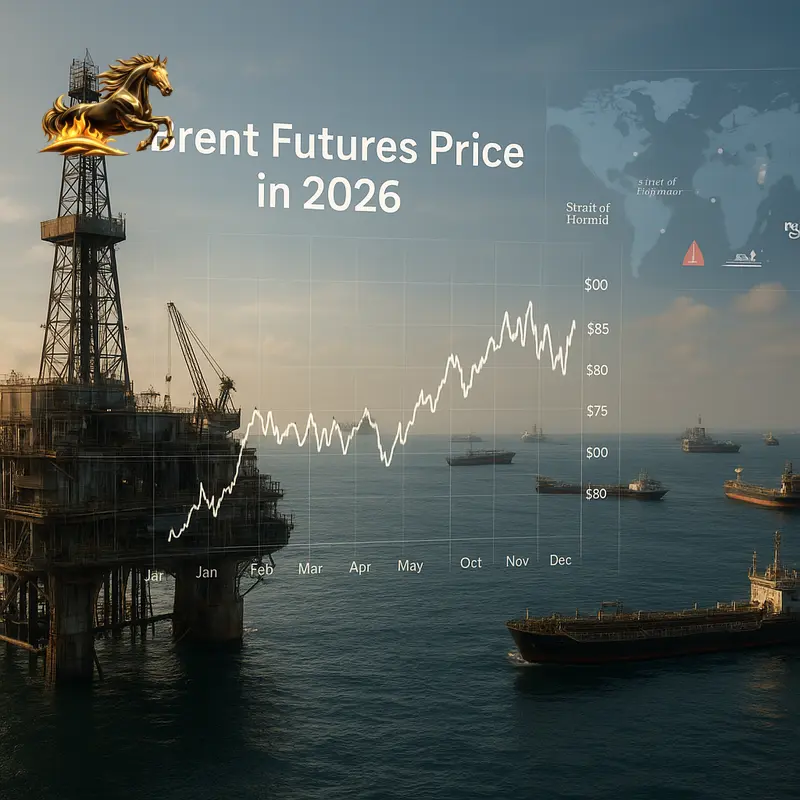
Brent Futures Price in 2026: A Comprehensive Analysis
Brent Futures Price in 2026: A Comprehensive Analysis of Current Drivers and Market Outlook
The global oil market in 2026 is shaped by a dynamic mix of supply, demand, and geopolitical events, all of which continuously influence Brent crude’s price movements. As mid-year unfolds, Brent futures are caught between conflicting forces: geopolitical disruptions raise risk premiums, while deliberate supply increases exert steady downward pressure. For traders, policymakers, and corporate leaders alike, grasping these complexities is crucial. This comprehensive analysis delves into the five primary factors driving Brent futures today, places them in broader market context, and outlines potential price paths moving forward.
Understanding Brent Crude: More Than Just a Price Benchmark
Brent crude oil serves as the leading global benchmark for light, sweet crude, primarily sourced from North Sea fields. Accounting for roughly two-thirds of internationally traded crude, Brent futures form the cornerstone of global energy pricing and market stability.
Traded on exchanges such as the Intercontinental Exchange (ICE), Brent futures contracts represent agreements to buy or sell specific crude volumes at predetermined future dates. They fulfill two vital roles:
- Hedging: Airlines, shipping firms, and producers use futures to lock in prices, minimizing exposure to volatile oil price swings.
- Speculation: Traders and investors seek to capitalize on anticipated price moves, injecting liquidity and facilitating transparent price discovery.
Brent futures prices synthesize immediate logistical challenges, geopolitical risks, and longer-term trends such as electric vehicle adoption — making their analysis essential for predicting market movements in 2026 and beyond.
The Five Key Forces Driving Brent Futures in 2026
Brent’s price action in mid-2026 reveals a paradox: near-term price spikes disturb a backdrop of sustained lows over longer timeframes. This duality stems from these five major forces at play:
1. Geopolitical Risk: The Strait of Hormuz Incident
July 2026 saw a Qatar-registered LNG carrier attacked near the Strait of Hormuz, a crucial maritime chokepoint handling about 21% of global petroleum liquids. This incident sharply heightened global risk perceptions.
Effects on Brent futures include:
- Elevated Risk Premiums: Prices surged to near one-week highs around $73 per barrel, reflecting fears of supply disruption.
- Diplomatic Uncertainty: Doubts about US-Iran agreements increased insurance costs and operational risks, providing indirect price support.
- Speculative Buying: Market sentiment alone drove additional demand ahead of any actual supply interruptions.
Though geopolitics inject short-term bullish momentum, sustained price hikes require deeper escalation.
2. OPEC+ Supply Increase: Bearish Overhang
Counterbalancing geopolitical risks, OPEC+ raised production quotas by roughly 188,000 barrels per day, led by Saudi Arabia’s supply boost.
This resulted in:
- Rising Physical Supply: Output nears pre-pandemic levels, adding downward pressure on Brent.
- Market Share Defense: The quota increase signals either confidence in demand or a strategic move to cap prices and defend market position.
- Price Ceiling: Despite intermittent gains, Brent hovers near multi-month lows amid swelling global inventories.
3. Saudi Arabia’s Aggressive Price Cuts: Heightened Competition
Saudi Arabia’s $11-per-barrel price cut for Arab Light crude in Asia signals intensified competition in key refining markets.
Impact includes:
- Market Share Battle: Deep discounts aim to retain key refinery clients, directly pressuring Brent pricing benchmarks.
- Bearish Sentiment: The scale of cuts highlights demand concerns, particularly around China’s growth outlook.
- Downward Price Momentum: This unexpected pricing move weighs heavily on Brent futures.
4. Refinery Crack Spreads: The Unexpected Support
Amid bearish supply signals, refinery crack spreads—the difference between refined product revenues and crude input costs—have soared to a four-year peak.
This provides support by:
- Driving Refinery Runs: Attractive margins incentivize increased crude purchases.
- Sustaining Physical Demand: Strong crack spreads cushion Brent from oversupply pressures.
- Mitigating Bearish Impacts: Healthy refining economics create a price floor.
5. Brent Futures: Navigating Uncertainty Between Highs and Lows
Currently, Brent trades between $72.8 and $73.2 per barrel, reflecting this ongoing tug-of-war. Geopolitical jitters push prices upward, even as rising supplies and aggressive pricing cap gains. Absent a decisive shift, Brent is poised for volatile, range-bound trading.
The Broader 2026 Landscape: Beyond Immediate Drivers
The Energy Transition’s Lingering Influence
Investments and policies now increasingly account for plateauing and potentially declining long-term oil demand amid renewable energy growth and electrification. The International Energy Agency highlights slowing oil demand growth, making “peak demand” central to market expectations and investment decisions.
Uneven Economic Recovery and Demand Volatility
Global economic divergence and cautious monetary policies inject uncertainty. Industrial and travel-related oil consumption rise in some regions, while recession fears dampen demand prospects.
The US Role: Strategic Market Balancer
US shale production remains key but is now capital disciplined. Meanwhile, the Strategic Petroleum Reserve serves as a market stabilization tool, not just a supply buffer, complicating supply-side dynamics.
The US Dollar’s Impact
Because crude is priced in US dollars, a stronger dollar raises costs for foreign buyers, suppressing demand and exerting downward pressure on Brent prices.
Brent Futures Outlook: Scenario Analysis Through 2026–2027
Bullish Scenario: Geopolitics and Demand Resilience
- Escalation of Middle East tensions disrupts Strait of Hormuz flows.
- Elevated refinery crack spreads persist alongside strong Asian seasonal demand.
- OPEC+ maintains production discipline.
- Brent surges to $80–$85 per barrel as risk premiums drive prices higher.
Bearish Scenario: Oversupply Deepens
- OPEC+ supply increases fully materialize; Saudi price cuts intensify competition.
- Global demand slows amid economic headwinds.
- Inventories build; refining margins shrink.
- Brent dips to $65–$68 per barrel, retesting previous lows.
Baseline Scenario: Volatile Range-Bound Trading
- Bullish and bearish forces balance out with no clear trend.
- Geopolitical events cause short-lived rallies offset by steady supply.
- Brent trades within a $70–$78 range.
Strategic Insights for Market Participants
For Traders and Investors
- Utilize range-bound trading strategies to capitalize on price volatility.
- Track refining crack spreads as a leading indicator of crude demand.
- Monitor OPEC+ production and Saudi Arabia’s pricing closely.
For Corporate Hedgers
- Layer hedges to manage exposure across potential price scenarios.
- Stress-test business models against bullish and bearish price environments.
- Consider options strategies for enhanced risk flexibility.
For Policymakers
- Strengthen energy security via diversification and strategic reserves.
- Monitor inflationary effects linked to oil price volatility.
- Balance climate transition ambitions with market stability concerns.
Conclusion: Mastering Brent Futures Amid Complexity
Brent futures in 2026 epitomize a market delicately balancing geopolitical risks and evolving supply amid a transformative energy landscape. Prices embody this intricate reality — marked by volatility, range-bound behavior, and wider economic and policy influences.
Key Takeaways:
- Geopolitical tensions create sharp but often temporary price upticks, while supply increases exert gradual bearish influence.
- Refinery crack spreads play a crucial role in supporting crude demand amidst inventory growth.
- Expect continued volatile, range-bound Brent futures until one side asserts control.
- The energy transition shapes long-term price ceilings and investor sentiment.
Navigating Brent futures today demands nuanced, flexible strategies and a deep understanding that goes beyond headline prices.
Frequently Asked Questions (FAQ)
Q1: What is a “risk premium” in oil prices?
A risk premium is an extra price added to oil reflecting the possibility of supply disruptions, driven by market uncertainty rather than actual supply loss.
Q2: Why does Saudi Arabia raise production yet cut prices simultaneously?
Production hikes come from collective OPEC+ decisions, while unilateral Saudi price cuts aim to defend market share in competitive regions, even if they suppress overall benchmark prices.
Q3: How does a strong US dollar affect Brent crude?
A stronger US dollar makes oil more expensive in other currencies, dampening demand and pressuring Brent prices downward.
Q4: What does the “crack spread” indicate and why is it important?
The crack spread shows refinery profitability by comparing refined product revenues to crude costs. High crack spreads encourage refiners to buy more crude, supporting oil prices.
Q5: Are Brent futures still relevant amid the global energy transition?
Absolutely. Despite renewable growth, oil remains vital for decades, and Brent futures continue to underpin global price discovery, risk management, and market liquidity.
