
Brent Oil Live Price in 2026: Navigating a New Era of Stability and Supply
For those monitoring global economic trends, the live price of Brent crude oil remains a vital, real-time barometer. It reflects not just supply and demand fundamentals but also geopolitical tensions and the overarching health of industry. As 2026 unfolds, Brent’s price story has shifted drastically from the wild swings of recent years. Gone are the frequent spikes above $100 per barrel, replaced by a new era of remarkable price stability with Brent comfortably settled in the low-$70 range. What fuels this newfound calm, and just how lasting is it? In this article, we explore the live dynamics of Brent oil pricing, highlight five pivotal factors shaping today’s market, and peek into what the future might hold.
Brent Oil Live Price: The Current Landscape
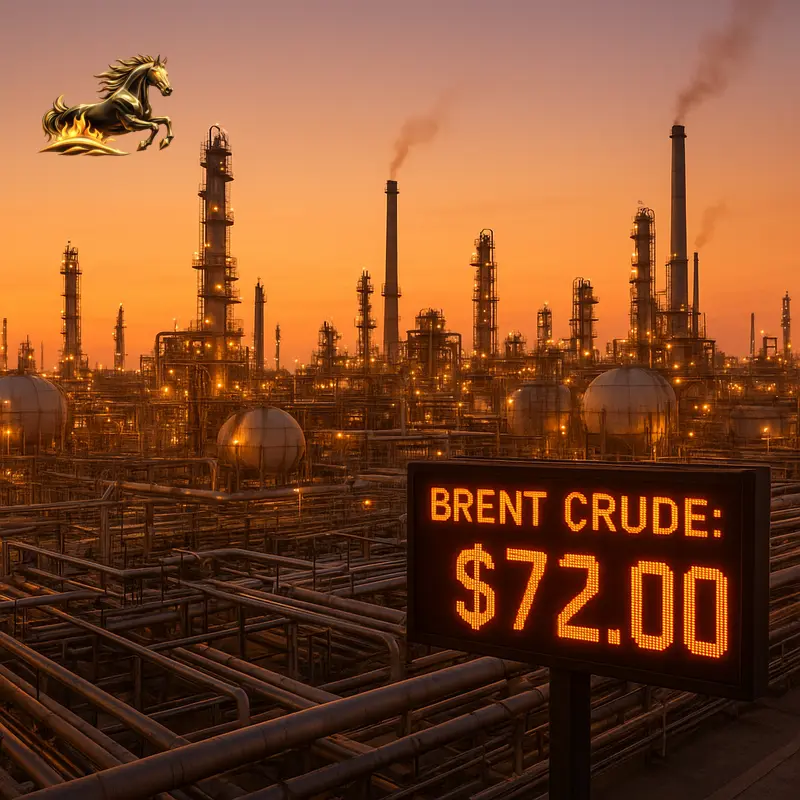
By mid-2026, Brent crude oil is trading consistently between $71 and $73 per barrel, often quoted near $72.10 across key financial platforms. After a notable four-week dip that drew market scrutiny, prices have stabilized, showing modest daily upticks averaging 0.5% to 0.9%. This comfortable range marks a significant softening from the conflict-driven highs exceeding $120 just a few years prior.
This steady price band signals a market in transition—shedding the “war premium” baked into past prices while balancing a complex environment of ample supply amid cautious demand growth. Investors, corporations, and policymakers alike need to understand the forces behind this steady $72 benchmark more than ever.
Why Brent Crude Remains the Global Benchmark
To grasp current pricing patterns, it’s essential to recall why Brent crude serves as the global gold standard. Originating mainly from the North Sea’s Brent, Forties, Oseberg, and Ekofisk fields (collectively BFOE), Brent is a light, sweet crude accounting for roughly two-thirds of globally traded oil. Its benchmark status stands on three pillars:
- High Liquidity: One of the most actively traded commodities worldwide, Brent offers a transparent, continuous price signal.
- Strategic Location: Proximity to European and global refinery hubs grants logistical advantages.
- Refining Quality: Its ease of refining into key products like gasoline and diesel ensures widespread industrial acceptance.
Brent’s price swings ripple through the global economy, influencing everything from transportation costs to manufacturing prices.
Five Key Forces Steering Brent’s Live Price in 2026
Several factors intertwine to anchor Brent within its current range. Each acts like a control dial, adjusting price pressure from different angles:
1. Reopening of the Strait of Hormuz: Removing the War Premium
The primary driver behind Brent’s retreat from triple-digit territory is the resumed shipping through the Strait of Hormuz.
- Context: A lasting ceasefire between the U.S. and Iran has restored tanker flows to pre-conflict levels. Since this critical chokepoint handles about 20% of global oil, its security heavily influences supply risk.
- Effect: The war-risk premium—once adding $20-$30 per barrel—has mostly vanished. Traders no longer pay hefty surcharges for fear of supply disruptions, steadily pushing Brent downward.
2. Market Numbness to Geopolitical Noise: A Return to Fundamentals
A marked change in trader mindset has emerged: in 2026, oil markets largely ignore geopolitical drama.
- Context: Despite ongoing diplomatic developments, Brent price volatility is minimal, contrasting sharply with unpredictable swings of preceding years.
- Effect: Investors increasingly focus on hard fundamentals—OPEC+ production, U.S. inventory stats, shale output, and demand from major economies—rather than emotional reactions. This rational approach anchors recent price stability.
3. Anticipated OPEC+ Supply Boosts: Capping Price Rises
As Gulf tanker flows normalize, OPEC+ signals plans for moderate supply increases.
- Context: The producer group expects to approve incremental quota hikes in August 2026, especially among Middle Eastern members.
- Effect: Expected higher supply dampens price rallies; traders factor in rising global inventories, potentially nudging Brent toward the high-$60s if demand remains soft.
4. OPEC+ Cohesion Strains: Kazakhstan’s Quota Breach
Despite collective production controls, cracks in OPEC+ discipline are visible.
- Context: Kazakhstan reportedly exceeded production limits, raising questions about alliance unity.
- Effect: Such non-compliance undermines output control effectiveness, injects uncertainty, and contributes to the price’s tight range.
5. Demand Trends: Optimism Tempered by Caution
Demand factors delicately balance hopeful and cautious signals.
- Optimistic Note: Improved U.S.-China trade relations encourage expectations of stronger industrial activity and elevated oil consumption.
- Cautious Note: European economic softness, subdued consumer spending, and the accelerating shift toward renewables restrain demand growth.
- Result: This seesaw maintains Brent within the $71-$73 corridor.
Inside a Typical Brent Trading Day at $72
Understanding small daily price shifts reveals market intricacies. Consider a July 2026 trading day:
- Asia Morning: Prices hold steady near $71.80 amid a smaller-than-expected U.S. crude inventory draw.
- London Open: Strong Hormuz tanker traffic reports cause a slight dip to $71.50; weak German industrial data adds bearish pressure.
- U.S. Midday: EIA data indicates gasoline stock build, signaling softer demand and nudging Brent down to $71.20.
- New York Close: An OPEC+ official’s guarded comment on August quotas sparks bargain buying, lifting Brent back to $72.00.
- After-Hours: The market consolidates, largely indifferent to late geopolitical headlines.
This daily rhythm reflects how supply stability, production policy, demand signals, geopolitical calm, and alliance dynamics collectively confine Brent within a narrow band.
Structural Trends Shaping the Market Outlook
Beyond daily trades, longer-term shifts significantly influence Brent’s trajectory:
The Green Energy Transition: Gradual But Persistent Influence
The rise of electric vehicles and tighter environmental regulations steadily temper long-term oil demand growth. These factors shape investment choices and exert a subtle but consistent drag on price expansion.
U.S. Shale: The Flexible Swing Producer
U.S. shale continues as a responsive supply buffer. When Brent surpasses roughly $75-$80, shale producers rapidly increase output, capping sustained price surges.
Currency Impact: The Strong U.S. Dollar
A robust U.S. dollar makes Brent more expensive for non-U.S. buyers, mildly suppressing global demand and weighing on prices.
Historical Perspectives Illuminate Today’s Stability
- 2020 Crash: Pandemic-driven demand collapse plus Saudi-Russia price war pushed Brent below $20, showing extreme downside risks.
- 2022-2024 Spike: Strait of Hormuz conflict-induced supply fears elevated prices above $120, highlighting geopolitical risk premiums’ power.
The 2026 steadiness reflects a market consciously balancing forces to avoid such volatility extremes.
What Lies Ahead for Brent Oil Prices?
- Extended Range (Most Likely): Brent trades between $68 and $78 as supply and demand balance, keeping volatility low.
- Downward Drift: Aggressive OPEC+ quota increases combined with weak demand could push prices toward the mid-to-high $60s.
- Surprise Rally: Unexpected supply disruptions or inventory shocks might briefly push Brent above $80, although U.S. shale’s swift response would limit the rally’s duration.
Strategic Takeaways for Market Participants
- Traders & Investors: Focus on range-bound strategies; emphasize fundamental data over headlines; remain aware shale output caps large price spikes.
- Corporate Planners: Leverage current stability for hedging strategies; plan within a $65-$80 Brent price band; monitor OPEC+ compliance carefully.
- Policymakers: Use stable prices to guide economic planning; design energy policies accommodating this evolving, balanced price environment.
Conclusion: Embracing Brent’s New Normal
The live price of Brent crude oil in 2026 tells a story of cautious adjustment. With the war premium removed and traders tuned into fundamentals, Brent has settled into a measured stability near $72 per barrel. This calm isn’t market dormancy but attentive balancing amid supply, demand, and geopolitical shifts—not headline-driven volatility.
For all stakeholders, recognizing and adapting to this new normal is key. Brent at $72 offers a stable platform from which the world can confidently navigate the evolving energy landscape—barrel by barrel.
Frequently Asked Questions (FAQ)
Q1: Why is Brent oil price so stable around $72 in 2026?
A: Stability stems from secure supply via the Strait of Hormuz, reduced geopolitical risk premiums, balanced OPEC+ production plans, and steady—but cautious—global demand. Traders emphasize concrete data over sensational headlines, leading to price equilibrium.
Q2: What could move Brent prices outside the current range?
A: Major supply shocks like a Strait of Hormuz closure, a breakdown in OPEC+ cooperation causing overproduction, or a global economic recession could push Brent beyond present support or resistance levels.
Q3: How does U.S. shale output influence Brent pricing today?
A: U.S. shale acts as a natural price ceiling. Prices above approximately $75-$80 trigger rapid shale production increases, which inject additional supply and suppress extended price hikes.
Q4: Is the green energy transition really impacting Brent prices now?
A: Yes, indirectly. The energy transition shapes long-term oil demand forecasts and investor sentiment, exerting steady downward pressure on price growth expectations.
Q5: Will Brent’s low volatility last through 2026?
A: Current evidence points to continued range-bound, low-volatility trading. However, short-term spikes or dips remain possible due to unforeseen geopolitical or weather events.
