
body {
font-family: -apple-system, BlinkMacSystemFont, “Segoe UI”, Roboto, Oxygen,
Ubuntu, Cantarell, “Open Sans”, “Helvetica Neue”, sans-serif;
color: #222222;
line-height: 1.6;
margin: 0;
padding: 24px;
background-color: #f9f9f9;
}
h1 {
color: #0052cc;
font-weight: 700;
font-size: 2.8rem;
margin-bottom: 24px;
line-height: 1.2;
}
h2 {
color: #003d99;
margin-top: 48px;
margin-bottom: 16px;
font-weight: 600;
font-size: 1.8rem;
}
h3 {
color: #1a1a1a;
margin-top: 32px;
margin-bottom: 12px;
font-weight: 500;
font-size: 1.3rem;
}
p {
margin-bottom: 20px;
font-size: 1.1rem;
}
ul {
margin-left: 20px;
margin-bottom: 20px;
}
li {
margin-bottom: 10px;
font-size: 1.1rem;
}
hr {
border: none;
border-top: 2px solid #dddddd;
margin: 40px 0;
}
strong {
color: #111111;
}
blockquote {
margin-left: 0;
padding-left: 20px;
border-left: 4px solid #0052cc;
color: #555555;
font-style: italic;
background-color: #edf2ff;
margin-bottom: 24px;
}
.faq-question {
font-weight: 600;
margin-top: 20px;
font-size: 1.1rem;
}
.faq-answer {
margin: 8px 0 20px 0;
font-size: 1.1rem;
}
.highlight {
color: #0052cc;
font-weight: 600;
}
The Barrel of Brent Crude in 2026: Navigating Price Swings, Geopolitics, and the Energy Transition
In 2026, the price of a barrel of Brent crude has recently dipped below $75—a figure that echoes far beyond oil markets. This price point mirrors a complex blend of geopolitical shifts, supply expectations, and the accelerating global move toward sustainable energy. For policymakers, investors, corporate strategists, and industry watchers alike, unraveling what drives Brent crude—and its broader economic impact—is more crucial than ever. This analysis delves into the current trends and future outlook of Brent crude amid a year defined by volatility and transformation.
Understanding Brent Crude: More Than Just Oil
Before forecasting its path, it’s essential to grasp what Brent crude is and why it holds such global significance.
Origins and Benchmark Status
Brent crude originates from the North Sea, first tapped in the 1960s at the Brent oilfield—a “light, sweet” crude revered for its low sulfur content and refining ease. Its prime location and quality gave rise to its evolution as a global pricing benchmark, now used to price nearly two-thirds of the world’s traded oil.
Today, Brent is not merely physical oil but a pricing benchmark formed from a basket of streams—Brent, Forties, Oseberg, and Ekofisk (known collectively as BFOE). This basket ensures adequate market liquidity and reliable price discovery, cementing Brent’s central role in international energy markets.
Why Brent Endures as a Benchmark
Despite natural output declines from North Sea fields, Brent maintains its benchmark status thanks to its financial liquidity and transparency. Traders worldwide rely on Brent prices as a market heartbeat, making it indispensable for oil valuation.
Brent Crude in 2026: A Market at a Pivotal Crossroads
The Brent market this year reflects the interplay of immediate geopolitical developments and long-term structural forces stemming from the energy transition.
Short-Term Price Moves: The Geopolitical Pulse
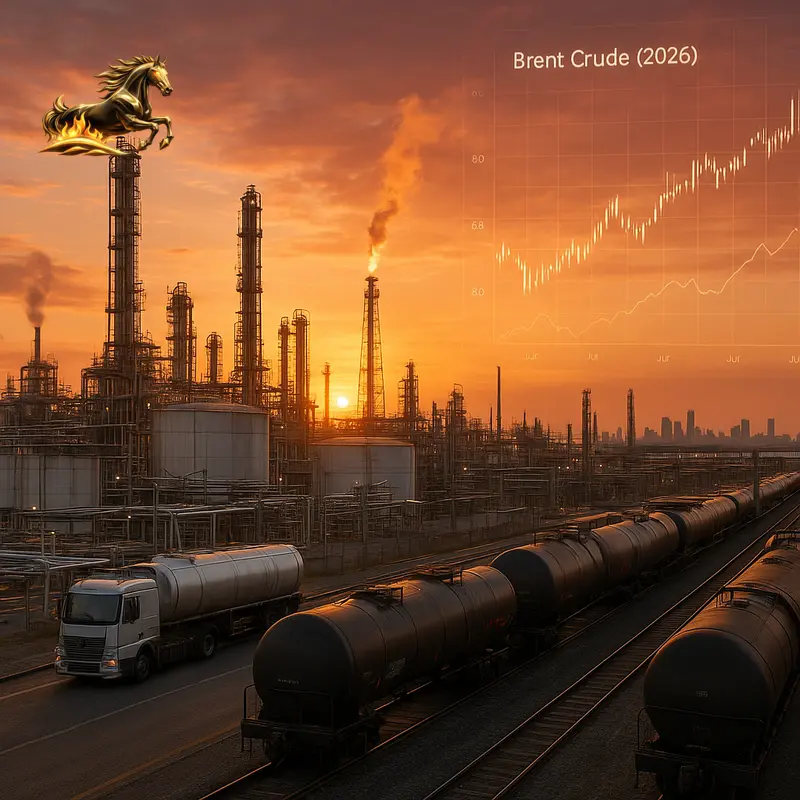
Price swings in mid-2026 reveal Brent’s sensitivity to geopolitical developments. Prices tumbled sharply from highs near $120 to the mid-$70s in June, mainly due to easing tensions in the Strait of Hormuz—a critical artery for global oil shipments.
Recent diplomatic progress, including U.S.-Iran talks and a temporary sanctions waiver for Tehran, opened the door for increased Iranian crude exports, easing supply worries. Leading financial institutions like J.P. Morgan have adjusted forecasts downward, citing softer demand and weaker-than-expected inventory draws.
Key Drivers to Watch for Brent in 2026
- Security in the Strait of Hormuz: This chokepoint remains the oil market’s most sensitive flashpoint. Any disturbance triggers immediate risk premiums on Brent prices.
- Iranian Oil Exports: The volume of Iranian crude flooding global markets remains a wildcard shaping supply balance.
- OPEC+ Production Discipline: Output management by Saudi Arabia, Russia, and their partners directly impacts market tightness.
- Global Demand Trends: Economic health, especially in China and Asia, continues to drive crude consumption patterns.
- OECD Inventory Levels: Stockpile data in developed economies provide tangible insight into market stress or surplus.
Structural Forces Reshaping Brent’s Future
Beneath headlines, profound geopolitical, economic, and environmental trends are redefining Brent crude’s role in the energy landscape.
The Geopolitical Landscape
The Middle East remains the epicenter of uncertainty. While de-escalation lowers immediate supply risks, it also hints at surging Iranian output that could weigh on prices. Concurrently, sanctions and price caps on Russian oil introduce complex dynamics, with alternative trade channels and unofficial “shadow fleets” influencing supply flows.
The U.S., now a dominant oil producer, walks a diplomatic tightrope—balancing Gulf alliances with engagement toward rivals—adding unpredictability to market sentiment.
Demand Outlook: A Mixed Picture
Is global oil demand peaking? The answer is nuanced:
- Advanced economies see declining consumption driven by electric vehicle adoption and efficiency improvements.
- Emerging markets in Asia, Africa, and Latin America continue to expand oil use, notably in transport and industry.
- Petrochemicals sustain steady demand, as oil remains a critical feedstock across diverse products.
This fragmented demand pattern suggests a plateauing rather than collapsing outlook, supporting steady Brent pricing.
Supply Dynamics: Investment Gaps and Decline
Conventional oil supply faces challenges:
- Underinvestment in major projects limits new capacity.
- Natural declines in mature fields require constant reinvestment to maintain output.
- OPEC+ spare capacity remains the primary lever controlling short-term balance.
Managing supply under these constraints is a delicate balancing act with profound pricing implications.
Sustainability Pressures on Brent
Environmental, Social, and Governance (ESG) forces increasingly shape Brent’s economics:
- Carbon pricing and regulations elevate production and consumption costs.
- Financing constraints for fossil fuel projects curb supply growth.
- Corporate transition strategies see major oil producers diversifying into renewables and carbon mitigation alongside traditional output.
Reconciling economic realities with regulatory and reputational demands adds a complex layer to Brent’s future.
Technology’s Role in Brent’s Ecosystem
Technology advances bolster efficiency and transparency:
- Enhanced Oil Recovery (EOR) techniques extend mature field life.
- AI and digital monitoring optimize operations and minimize downtime.
- Blockchain streamlines trading and settlement processes.
- AI-driven market analysis refines forecasting and risk management.
These innovations help sustain Brent supply competitiveness and market efficiency amid volatility.
Strategies for Navigating Brent’s Volatile Market in 2026
In such an environment, agility and informed decision-making are key.
Hedging and Risk Management
Geopolitical volatility highlights the importance of futures and options for managing price exposure. Traders should watch futures curve dynamics and leverage sophisticated strategies to exploit shifting risk premiums profitably.
Investment Considerations
Investors must blend traditional financial analysis with ESG insights. Companies with low-cost production, strong balance sheets, and credible decarbonization plans are best positioned to thrive amid evolving market conditions.
Key Takeaways for 2026
- Geopolitics Stay Front and Center: Developments in the Middle East, especially around the Strait of Hormuz, will continue to sway Brent prices sharply.
- Energy Transition Caps Upside: Although demand remains solid near term, the shift to clean energy limits sustained price surges.
- Supply Constraints Are Looming: Current underinvestment risks tighter markets and upward price pressure later this decade.
- ESG Impact Is Material: Environmental regulations and financing hurdles directly affect production costs and capital flow.
- Agility and Insight Are Vital: Success depends on reading evolving geopolitical, economic, and sustainability signals and adjusting strategies accordingly.
Conclusion: Brent Crude as a Global Barometer
In 2026, a barrel of Brent crude transcends commodity pricing—it serves as a dynamic barometer capturing geopolitical risks, economic shifts, and the energy transition’s complexity. For market participants and observers, mastering the multiple factors influencing Brent is essential to anticipate challenges and seize opportunities amid ongoing volatility and change.
Frequently Asked Questions (FAQ)
Q1: Why has Brent crude recently fallen below $75?
The price drop reflects eased geopolitical tensions—particularly renewed tanker flows through the Strait of Hormuz and progress in U.S.-Iran diplomacy—reducing supply risks and stripping away the previous risk premium.
Q2: What does “risk premium” mean in oil pricing?
It’s an added cost embedded in prices reflecting fears of supply disruption. When geopolitical risks heighten, the premium inflates, boosting prices; when tensions ease, it evaporates, causing a price decline.
Q3: Are we at or near peak oil demand?
Demand is plateauing in advanced economies due to electrification and efficiency but continues to grow in emerging markets and petrochemicals, supporting global oil use through at least 2030.
Q4: How does carbon pricing influence Brent crude?
Carbon pricing increases production and consumption costs, acting as a headwind on demand and raising operational expenses, which weighs on Brent’s long-term valuation.
Q5: Should investors shy away from Brent-related assets amid the energy transition?
Not necessarily. Targeted investment in companies with low-cost operations, robust finances, and credible ESG strategies remains a promising approach. ESG considerations are now critical for managing risks and capital access.
Understanding Brent crude today means grasping the crossroads of energy, geopolitics, and sustainability. This knowledge empowers market players to navigate 2026’s challenges and capitalize on emerging opportunities with confidence.
