
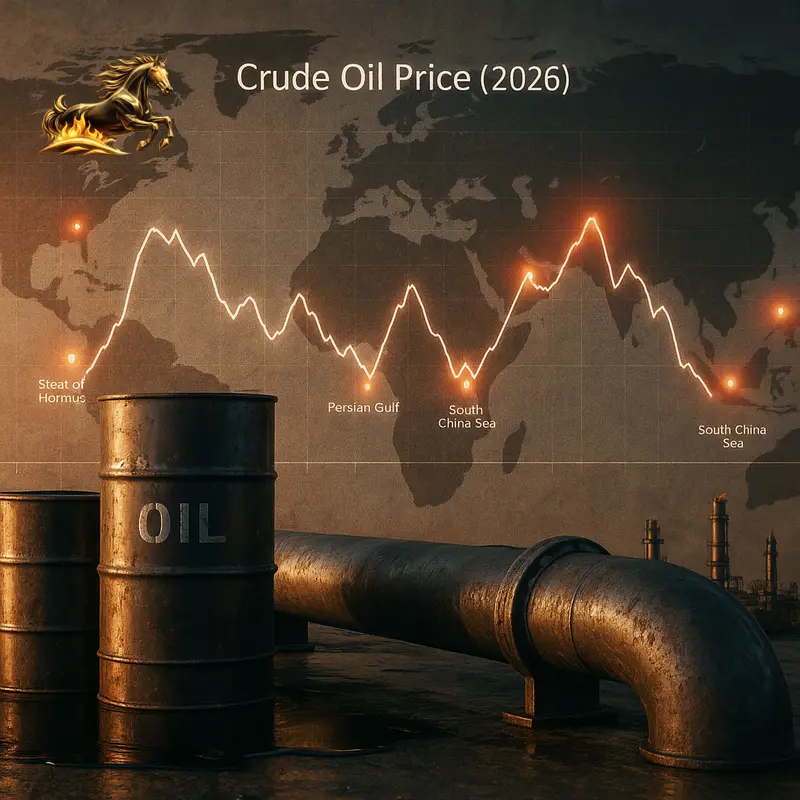
The 2026 Crude Spot Price Report: Navigating Volatility
In July 2026, the global oil market underwent a seismic shift. West Texas Intermediate (WTI) crude futures plunged nearly 5.8% in a single session, hitting a 3.5-month low. Brent crude followed suit, tumbling to levels unseen since early spring. This dramatic price adjustment wasn’t sparked by typical inventory data but by a swift market repricing triggered by a landmark peace deal between the United States and Iran and plans to reopen the strategic Strait of Hormuz—crucial for global oil shipments.
For anyone in energy, finance, or industrial sectors, the crude spot price is more than just a daily number—it’s the heartbeat of the global economy. It influences production costs, inflation, and policy decisions worldwide. As 2026 unfolds amid evolving geopolitical and economic landscapes, understanding the drivers behind this key benchmark is essential. This report breaks down crude spot pricing, highlights pivotal market-moving events, and offers insights to help you anticipate what’s next.
What Exactly Is the Crude Spot Price?
The crude spot price represents the current cost of a barrel of oil available for immediate delivery and payment. It captures the real-time balance between supply and demand at key physical trading hubs across the globe. Unlike futures contracts, which lock in prices for oil delivery at a future date, the spot market deals with the actual barrels changing hands now.
This physical exchange is fundamental to the oil supply chain. While billions of dollars worth of oil futures trade daily, those prices ultimately hinge on spot prices that reflect real-world oil availability and movement.
Key Global Benchmarks
Because oil varies by type and origin, global markets rely on critical benchmarks to set pricing standards for different crude blends. The three main benchmarks are:
- Brent Crude: Produced in the North Sea, Brent is the primary benchmark for Atlantic Basin and global oil prices, referenced by roughly two-thirds of internationally traded oil.
- West Texas Intermediate (WTI): A high-quality, light, sweet crude from the U.S., delivered at Cushing, Oklahoma, primarily setting North American oil prices.
- Dubai/Oman Crude: Vital for pricing Middle Eastern oil exports to Asia—the world’s largest oil-importing region.
Individual crude grades like Nigerian Bonny Light or Saudi Arabian Light are priced relative to these benchmarks, adjusted for quality and location differences.
Key Insight: Grasping the difference between spot and futures prices, along with benchmark roles, is crucial for accurately interpreting market trends and forecasts.
Anatomy of a Price Swing: July 2026’s Geopolitical Shockwave
July 2026’s price swings offer a powerful example of how geopolitical events shape crude spot prices.
The Surge: War Premium at Play
Before the crash, prices soared amid rising regional tensions. Iranian missile strikes near Kuwait stoked fears of threats to the Strait of Hormuz—a critical chokepoint handling roughly 20-21 million barrels daily, about a fifth of global seaborne oil trade.
At this peak, WTI topped $94 per barrel and Brent climbed above $97—classic “war premium” territory, where traders pay extra to hedge against potential supply disruption. These concerns were backed by data: the U.S. Energy Information Administration (EIA) reported over 20 million barrels taken from U.S. crude inventories in June, signaling tight market conditions.
The Drop: Risk Premium Dissolves
Following an overnight ceasefire extension between the U.S. and Iran and plans to reopen the Strait of Hormuz with resumed Iranian crude exports, the risk premium vanished.
- WTI dropped 4.4%, settling at $81.33 per barrel; Brent slid to $83.63.
- Asian markets extended losses, with Brent around $78.29 and WTI at $75.41.
- Indian markets dipped below the psychological $80 level, hitting a three-month low.
This rapid retreat underscores how quickly geopolitical risk premiums inflate and deflate, dramatically affecting spot prices.
Takeaway: While inventory levels matter, market expectations around supply and geopolitical stability often wield greater influence on spot price swings.
Key Drivers Influencing Crude Spot Prices in 2026
July’s volatility sheds light on broader factors shaping crude spot prices this year:
1. Geopolitical Stability and Chokepoint Security
Oil production and transit routes are concentrated in politically sensitive areas. The Strait of Hormuz exemplifies this risk, alongside other vital passages like the Strait of Malacca, Suez Canal, and pipelines through unstable zones.
- Sanctions and Diplomacy: The U.S.-Iran peace agreement has fundamentally altered the supply dynamic by reintegrating over a million barrels per day, reversing years of sanctions. Future diplomatic developments or sanctions could further disrupt markets.
- OPEC+ Coordination: The group’s production decisions, led by Saudi Arabia and Russia, continue to heavily influence global supply. Disunity or unexpected moves add volatility.
2. Supply and Demand Fundamentals
Beyond politics, the core balance of supply and demand steers pricing:
- Supply: U.S. shale producers remain nimble swing suppliers, adjusting output according to prices. Meanwhile, investments in conventional oil projects have declined amid the energy transition, tightening long-term supply. Growth in new production regions like Brazil, Guyana, and Canada is shifting the supply map.
- Demand: Economic health in emerging Asian markets drives consumption, especially in transport and manufacturing. Though electric vehicles and renewables are rising, demand is expected to plateau rather than collapse, with sectors like petrochemicals and aviation still growing.
3. Inventory Levels
Inventories cushion against shocks. Recent significant U.S. crude draws heightened market sensitivity. Weekly reports from agencies like the EIA remain vital indicators of balance.
4. Financial Markets and Currency Effects
Since oil trades in U.S. dollars, exchange rates impact demand and prices:
- A stronger dollar makes oil costlier in other currencies, dampening demand.
- Speculative trading by hedge funds can amplify price trends, creating sharper swings.
Summary: Spot prices emerge from a complex interplay of physical supply-demand fundamentals, geopolitical dynamics, and financial market influences.
What’s Next for Spot Prices? Scenario Analysis
Three plausible scenarios outline what could lie ahead for crude spot prices this year:
Scenario 1: Quick Normalization (Bearish)
If the U.S.-Iran deal holds and Iranian oil flows restart smoothly, with the Strait of Hormuz secure, supply could rise 1.0–1.5 million barrels per day. Combined with steady or increased OPEC+ production, prices may face downward pressure.
Impact: Brent and WTI could test low-to-mid $70s, potentially shifting the market into contango—favoring storage and signaling supply comfort.
Scenario 2: Bumpy Road (Volatile, Range-Bound)
If delays slow Iranian supply re-entry, OPEC+ cuts output to balance the market, and global economics remain uncertain, prices may fluctuate within a $78–$88 band.
Impact: This range rewards agile market players, but no clear price trend emerges.
Scenario 3: Disruption Triggers (Bullish Spike)
Possible shocks include ceasefire collapse, Gulf hurricanes hitting U.S. output, unplanned outages, or a stronger-than-expected Chinese GDP rebound.
Impact: Risk premiums could surge, driving Brent and WTI above $90—and possibly above $100—especially with current tight inventories.
Strategic Insight: Flexibility across scenarios is vital amidst uncertainty.
Strategic Moves for Businesses and Investors
In this dynamic environment, proactive strategies matter.
Industrial Users (Airlines, Shipping, Manufacturing)
- Hedging: Use layered options like costless collars or swaps to shield against spikes while capitalizing on lower prices.
- Contract Flexibility: Negotiate supply agreements with multi-benchmark references and adaptable pricing to capture market swings.
Energy Producers
- Stress Testing: Assess asset performance at sustained $75–$80 prices to identify risk points.
- Operational Agility: Favor projects with quick returns and adjust capital allocation as market shifts.
Investors
- Financial Health: Target firms with robust cost structures poised to weather volatility and seize market opportunities.
- Market Structure Monitoring: Watch shifts from backwardation to contango for trading and storage plays.
The Long Game: Energy Transition and Peak Demand
While 2026 volatility captures headlines, the energy transition shapes the future. Most experts agree oil demand will peak before 2030—not collapse suddenly. Instead, demand will plateau as cleaner tech grows, with sustained consumption in petrochemicals and aviation.
This paints a nuanced outlook:
- 2026–2030: Expect persistent volatility fueled by geopolitics, OPEC+ policy, and economic cycles.
- Post-2030: Electrification and efficiency gains will gradually reduce oil demand. Reduced new project investment may tighten supply, causing periodic price spikes—the so-called “energy crunch.”
Success will require balancing investments in current hydrocarbons with low-carbon innovations.
Conclusion: Key Takeaways
The 2026 crude spot price vividly reflects global risk, economic stability, and the energy future. July’s dramatic sell-off following the U.S.-Iran peace deal shows how rapidly markets shift from fear to optimism, realigning billions in value overnight.
- Geopolitics Drives Short-Term Moves: Removing the Hormuz risk premium alone wiped over 5% off prices—geopolitical monitoring is critical.
- Fundamentals Matter: Even amid optimism, inventory levels support a fundamental price floor.
- Volatile Transition: The market balances cyclical supply-demand with the broad energy transition, ensuring uncertainty.
- Prepare for Multiple Scenarios: Build resilience across a $75–$95 Brent range rather than fixed forecasts.
Frequently Asked Questions (FAQ)
Q1: How does the crude spot price differ from futures?
Spot price reflects immediate delivery and payment cost—real-time supply and demand. Futures price locks in delivery at a future date. When spot > futures (backwardation), the market is tight; when futures > spot (contango), supply is ample.
Q2: Why did prices drop despite low U.S. inventories?
Markets shifted expectations—anticipating a surge in future supply from Iran and Hormuz reopening—triggering selling despite tight current inventories.
Q3: How fast can Iranian oil return?
Iran can ramp up exports over weeks via its “shadow fleet,” but fully restoring over 1 million barrels per day may take months due to maintenance.
Q4: Can OPEC+ prevent prices falling further?
OPEC+ can cut quotas to tighten supply. Upcoming meetings are pivotal as they balance price support and market share amid Iran’s return.
Q5: Is $100+ oil impossible given the energy transition?
Not at all. Geopolitical crises, supply disruptions, or strong emerging market growth can still push prices above $100, though transition may reduce the frequency of spikes.
