
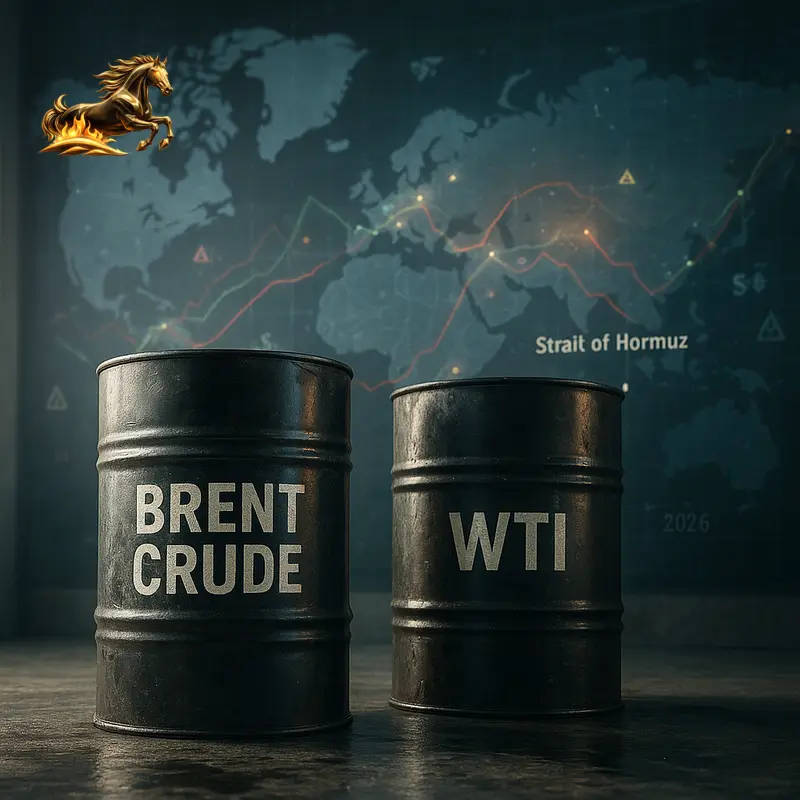
Brent Crude vs. WTI: Decoding the Price Dynamics Shaping the Global Oil Market in 2026
The relationship between Brent Crude and West Texas Intermediate (WTI) is far more than a market curiosity—it directly impacts the global economy and the cost of goods we use every day. In 2026, this dynamic has become increasingly complex, volatile, and driven by geopolitical factors. The price spread between Brent and WTI barrels acts as a real-time barometer of international tensions, diplomatic efforts, and shifts in energy power balances.
This article unpacks why Brent and WTI remain the most important oil benchmarks, how geopolitical events—especially surrounding the Strait of Hormuz—are reshaping their price relationship, and what these developments mean for investors, traders, and businesses in today’s oil markets.
Why Brent and WTI Are the World’s Leading Oil Benchmarks
Benchmark prices are essential to understanding oil markets. Brent Crude and WTI serve as the primary global references for crude oil pricing.
- Brent Crude: Extracted mainly from the North Sea oil fields between the UK and Norway, Brent is the global benchmark for international oil prices. Nearly two-thirds of the worldwide oil supply is priced relative to Brent, which sets pricing in Europe, Africa, the Middle East, and much of Asia. Its price movements often reflect global supply-demand balances and are highly sensitive to geopolitical events and OPEC+ production decisions.
- West Texas Intermediate (WTI): Sourced primarily from U.S. oil fields, WTI is the key benchmark for North American markets. Known for its lighter, sweeter quality compared to Brent, WTI historically traded at a discount because of U.S. export restrictions and transportation hurdles. However, the shale boom has tied WTI more closely to global markets, increasing its influence.
The Brent-WTI spread—the price gap between these two benchmarks—offers crucial insights into regional supply conditions, logistical challenges, and geopolitical risks. In 2026, understanding this spread is vital to grasp the interaction between local and global energy forces.
The Strait of Hormuz: 2026’s Geopolitical Flashpoint Driving Oil Prices
The Strait of Hormuz, a narrow but critical chokepoint between Oman and Iran, has long been a major influencer of oil prices. In 2026, Hormuz remains the central trigger for immediate price swings in both Brent and WTI.
Nearly 20% of the world’s oil — plus substantial volumes of liquefied natural gas — transit this waterway. Any disruptions here ripple through global energy markets, making price fluctuations tied to Hormuz a key risk indicator.
The Price Drop: Diplomatic Hopes Cool the Market
In May 2026, oil prices sharply declined amid renewed optimism for a diplomatic breakthrough. Brent futures slid over 4.5%, dipping below $95 per barrel, while WTI fell more than 5% to a five-week low. This wasn’t due to shifts in supply or demand but rather political developments.
Iran pledged to restore commercial traffic through the strait to pre-conflict volumes within a month. Verified safe passages of several non-Iranian supertankers bolstered hopes of easing tensions. The market rapidly priced out the geopolitical risk premium, with Brent shedding over 16% in May after earlier gains.
Rumors of an unofficial U.S.-Iran deal to lift the naval blockade in exchange for assured safe transit further fueled this sell-off.
The Price Rebound: Renewed Conflict Spurs Risk Premiums
Optimism proved fleeting. U.S. officials dismissed leaked deal talks as fabricated, coinciding with renewed U.S. military strikes on Iranian targets. Prices reversed swiftly; Brent climbed back toward the mid-$90s as markets recalibrated for heightened disruption risk.
This tug-of-war between diplomacy lowering prices and military tensions driving them higher has created a headline-driven, volatile market. Until a lasting solution emerges, uncertainty around the Strait of Hormuz will remain the dominant influence on Brent and WTI price dynamics.
Brent and WTI Prices in May 2026: A Snapshot of Volatility
Reflecting the Hormuz developments, late May 2026 prices show heightened swings:
- Brent Crude trades around $95-$96 per barrel—more than 50% higher than a year ago—demonstrating resilience even amid corrections.
- WTI closely follows, hovering above $91 per barrel, supported by strong U.S. domestic demand and exports, though vulnerable to geopolitical shocks from global events.
Analyst forecasts project Brent reaching $105-$106 per barrel by quarter-end and potentially $120 within twelve months, reflecting an elevated, risk-sensitive market environment.
Structural Forces Behind Brent and WTI Price Movements
While Hormuz-driven geopolitical tensions dominate near-term price shifts, several deeper trends shape Brent and WTI pricing in 2026:
- Geopolitical Realignment & Energy Security: Countries prioritize energy independence and diversification, sustaining stable demand for physical barrels and reinforcing Brent’s benchmark role amid Middle East uncertainties.
- OPEC+ Production Balancing: OPEC+ navigates a complex landscape balancing revenue goals with political and market realities. Their production decisions continue to impact regional supply and the Brent-WTI spread.
- U.S. Shale Output & Export Infrastructure: The shale sector focuses on disciplined growth. Export terminal capacities influence WTI pricing, with bottlenecks causing regional oversupply and price pressure relative to Brent.
- Environmental Policies & Demand Shift: Climate initiatives and evolving consumption trends cap long-term oil demand growth, increasing supply sensitivity to disruptions.
- Global Economic Performance & Emerging Markets: Strong U.S. demand supports WTI, while Brent reflects economic recoveries in Europe and Asia. Emerging economies fuel ongoing oil demand that balances declines in developed regions.
Decoding the Brent-WTI Spread in 2026
The Brent-WTI spread offers critical insight into market dynamics:
- Logistics & Quality Factors: Though WTI is lighter, it traditionally trades at a discount due to inland production and transportation costs.
- Geopolitical Risk Premium: Concerns over Middle East instability maintain Brent’s premium over WTI in 2026.
- North American Supply and Infrastructure: Fluctuating U.S. shale output and export limitations widen or narrow the spread.
Currently, geopolitical risk is the dominant force sustaining Brent’s premium and driving spread volatility.
The 2026 Hormuz Crisis: A Price Cycle in Three Phases
Recent months illustrate how geopolitics shape oil prices:
- Phase 1 (March-April): Rising fears from incidents triggered price spikes, with Brent leading WTI higher due to its sensitivity to seaborne supply risks, widening the spread.
- Phase 2 (Mid-May): Diplomatic progress rumors and Iran’s reopening promises caused prices to fall and the spread to tighten as risk perceptions eased.
- Phase 3 (Late May): Discredited deal rumors and new military actions revived uncertainty, pushing prices up and widening the spread again.
This cycle underscores the necessity of combining fundamental and geopolitical analysis for accurate market perspectives.
Strategic Insights for Market Participants in 2026
Investors and Traders
- Embrace volatility: Prepare for large price moves driven mostly by geopolitical headlines.
- Prioritize geopolitical intelligence: Stay informed on diplomatic and military developments alongside supply-demand fundamentals.
- Explore spread trading: Leveraging Brent-WTI spread differences offers nuanced exposure to regional risks with potential for moderated volatility.
Corporations and Hedgers
- Plan for higher prices: Use layered hedging to guard against rising cost scenarios.
- Manage benchmark risk: Tailor strategies to your contracts’ reference price—Brent, WTI, or blends.
- Incorporate geopolitical buffers: Budget for Brent prices hitting $100-$120 per barrel amid uncertain geopolitical landscapes.
What’s Next for Brent and WTI?
Three potential scenarios stand out:
- Persistent Premium: Middle East tensions keep Brent’s geopolitical risk premium high, sustaining a wide Brent-WTI spread and elevated prices amid limited new supply.
- Decoupling: WTI pricing largely follows U.S. fundamentals, while Brent reflects Eastern Hemisphere geopolitics and Asian demand, weakening correlation and driving divergent market trends.
- Accelerated Energy Transition: Rapid decline in demand pressures both benchmarks downward, with Brent falling faster due to geopolitical risk, while U.S. shale remains more resilient.
The likely reality mixes these scenarios: oil prices will stay vital but volatile, shaped by intertwined geopolitical and structural market factors.
Conclusion: Navigating Oil Market Realities in 2026
Brent and WTI price dynamics in 2026 unfold where global diplomacy, conflicts, and evolving energy policies mesh tightly with core supply-demand fundamentals. Their spread communicates market fears, logistics challenges, and geopolitical hotspots in real time.
Success in this environment demands embracing volatility, integrating geopolitical insight, and broadening strategic viewpoints beyond day-to-day price swings. Staying informed, agile, and prepared is the key to thriving amid the ever-evolving global oil market.
Key Takeaways
- Geopolitics, centered on the Strait of Hormuz, dominate oil price volatility.
- Brent maintains a fluctuating geopolitical risk premium over WTI.
- Long-term signals point to structurally high prices amid persistent risks.
- Effective strategies demand hedging volatility and incorporating geopolitical intelligence.
Frequently Asked Questions (FAQ)
- Q1: Why is Brent usually pricier than WTI?
- Brent’s premium reflects its global benchmark role, greater geopolitical exposure, superior shipping access, and quality factors—compounded in 2026 by Middle Eastern tensions.
- Q2: What drives changes in the Brent-WTI spread?
- Spread shifts stem from geopolitical risks, supply-demand balances, transportation constraints, and quality differences. Wide spreads usually indicate increased Eastern Hemisphere risk or U.S. oversupply.
- Q3: How do Strait of Hormuz events impact U.S. gasoline prices?
- Although the U.S. imports little Middle Eastern oil directly, global Brent price moves affect WTI via crude flows, influencing domestic gasoline prices after some delay.
- Q4: Will high oil prices persist through 2026?
- Analysts foresee structurally high prices fueled by geopolitical tension, constrained supply, and steady demand, with Brent potentially averaging above $100 per barrel.
- Q5: How can consumers and businesses track oil prices effectively?
- Monitor WTI (“CL” futures) for North American and Brent (“BRN”) for global viewpoints. Focus on broader trends and expert geopolitical commentary instead of reacting to daily volatility.
Understanding Brent Crude versus WTI in 2026 unlocks vital insights into a fast-changing, often unpredictable global economy—empowering smarter decisions amid uncertainty.
