
Understanding the Petroleum Price Chart: Trends, Analysis, and Future Outlook in 2026
Introduction
In 2026, petroleum price charts remain indispensable tools for unraveling the intricate relationship between global economics, geopolitics, and energy markets. More than just numbers, these charts reveal how crude oil prices impact everything from transportation costs to global goods pricing.
This article dives deep into petroleum price trends, the causes behind recent fluctuations, and what the future holds. By reviewing historical data and analyzing current market dynamics, readers will gain clear insights into the key forces shaping petroleum prices today and beyond.
Historical Context of Petroleum Prices
The Evolution of Oil Prices
Petroleum prices have long been influenced by major historical events that continue to inform present-day market behavior:
- 1970s Oil Crises: The 1973 OAPEC embargo triggered a dramatic quadrupling of oil prices, spotlighting oil’s geopolitical sensitivity and ushering in a new era of market volatility.
- 2008 Financial Crisis: Oil prices soared to an all-time high of $147 per barrel before nosediving to about $30 amid the global downturn, underscoring crude oil’s vulnerability to economic conditions.
- COVID-19 Pandemic: The 2020 pandemic caused demand to collapse, culminating in unprecedented negative oil prices—a stark reminder of how fragile and dynamic the petroleum market can be.
These milestones emphasize how external shocks and global policies continually reshape the oil price landscape.
Current State of Oil Prices in 2026
As of April 2026, Brent crude oil prices hover around $100 per barrel, with West Texas Intermediate (WTI) close to $89 per barrel. Several pivotal factors influence this pricing:
- Geopolitical Tensions: Ongoing conflicts in vital oil-producing areas, especially the Middle East, generate supply concerns, often leading to price surges.
- Post-Pandemic Demand Recovery: Global transportation and travel sectors have rebounded strongly. Producers are steadily increasing output but remain cautious to prevent oversupply, which could destabilize prices.
- Energy Transition Pressures: Growing policies aimed at expanding renewable energy and cutting carbon emissions are shifting consumption patterns, challenging traditional oil demand.
Understanding these elements puts current petroleum price trends into perspective and helps anticipate future market moves.
Key Factors Influencing Petroleum Prices Today
1. Supply and Demand Dynamics
The fundamental law of supply and demand steers the petroleum market. Rising consumption in emerging economies often drives prices up, while unexpected supply gluts can suppress pricing.
2. OPEC and Non-OPEC Production Coordination
OPEC and allied producers (collectively OPEC+) strategically adjust output to stabilize global oil prices, a critical balancing act during periods of market imbalance.
3. Technological Advances and Shale Oil Production
Technologies like hydraulic fracturing and horizontal drilling have unleashed vast U.S. shale reserves, solidifying America’s role as a leading oil producer and influencing global supply levels.
4. Economic Indicators
Metrics such as GDP growth, employment rates, and industrial output act as proxies for future energy demand. Strong economic data often signals higher oil consumption and upward price pressure.
5. Environmental Regulations and Climate Policies
Stricter climate policies targeting emission reduction influence oil demand trends. The pace of renewable energy adoption will greatly affect petroleum’s longer-term positioning.
Together, these factors create a complex, ever-changing backdrop for petroleum pricing.
Current Trends in Petroleum Price Charts
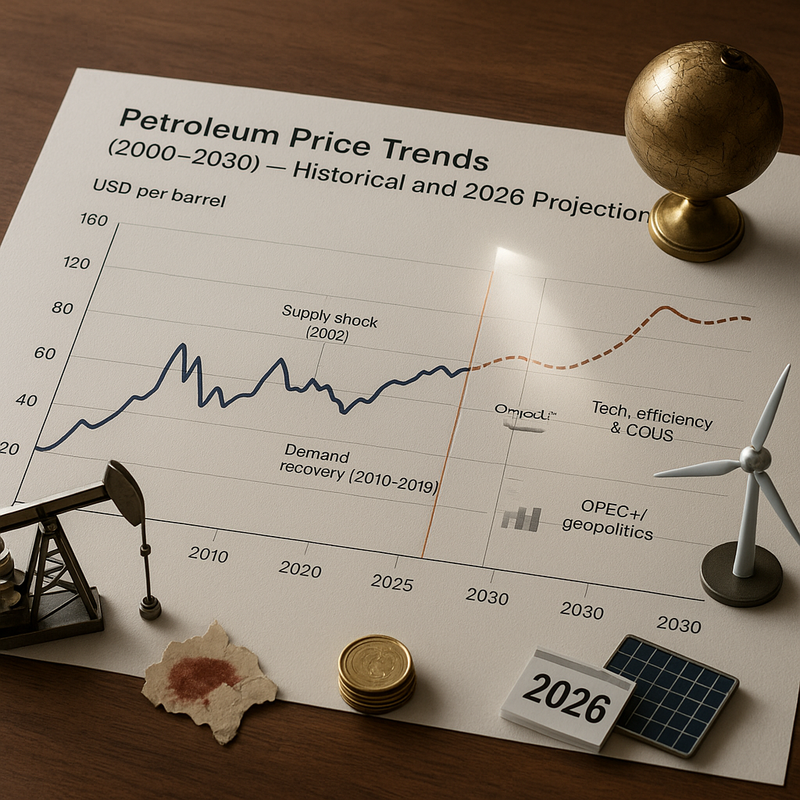
Petroleum price charts vividly illustrate the interplay of these forces over time, revealing patterns in both short-term volatility and long-term trends.
Recent Price Movements
- On April 9, 2026, crude oil prices surged to $98.87 per barrel—up 4.72% from the previous day and an 18.47% increase over the last month. Year-to-date, prices have climbed an impressive 64.59%.
- Gasoline prices averaged $3.06 per gallon, rising 15.79% over the past month and 56.22% year-over-year, reflecting the ripple effects of crude oil prices and refining costs.
Seasonal Influences
Seasonal demand patterns—linked to summer travel and winter heating—drive predictable price fluctuations, typically causing prices to climb ahead of peak consumption periods.
Interpreting petroleum price charts empowers stakeholders to gauge market momentum and anticipate upcoming price shifts.
Future Outlook for Petroleum Prices: 2026 and Beyond
Projected Demand Growth
Experts forecast a steady rise in global oil demand, possibly reaching about 104 million barrels per day by 2027, fueled chiefly by growth in Asian developing economies.
Technological and Energy Transitions
The accelerating adoption of electric vehicles, battery technology, and renewables could moderate oil demand growth. How quickly these technologies permeate markets will significantly influence petroleum’s future.
Policy and Regulatory Developments
Decarbonization policies and incentives for clean energy deployment in major economies will reshape demand and supply dynamics, potentially hastening shifts away from conventional oil consumption.
Geopolitical Risks
Persistent geopolitical uncertainties remain a critical wild card. Any sudden supply disruptions or shifts in trade relations can swiftly alter price trajectories and market balance.
Collectively, these factors frame both the risks and opportunities shaping petroleum markets going forward.
Conclusion
The petroleum price chart encapsulates far more than price movements; it reveals the convergence of economic, political, technological, and environmental forces molding global energy markets. Gaining a solid understanding of these dynamics is essential for investors, policymakers, and consumers alike.
As 2026 advances, staying updated on geopolitical developments, technological progress, and policy changes will be crucial to navigating petroleum market shifts. While renewables expand, petroleum is set to remain a key economic player amid a transforming energy landscape.
Suggested Next Steps
- Track real-time oil price updates on trusted platforms such as Trading Economics and OilPrice.com to stay informed of market trends.
- Follow geopolitical news via reliable financial outlets to anticipate possible impacts on oil supply and prices.
- Explore investment opportunities aligned with the energy transition, recognizing how emerging technologies and policies are reshaping the energy sector.
Equipped with timely insights and robust data, you’ll be well-positioned to confidently navigate the evolving petroleum price landscape in 2026 and beyond.
