
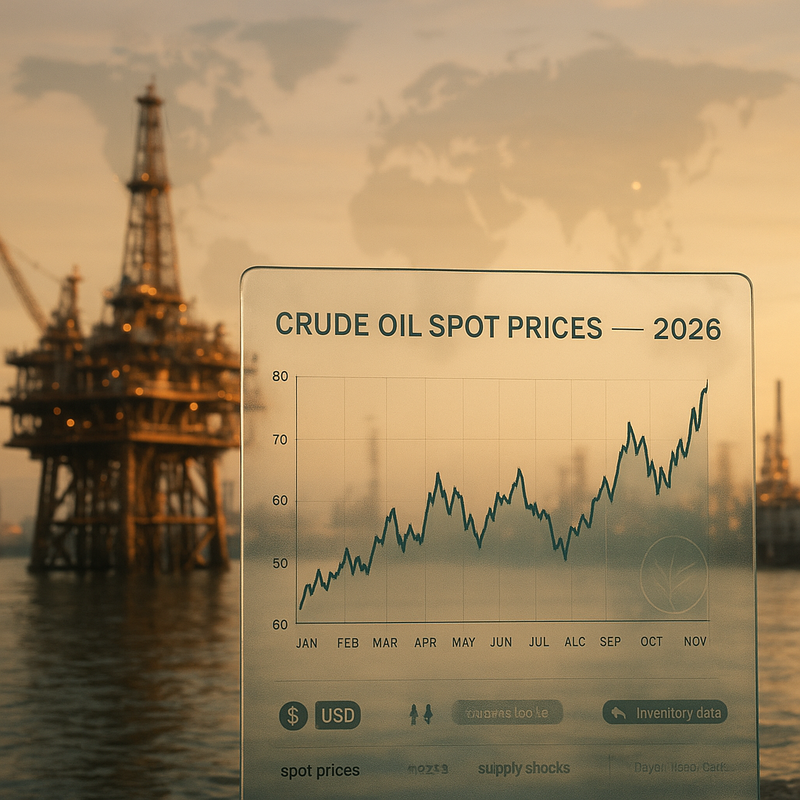
Understanding Crude Oil Spot Prices in 2026: Trends, Influences, and Future Outlook
Introduction
Crude oil remains a vital pillar of the global economy, powering energy supply, transportation, and industry worldwide. As 2026 unfolds, understanding crude oil spot prices is crucial—not only for investors and energy firms but also for policymakers and everyday consumers. The crude oil spot price reveals the current market value for immediate delivery, providing a real-time snapshot of supply and demand dynamics. This article breaks down what crude oil spot prices mean, explores the trends shaping these prices in 2026, and offers insight into what lies ahead in this essential market.
What Are Crude Oil Spot Prices?
Definition and Importance
Crude oil spot prices refer to the cost for immediate purchase and delivery of crude oil. Unlike futures prices, which are contracts for delivery at a later date, spot prices fluctuate constantly, reflecting real-time market conditions. These prices serve key roles:
- Economic Indicator: Changes in spot prices often highlight shifts in economic activity. Rising prices can signal strong demand or limited supply, while declines may indicate surplus inventories or softer demand.
- Market Benchmark: Spot prices form the basis for futures pricing, influencing investments and oil-related financial products.
- Cost Driver: Fluctuations in spot prices ripple through the economy, impacting gasoline costs, heating bills, and overall inflation.
Grasping spot prices offers vital insight into immediate market forces and broader economic health.
Current Trends in Crude Oil Spot Prices (2026)
Market Snapshot
- West Texas Intermediate (WTI): WTI spot prices recently averaged around $95.41 per barrel, showing a slight pullback from earlier highs this year, according to Trading Economics.
- Brent Crude: As the global benchmark, Brent continues to reflect international pressures—from OPEC+ supply decisions to geopolitical tensions.
- Comparative View: Price levels today reflect the cumulative impact of supply chain interruptions and geopolitical uncertainty since early 2023.
Key Factors Driving Prices
Geopolitical Tensions
Ongoing conflicts and political instability in critical producing regions like the Middle East create supply uncertainties, pushing prices upward. Sanctions—especially on major exporters such as Russia—also tighten market availability.
Supply Chain Disruptions
Residual effects from the COVID-19 pandemic and shifting trade policies have unsettled shipping and labor logistics. These challenges contribute to price spikes and unpredictability.
Economic Growth Trends
Global economic activity directly drives oil consumption: robust growth in emerging markets fuels demand, while slowdowns suppress it, reflecting a delicate supply-demand balance.
Environmental Regulations
Mounting pressure to transition toward sustainable energy sources impacts production limits and consumption patterns. While positive for the environment, this shift adds short-term volatility as markets adjust.
Historical Context: How Prices Got Here
Recent Historical Trends
- 2010s Fluctuations: Political events like the Arab Spring pushed prices higher, but oversupply and OPEC’s strategies triggered steep declines from 2014 onward.
- Pandemic Shock: The COVID-19 demand collapse in 2020 led to historic price crashes, including a remarkable moment when futures briefly fell negative. Recovery followed as economies reopened and consumption surged.
OPEC’s Role
OPEC’s ability to manage production quotas has been central to stabilizing markets during uncertainty, underscoring its influence on oil prices.
Spot Prices vs. Futures Prices: Understanding the Difference
Defining Each
- Spot Prices: Reflect immediate delivery costs and respond rapidly to current supply-demand imbalances, often with sharp daily swings.
- Futures Prices: Represent contracts for future delivery; these prices incorporate market expectations about upcoming conditions and factors like inventory levels, geopolitical outlooks, and speculation.
How They Interact
Research shows spot prices often lead futures during fast-changing conditions, especially following major OPEC announcements, highlighting the value of monitoring both for a full market view.
Looking Ahead: The Future of Crude Oil Spot Prices
What to Expect
- Ongoing Volatility: Persistent geopolitical risks and supply uncertainties suggest price swings will continue.
- Energy Transition Impact: The growing shift toward renewables may moderate long-term crude oil demand, potentially capping price increases.
- Economic Recovery Pace: The speed of global economic rebounds will heavily influence oil consumption trends and price directions.
Conclusion: What This Means for You
Crude oil spot prices in 2026 capture a complex blend of geopolitical tensions, economic shifts, environmental policies, and supply challenges—all unfolding in real time. Understanding these factors empowers investors, policymakers, and businesses to better anticipate market movements and make smarter decisions.
Key Takeaways
- Spot prices deliver timely insights into oil market dynamics.
- Geopolitical and supply chain issues remain major price drivers.
- Environmental efforts are reshaping long-term demand.
- Price fluctuations will likely persist amid global uncertainties.
Next Steps for Deeper Insight
Consider exploring:
- Regional impacts of geopolitical events on oil markets.
- Strategies for oil trading and risk hedging.
- Emerging technologies and alternative energy’s role in future demand.
In a world deeply entwined with crude oil, staying informed about spot prices and their drivers is vital. This knowledge equips all stakeholders to navigate the evolving energy landscape with confidence and foresight.
