

Fertilizer Industry Sulfur Supply: The 2026 Crisis Reshaping Phosphate Prices and Global Food Security
In 2026, the global fertilizer industry is grappling with a sulfur shortage that has quickly escalated from a minor disruption to a critical threat to food security. Sulfur, often overshadowed by nitrogen, phosphorus, and potassium, is a vital ingredient in fertilizer production—especially for processing phosphate rock into fertilizers like DAP (diammonium phosphate), MAP (monoammonium phosphate), and NPK blends. Without enough sulfur, abundant phosphate rock cannot be efficiently converted into crop-ready fertilizers.
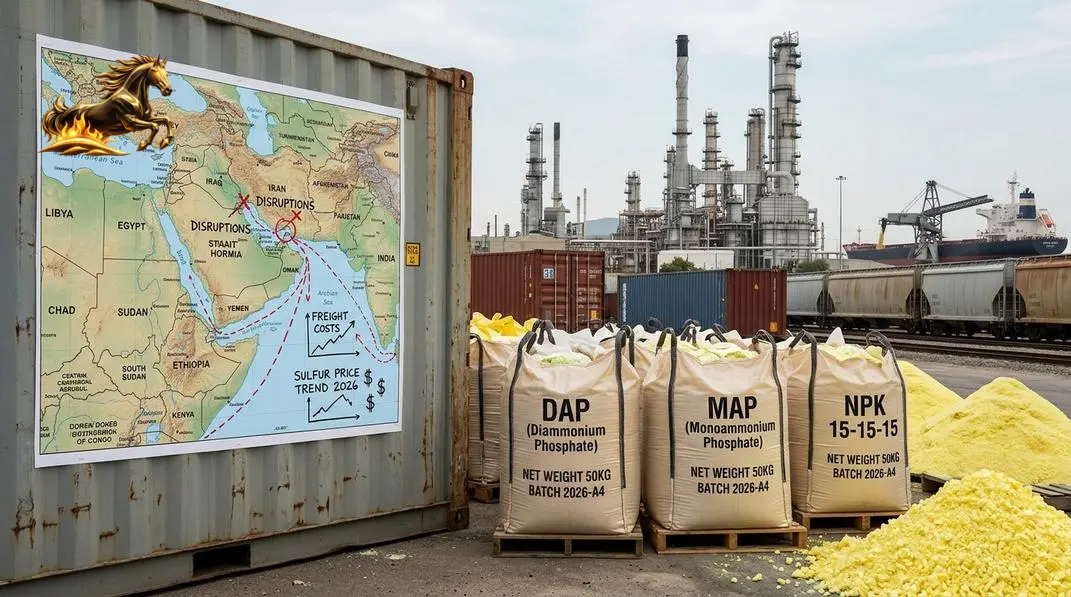
This sulfur supply crunch is shaking up markets worldwide. Disruptions in shipping routes, notably a near two-month halt of fertilizer shipments through the Strait of Hormuz, have tightened sulfur logistics and pushed phosphate fertilizer prices up by 25–30%. Industry analysts, including UkrAgroConsult, forecast that phosphate fertilizer production may drop to around 45 million tons in 2026—well below the typical annual demand of about 75 million tons—due largely to sulfur shortages and soaring sulfur prices. Delivered sulfur prices have surged to $1,000–$1,200 per ton, making phosphate fertilizer production uneconomical for many producers.
But this is more than a commodity story—it directly impacts farmers’ costs, crop yields, fertilizer availability, and ultimately global food supply. As sulfur becomes scarce and expensive, phosphate fertilizers tighten, placing strain on the entire agricultural value chain.
Why Sulfur Matters More Than Most People Realize
Often cited as the fourth essential plant nutrient after nitrogen, phosphorus, and potassium, sulfur’s importance is twofold—both agronomic and industrial.
Agronomic Importance
Sulfur is essential for protein synthesis, enzyme function, and chlorophyll production in plants. It boosts crop quality—enhancing oil and protein content, stress tolerance, and yield stability—especially in crops like oilseeds, cereals, brassicas, corn, and wheat. Even if other nutrients are sufficient, sulfur deficiency can severely limit crop performance.
Industrial Role
On the production side, sulfur’s main use is manufacturing sulfuric acid, which converts phosphate rock into usable phosphate fertilizers. Without sulfuric acid, phosphate rock remains mostly useless as fertilizer. This link tightly binds sulfur supply to phosphate fertilizer production capacity.
Bottom line: Sulfur is indispensable—not just as a nutrient but as a cornerstone industrial input enabling modern phosphate fertilizer manufacturing.
The 2026 Sulfur Shock Explained
The sulfur crisis stems from three interconnected pressures:
1. Availability
Sulfur mainly comes as a byproduct from oil refining and natural gas processing. Refinery slowdowns, reduced gas processing, and shipping disruptions have tightened tradable sulfur supplies. Because sulfur derives mostly as a secondary product, scaling up production quickly is challenging.
2. Price
With delivered sulfur hitting $1,000–$1,200 per ton, fertilizer producers face sharply increased input costs that squeeze margins. For many, converting phosphate rock into fertilizer becomes financially unfeasible.
3. Logistics
The extended suspension of shipments through the Strait of Hormuz—a crucial shipping shortcut—has worsened supply tightness, raised freight costs, and delayed deliveries. These logistics bottlenecks amplify both scarcity and price fluctuations.
In summary: The 2026 sulfur supply crunch results from a complex interplay of constrained availability, soaring prices, and disrupted logistics, each factor compounding the others.
Hormuz and the Sulfur Corridor: How Shipping Shapes the Market
The Strait of Hormuz, a strategic maritime chokepoint, unexpectedly became a critical pressure point in the sulfur supply chain. Prolonged shipment halts delayed cargoes, triggered costly rerouting, escalated insurance premiums, and forced inventory building down.
Since sulfur frequently moves as a byproduct in tightly timed supply chains, even a small disruption along key shipping routes can ripple through into widespread shortages. The Hormuz bottleneck exemplifies how geopolitical and logistical issues can ignite fertilizer input crises and highlights how fragile the global sulfur supply chain truly is.
Key insight: Reliable transport corridors are as crucial as production volumes; without steady logistics, sulfur supply—and consequently phosphate fertilizer availability—remains vulnerable.
Why $1,000–$1,200 Per Ton Sulfur Is a Game-Changer
At these price points, sulfur fundamentally alters fertilizer economics. Producers must decide whether to run plants at full capacity, reduce output, or temporarily shut down facilities. High sulfur costs squeeze profits and often make phosphate fertilizer production unviable.
Major fertilizer producers, such as Mosaic, have reportedly scaled back production due to elevated sulfur costs. These production cuts shrink supply, pushing phosphate prices higher and deepening market uncertainty.
Conclusion: Soaring sulfur prices are a core driver reshaping fertilizer production patterns and global availability.
The 45 Million Ton Problem: Production Vs. Demand
UkrAgroConsult anticipates global phosphate fertilizer production may fall to 45 million tons in 2026, far below an estimated demand of 75 million tons. This substantial gap threatens to:
- Deplete global fertilizer inventories.
- Cause regional shortages and supply imbalances.
- Pressure farmers to reduce fertilizer usage.
- Sustain volatile, high prices.
- Endanger food security by limiting crop nutrition.
This looming shortfall represents a critical constraint on global phosphorus supply for agriculture.
Where Does Sulfur Supply Originate?
Sulfur supply primarily comes from:
- Oil refining and natural gas processing: Elemental sulfur is recovered while “sweetening” sour hydrocarbons to comply with environmental standards.
- Sulfur recovery plants: Facilities like Claus units convert sulfur compounds into elemental sulfur but face capacity limits tied to feedstock quality and maintenance.
- Mining: A smaller contributor supplementing supply where available.
- Trade: Dependent on port infrastructure and steady shipping routes.
Because sulfur supply hinges largely on energy sector operations, fluctuations in oil refining and gas processing indirectly impact sulfur availability.
Takeaway: The sulfur-fertilizer link means agricultural supply is uniquely exposed to dynamics in global energy markets.
Why Sulfur Shortages Lead to Phosphate Fertilizer Shortages
Phosphate rock is not directly usable as fertilizer—it must be treated with sulfuric acid produced from elemental sulfur. A shortage in sulfur cuts production capacity and drives up costs, prompting output reductions and squeezing supply.
This direct connection means any disruption in sulfur availability quickly reverberates through phosphate fertilizer markets, affecting availability and prices.
Producer Response: Idling and Cutbacks
Facing high sulfur expenses, producers are adjusting plant operations. Temporary shutdowns and production scale-backs at major facilities reflect rational responses to soaring input costs. While these actions reduce immediate supply, they also amplify price volatility and raise scarcity expectations.
This cycle—production cuts triggering tighter supply and higher prices—defines market conditions in 2026.
Signs of Relief and Persistent Fragility
Some relief has emerged with the resumption of Kazakh sulfur exports. Yet, ongoing challenges like Vancouver terminal maintenance continue to tighten supply.
These developments show:
- Partial flow restorations ease acute shortages.
- Infrastructure bottlenecks persist.
- Elevated prices and production curtailments sustain a delicate balance.
Thus, even with some recovery, the market remains fragile.
Rising Demand Meets Tightening Supply
Despite supply constraints, sulfur fertilizer demand continues to grow, with the market expected to reach around USD 5.34 billion in 2026—an annual growth rate of roughly 4.58%. This growth reflects increasing emphasis on efficient nutrient use and sustainable agriculture.
This gap between rising demand and limited supply fuels price volatility and stresses the fertilizer value chain.
Regional Perspectives on the Crisis
- Middle East: A key sulfur recovery and export hub, disruptions here affect global flows disproportionately.
- Asia-Pacific: Major phosphate fertilizer consumers like China and India are highly vulnerable to supply shortages and price hikes.
- Central Asia: Restarted Kazakh exports offer some relief but rely on broader stability.
- North America: Relatively resilient but facing logistics and terminal constraints impacting fertilizer movement.
- Europe and Africa: Struggle with affordability challenges affecting fertilizer use and food production sustainability.
Environmental and Regulatory Influences
Sulfur supply is linked closely to environmental regulations that mandate sulfur compound removal from fuels. While these rules ensure sulfur recovery, maintenance and operational limits at refineries may reduce production. Regulatory shifts in emissions standards and compliance further add unpredictability to sulfur availability.
The Farmer’s Experience Amid the Crisis
Farmers rarely handle elemental sulfur directly, but they face its impact through spiking fertilizer prices and tighter availability. This compels tough decisions on budgeting nutrients, prioritizing fields, and managing crop nutrition under constrained conditions—highlighting the critical link between industrial supply dynamics and on-farm realities.
Strategies for Stakeholders in a Tight Market
For Producers:
- Secure raw material supplies.
- Boost sulfuric acid plant efficiency.
- Adjust product mixes.
- Utilize risk management tools.
- Coordinate logistics proactively.
For Distributors and Traders:
- Lock in early supply contracts.
- Maintain prudent inventory.
- Communicate delivery transparently.
- Educate customers on sulfur’s impact and price trends.
For Farmers and Advisors:
- Prioritize soil testing.
- Target nutrient applications where response is highest.
- Plan timing and products carefully.
- Avoid panic buying.
For Policymakers:
- Promote supply chain transparency.
- Fund nutrient efficiency research.
- Facilitate trade.
- Support agricultural resilience programs.
Innovation and Long-Term Solutions
Technological advances can ease future sulfur constraints through:
- Improved sulfur use efficiency in fertilizers.
- Enhanced sulfur recovery and acid production methods.
- Circular nutrient recycling.
- Precision agriculture techniques boosting nutrient efficiency.
While promising, these innovations do not replace the need to address today’s immediate supply challenges.
Conclusion: A New Lesson in Fertilizer Supply Fragility
The 2026 sulfur supply crisis exposes how a seemingly secondary commodity can profoundly influence global food security through complex production, logistics, and economic interrelations. Recognizing sulfur as a strategic, system-critical resource—rather than a niche input—is essential.
Collaboration across the supply chain combined with informed, precise nutrient management at the farm level offers the best defense against ongoing volatility. The clear lesson: securing sulfur supply is fundamental to sustaining phosphate fertilizer production and ensuring stable global food supplies.
Frequently Asked Questions (FAQ)
Sulfur is essential for producing sulfuric acid, the key chemical that converts phosphate rock into phosphate fertilizers. Without sulfur-derived acid, fertilizer manufacturing grinds to a halt.
A mix of shipping disruptions (especially through the Strait of Hormuz), refinery slowdowns, elevated sulfur prices, and terminal maintenance are driving the shortage.
Delivered sulfur prices range from $1,000 to $1,200 per ton, sharply increasing fertilizer production costs.
Yes. High sulfur costs have pushed producers like Mosaic to temporarily idle or reduce phosphate fertilizer production.
Some supply restoration—such as resumed Kazakh exports—is helping, but logistics challenges and elevated prices mean tight markets will likely persist short term.
Final Thought: The 2026 fertilizer sulfur crisis underscores that agricultural productivity depends on more than natural conditions. Reliable access to industrial inputs, dependable logistics, and strategic market management are vital to securing the global food supply in an increasingly complex world. Planning now is essential to prevent temporary supply shocks from becoming long-lasting crises.
