

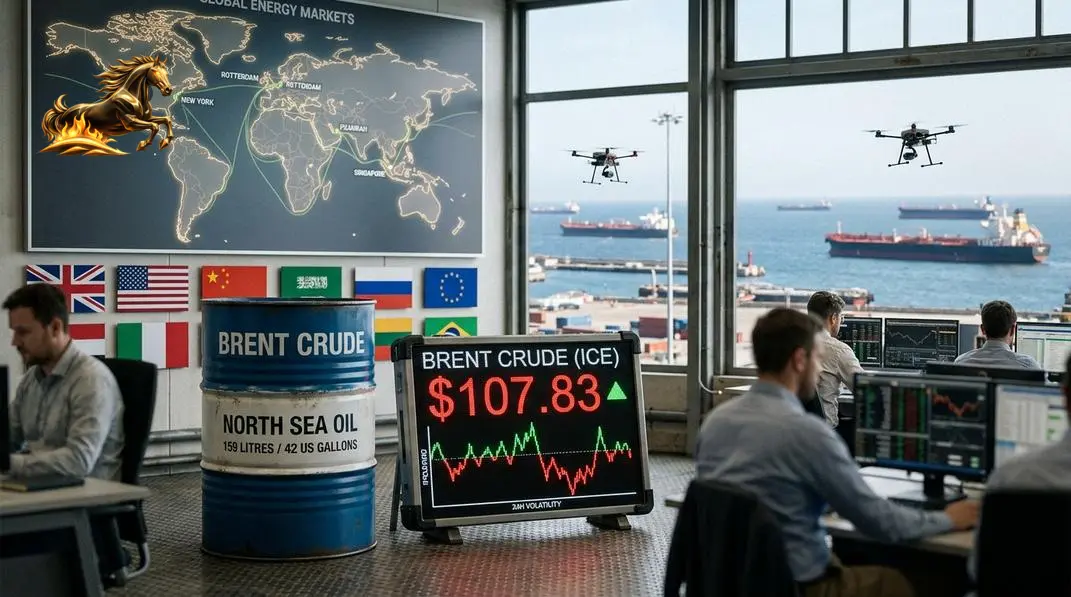
Brent Crude Price Now: Decoding Today’s $107 Volatility
If you checked the Brent crude oil price this morning, you likely saw a market in flux. As of late 2026, Brent is trading near $107 per barrel, a number that reflects far more than just a commodity price. This figure tells the story of clashing forces: a sharp daily decline paired with an astounding annual gain exceeding 75%. It’s a live snapshot of global tensions, economic resilience, and geopolitical uncertainty. From policy shifts in Washington to drone strikes targeting Russian refineries, today’s Brent price reveals how the world grapples with energy security amid geopolitical upheaval.
This article offers a clear breakdown of today’s price volatility, the broader economic implications, and what to expect from Brent crude looking ahead to 2026.
Brent Crude Price Today: A Market on a Knife’s Edge
Today’s facts speak volumes: Brent crude closed at $107.23 USD per barrel in late October 2026, down 2.39% intraday from the previous session. But zooming out reveals a more dramatic story — prices have increased nearly 7% over the past month and surged by an eye-popping 75.76% over the last year.
This gap between short-term drops and a strong long-term surge defines the oil market’s current volatility. Headlines trigger swift selloffs while structural supply constraints keep pushing prices up. Understanding the $107 price today means grasping both immediate political reactions and fundamental market dynamics.
Why Did Brent Crude Prices Drop Today? The Trump Sanctions Waiver Explained
The main catalyst behind today’s price dip was a geopolitical pivot: President Trump’s waiver on sanctions and tariffs targeting Russian oil. For months, sanctions had tightened Russian crude exports, layering a risk premium onto prices due to constrained supply.
The waiver hinted at increased Russian oil flows to global markets, prompting traders to reduce that premium and sparking an immediate price drop. This shows how political decisions, especially from key global powers, can outweigh traditional market data in driving oil price moves.
Short-Term Relief, Long-Term Uncertainty
While the waiver eases some pressure in the near term, its long-term impact remains unclear. The extent and duration of the waiver, plus Russia’s export capacity, will determine outcomes. It doesn’t resolve other supply bottlenecks or geopolitical risks, so these swings highlight how diplomatic developments weigh heavily on Brent crude prices in 2026.
Why Brent Crude Price Remains Above $100 Despite Today’s Dip
1. Middle East Shipping Risks and the Hormuz Premium
The Strait of Hormuz remains a critical chokepoint for oil shipments. Recent attacks on vessels and ongoing regional tension increase transit risks and costs. Since a large share of seaborne oil passes here, instability enforces a persistent price floor that counters bearish headlines.
2. Refining Disruptions from Ukrainian Drone Strikes
Ukraine’s drone attacks on Russian refineries and storage facilities have hit refining capacity hard, squeezing diesel, gasoline, and marine fuel supplies. This refined product shortage keeps crude demand high as refiners push output to fill gaps, adding layers of complexity and volatility to the energy market.
3. Tight Supply and Robust Demand
- Industrial growth and expanding trade fuel strong fuel demand.
- Freight rates are climbing amid transport bottlenecks.
- U.S. crude stockpiles continue falling, signaling sustained consumption.
At the same time, OPEC+ sticks to production cuts, supporting prices. U.S. shale growth, meanwhile, lags due to capital discipline and operational constraints.
The 75% Surge in Brent Crude: A Year of Structural Change
To truly grasp today’s $107, consider the remarkable 75.76% yearly rally driven by deep market shifts:
- Russia-Ukraine Conflict: The war reshaped global oil flows, adding costs and inefficiencies via sanctions and rerouted shipments.
- OPEC+ Discipline: The cartel’s tight production controls have prevented previous price collapses, setting a firm price floor.
- Strong Global Demand: Asia’s recovery—especially China and India—fuels ongoing consumption alongside growing petrochemical needs.
- Underinvestment in Supply: Pandemic shocks and climate concerns have curbed upstream investment, squeezing spare capacity and tightening markets.
Key Geopolitical Hotspots Impacting Brent Prices in 2026
Brent crude prices today reflect global fault lines:
- Middle East: Escalating tensions involving Saudi Arabia, Iran, and Israel risk sudden supply disruptions that could spike prices dramatically.
- Russia-Ukraine: Continued attacks on energy infrastructure drive volatility and strain refining.
- Gulf of Guinea: Pirate attacks and oil theft increase shipment risks from Africa, raising costs further.
- U.S. Policy: Shifts in sanctions and strategic reserve use add layers of uncertainty.
Economic Impacts of $100+ Brent Crude Prices
Sustained oil prices above $100 ripple through the global economy:
- Inflation: Rising energy expenses push up manufacturing and transport costs, fueling broader inflationary pressures.
- Consumers: Higher fuel and heating bills squeeze household budgets, potentially damping spending.
- Businesses: Energy-intensive sectors see tighter margins, with varying ability to pass costs to customers.
- Countries: Oil importers face worsening deficits and currency stress, while exporters capitalize on windfalls.
Energy Transition and the $100 Oil Paradox
- Short-Term Setbacks: Energy security concerns prompt some regions to double down on fossil fuels temporarily.
- Long-Term Momentum: Price spikes underline the urgency for renewables and energy independence, fueling record clean energy investments.
- Capital Allocation: The choices energy firms make—favoring fossil expansion, shareholder returns, or decarbonization—will shape the future energy landscape.
Market Sentiment: Navigating 2026’s Oil Price Volatility
The 2026 Brent market remains highly sensitive:
– Political headlines spark swift price shifts.
– Traders track shipping and inventory data closely.
– Speculative moves amplify swings beyond fundamentals.
Brent Crude Price Outlook: What’s Next?
While forecasts vary, three scenarios dominate:
- Bull Case ($110–$130+): Major supply shocks and falling stocks push prices sharply higher, triggering demand destruction and strategic reserve taps.
- Base Case ($90–$110): Tight but balanced markets persist, with episodic geopolitical-driven volatility and no systemic shocks.
- Bear Case (Below $90): A rapid geopolitical détente, surging production, and weak demand could force prices lower—though this remains unlikely today.
Strategic Tips for Businesses and Investors
Businesses Should:
- Hedge energy costs using derivatives or contracts to stabilize budgets.
- Boost energy efficiency to lower expenses meaningfully.
- Diversify supply chains to reduce exposure to volatile routes.
- Prepare flexible plans for price shocks and sustained high-cost periods.
Investors Can:
- Differentiate among energy sectors—upstream, refining, integrated majors, midstream.
- Explore transition-related opportunities: carbon capture, biofuels, hydrogen, battery minerals.
- Diversify geographically between oil exporters and importers.
- Manage portfolios actively to deal with heightened volatility.
Conclusion: Embracing the New Energy Normal
Brent crude at $107 is more than a price—it reflects a world in transformation and tension. Daily swings highlight market nerves, while the strong yearly gain underscores deep supply challenges.
Takeaways for 2026:
- Geopolitics remain central to price moves.
- The Brent crude price floor above $80 is here to stay.
- Volatility will persist as a market feature.
- The energy transition, though gradual, continues shaping demand and investment.
Understanding these dynamics empowers better decisions for businesses, policymakers, and investors. In uncertain times, adaptability and insight are key.
Frequently Asked Questions (FAQ)
Q1: Why did Brent crude prices drop sharply today?
The main cause was the U.S. waiver on sanctions against Russian oil, suggesting higher supply potential and prompting traders to cut built-in risk premiums.
Q2: If sanctions ease, why do supply worries persist?
The waiver is limited and doesn’t resolve other bottlenecks like OPEC+ production discipline, shale growth delays, damaged refining capacity, or broader geopolitical risks.
Q3: How do attacks on Russian refineries affect global oil prices?
They reduce refined product output, sustaining strong crude demand as refiners maximize production, which supports higher crude prices and adds volatility.
Q4: What is Brent crude and why is it important?
Brent crude is a North Sea oil grade that serves as the global benchmark for about two-thirds of internationally traded oil, influencing prices, inflation, and energy policies worldwide.
Q5: How can individuals protect against rising energy costs?
Direct commodity trading is risky; instead, focus on improving home energy efficiency, consider diversified energy-sector funds, and budget flexibly for transport and utility expenses.
