
body {
font-family: -apple-system, BlinkMacSystemFont, “Segoe UI”, Roboto, Oxygen,
Ubuntu, Cantarell, “Open Sans”, “Helvetica Neue”, sans-serif;
color: #222222;
line-height: 1.65;
max-width: 800px;
margin: 40px auto;
padding: 0 15px;
background-color: #fafafa;
}
h1 {
color: #1a1a1a;
font-weight: 700;
font-size: 2.5rem;
margin-bottom: 30px;
border-bottom: 3px solid #f05a28;
padding-bottom: 10px;
}
h2 {
color: #f05a28;
margin-top: 50px;
margin-bottom: 20px;
font-weight: 600;
border-bottom: 2px solid #f05a28;
padding-bottom: 6px;
}
h3 {
color: #dd5b24;
margin-top: 35px;
margin-bottom: 15px;
font-weight: 600;
}
p, ul {
font-size: 1.05rem;
color: #333333;
}
ul {
list-style-type: disc;
padding-left: 20px;
margin-bottom: 25px;
}
li {
margin-bottom: 10px;
}
strong {
color: #b84400;
}
blockquote {
border-left: 4px solid #f05a28;
margin: 20px 0;
padding-left: 15px;
font-style: italic;
color: #666666;
}
hr {
border: none;
border-top: 2px solid #eee;
margin-top: 55px;
margin-bottom: 55px;
}
.faq q {
font-weight: 600;
color: #c04500;
}
.faq p {
margin-top: 5px;
margin-bottom: 20px;
}
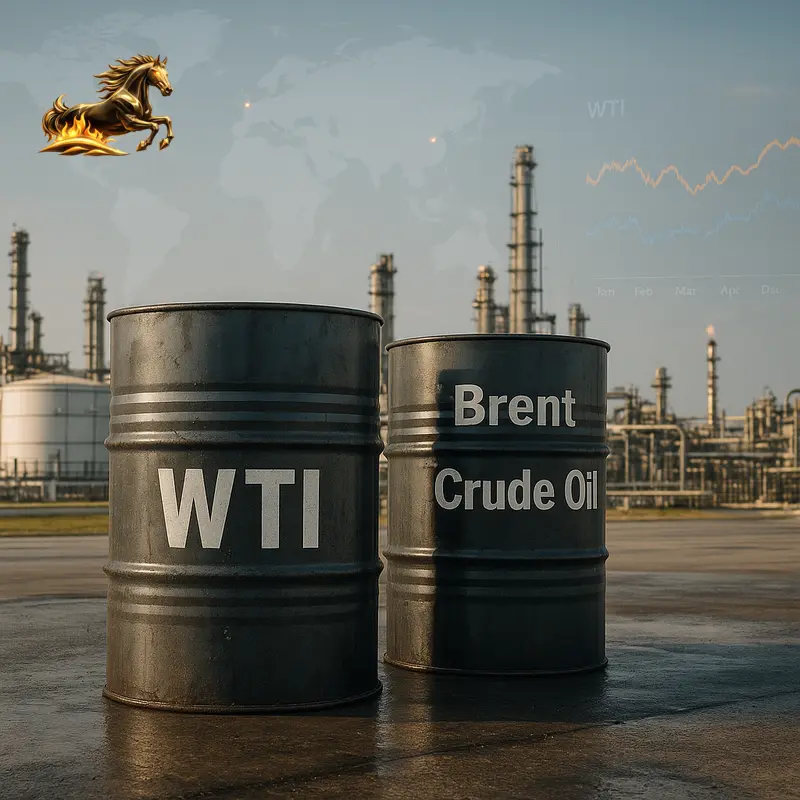
WTI vs. Brent Crude Oil in 2026: Benchmarks, Geopolitics, and Market Outlook
The global oil market in 2026 is brimming with volatility and geopolitical tension, placing West Texas Intermediate (WTI) and Brent crude oil at the center of energy conversations worldwide. Both benchmarks have climbed to near multi-week highs, fueled mainly by renewed worries over supply disruptions amid rising tensions between the U.S. and Iran. For anyone active in energy markets, finance, or international trade, grasping the differences between WTI and Brent is essential. This analysis breaks down their distinctions, what drives their pricing divergences, and what the future holds in this fast-evolving landscape.
The Cornerstones of Oil Pricing: WTI and Brent Crude
To understand today’s market shifts, it helps to clarify what WTI and Brent stand for. These two benchmarks serve as the global reference points for crude oil pricing, each with its own unique traits and market forces.
What Is West Texas Intermediate (WTI)?
WTI, known as “light sweet crude,” is the key benchmark for oil in the Americas. Its defining features include:
- Light: Low density eases refining into premium products like gasoline.
- Sweet: Low sulfur content (~0.24%) means cheaper, cleaner refining.
Primarily sourced from U.S. oil fields in Texas, Louisiana, and North Dakota, WTI trades physically and on futures contracts via the New York Mercantile Exchange (NYMEX). Historically, its pricing was largely shaped by U.S. domestic factors such as inventory levels in Cushing, Oklahoma, and pipeline capacities. Since the U.S. lifted its oil export ban in 2015, WTI’s global significance has grown, though it still retains strong ties to domestic supply dynamics.
What Is Brent Crude?
Brent is the top international benchmark setting the price for about two-thirds of global traded oil. It’s a blend from four North Sea fields—Brent, Forties, Oseberg, and Ekofisk, known collectively as the “BFOE” basket. Brent is light and sweet but slightly higher in sulfur (~0.40%) than WTI, though this difference is minor compared to its strategic geographical importance.
Brent’s waterborne nature makes shipping straightforward via the North Sea, making it the go-to benchmark for European, African, and Middle Eastern crudes heading to global markets, especially Asia and the West. Brent futures trade on the Intercontinental Exchange (ICE). Given its exposure to vital shipping routes, Brent pricing is highly sensitive to international geopolitical risks.
Why WTI and Brent Prices Diverge: The Great Divergence
While WTI and Brent prices once moved in close lockstep, shifts in production, infrastructure, and geopolitics have altered that relationship. The U.S. shale revolution in the early 2010s was pivotal, with WTI sometimes trading at notable discounts due to pipeline bottlenecks and oversupply at home.
In 2026, several factors continue to keep WTI and Brent prices apart:
Key Drivers Behind the WTI-Brent Spread
- Geography and Transportation: WTI’s landlocked position means higher transport costs and delays via pipelines, rail, or trucking, whereas Brent’s sea access incorporates shipping freight costs, making it more reactive to maritime transport fluctuations.
- Geopolitical Events: Brent feels the heat from Middle Eastern tensions more sharply because it’s tied to seaborne supplies transiting chokepoints like the Strait of Hormuz. The recent spike in Iran-U.S. hostilities has pushed Brent prices higher, adding a risk premium. WTI rallies too, but generally on broader global supply concerns instead of direct chokepoint threats.
- Regional Supply and Demand: U.S. factors like production levels, inventories, and refinery needs are key for WTI pricing. Conversely, Brent is driven by OPEC+ policies, North Sea output, and Asian crude demand.
- Macroeconomic Environment: Rising inflation and bond yields in 2026 affect both benchmarks. A stronger U.S. dollar often dampens oil prices, yet fears about supply tightness can spur inflation expectations that reverberate through investment decisions.
- Energy Transition Policies: Europe’s tougher climate rules and carbon pricing weigh more heavily on Brent’s demand outlook than WTI’s, given differing U.S. policy incentives around fossil fuels.
Geopolitics in Action: Recent Market Examples
Recent events illustrate how geopolitical factors distinctly shape WTI and Brent prices:
- 2025 Middle East Escalation: Brent surged sharply on growing supply risks, widening the Brent-WTI spread and boosting U.S. crude competitiveness globally.
- 2024 U.S. Economic Boom: Strong domestic demand pushed WTI above Brent at times, highlighting WTI’s connection to the U.S. economy.
- 2026 Strait of Hormuz Crisis: Renewed conflict at this crucial maritime chokepoint has amplified Brent’s price premium, reflecting direct supply threats. WTI’s gains reflect broader concerns, tempered by robust U.S. shale output.
Looking Ahead: Market Outlook for 2026 and Beyond
Several key trends will shape the WTI-Brent dynamic going forward:
- Continued Volatility: Geopolitical hotspots and macroeconomic uncertainties will keep price swings frequent and sharp, with Brent especially sensitive to global events.
- Spread as a Market Barometer: The Brent-WTI price gap gives real-time insights into regional supply-demand and geopolitical risks.
- The Resilience of U.S. Shale: Agile shale producers will continue to limit extreme price spikes in WTI and influence global crude availability.
- Impact of the Energy Transition: The shift to low-carbon alternatives will increasingly pressure oil demand, with Brent feeling effects sooner and more deeply due to Europe’s strict climate policies.
Why WTI and Brent Matter to You
Understanding how WTI and Brent prices move is critical beyond commodity traders:
- Investors use these benchmarks to make sound energy investment choices.
- Corporate finance teams rely on them for hedging fuel cost risks.
- Policy makers depend on price signals to manage inflation and energy security.
- Global businesses factor in crude price shifts for logistics and cost planning.
Navigating Oil Benchmarks in 2026: Practical Tips
Stay ahead with these savvy strategies:
- Track weekly U.S. Energy Information Administration (EIA) updates for WTI trends.
- Follow OPEC+ statements and maritime news, especially around the Strait of Hormuz, for clues on Brent.
- Contextualize market news by comparing WTI and Brent movements to decode underlying fundamentals.
- Assess your exposure and pinpoint which benchmark most affects your costs for smarter risk management.
Conclusion
In 2026, WTI and Brent crude oil remain pivotal to decoding global energy markets. Brent acts as a barometer for international geopolitical risk, while WTI mirrors the U.S. domestic supply-demand balance. Changes in their price spread deliver crucial signals on regional and worldwide market conditions. Amid ongoing volatility and transformation, understanding these benchmarks equips you to confidently navigate the uncertain energy landscape ahead.
Frequently Asked Questions (FAQ)
Why is Brent crude often priced higher than WTI?
Brent carries a premium due to its global benchmark role and exposure to Middle East supply risks. Its waterborne delivery also adds shipping costs, unlike WTI’s mostly landlocked logistics.
Which benchmark better predicts U.S. gasoline prices?
WTI more directly influences U.S. gasoline pricing since domestic refineries mainly process WTI or similar crudes for fuel production.
What does “overbought” mean relating to oil prices?
“Overbought” signals prices have risen sharply and might soon correct, often identified through technical trading patterns, despite strong fundamentals supporting high prices.
How has the U.S. becoming a net oil exporter affected WTI-Brent dynamics?
Increased U.S. crude exports have narrowed the Brent-WTI price gap, though WTI still faces domestic oversupply and logistical challenges before export effects fully materialize.
Will WTI and Brent lose relevance due to the energy transition?
Despite rising renewables, WTI and Brent will remain vital pricing references for decades, reflecting ongoing oil demand and serving as essential market indicators amid the energy transition.
Mastering the nuances of WTI and Brent crude oil pricing is essential for anyone steering through one of the world’s most influential commodities. As global factors evolve, these benchmarks will continue to tell the crucial story of oil’s role in our changing energy future.
