
body {
font-family: “Helvetica Neue”, Helvetica, Arial, sans-serif;
color: #222;
line-height: 1.6;
margin: 0;
padding: 0 15px 40px;
background: #fff;
}
.container {
max-width: 900px;
margin: 30px auto 60px;
padding: 0 15px;
}
h1, h2, h3 {
font-weight: 600;
color: #0b3c5d;
margin-top: 2.5rem;
margin-bottom: 1rem;
}
h1 {
font-size: 2.4rem;
border-bottom: 3px solid #0b3c5d;
padding-bottom: 12px;
}
h2 {
font-size: 1.8rem;
border-bottom: 2px solid #397dac;
padding-bottom: 6px;
}
h3 {
font-size: 1.3rem;
margin-top: 1.8rem;
color: #23596b;
}
p {
margin-bottom: 1.3rem;
font-size: 1rem;
}
ul {
list-style-type: disc;
padding-left: 26px;
margin-bottom: 1.3rem;
color: #333;
}
ul li {
margin-bottom: 0.6rem;
}
strong {
color: #144d66;
}
blockquote {
border-left: 4px solid #0b3c5d;
margin: 1.5rem 0;
padding-left: 15px;
font-style: italic;
color: #555;
}
hr {
border: none;
border-top: 2px solid #ddd;
margin: 2.8rem 0;
}
.faq-question {
font-weight: 600;
margin-top: 1.2rem;
color: #0b3c5d;
}
.faq-answer {
margin-left: 15px;
margin-bottom: 1rem;
color: #333;
}
em {
font-style: italic;
color: #0b3c5d;
}
What Is the Price of a Barrel of Oil Today? Navigating a Volatile 2026 Market
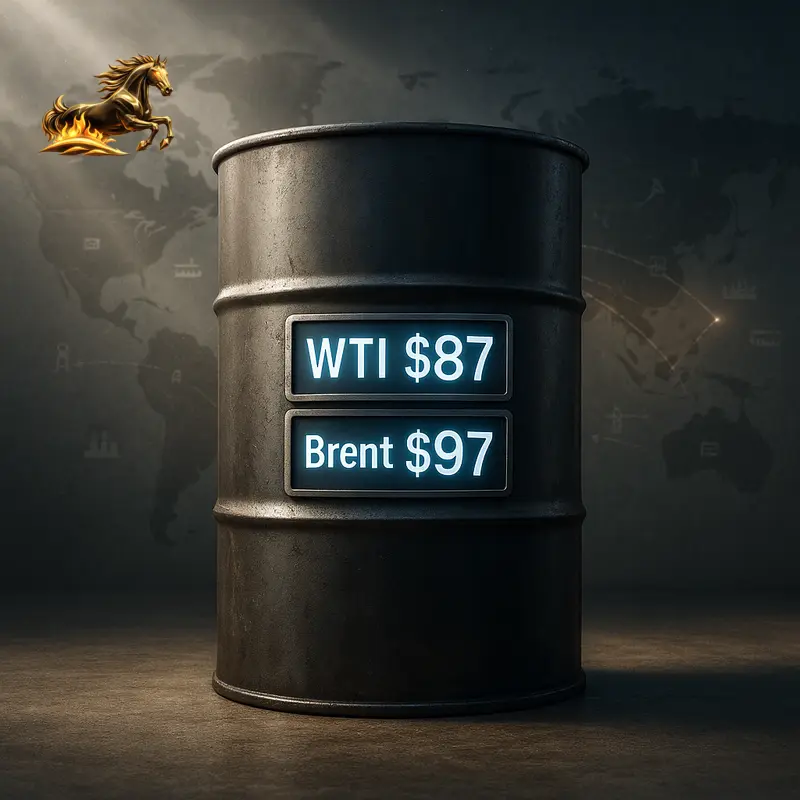
The price of oil isn’t just a number flashing on a screen—it’s a crucial barometer of global economic vitality, geopolitical shifts, and a core driver behind transportation costs and national budgets. Checking the price of a barrel of oil today unveils the intricate web of global supply, political tensions, and strategic maneuvers shaping the energy landscape. As we stand in 2026, oil prices remain delicately poised, with West Texas Intermediate (WTI) hovering near $87 per barrel and Brent crude close to $97. These figures hint at deeper undercurrents—from supply disruptions and sanctions to emerging energy innovations. This article dives into today’s market dynamics, long-term trends, and why oil prices matter in our interconnected world.
The Price of a Barrel of Oil Today: A 2026 Market Snapshot
The oil market today carries an air of uncertainty, punctuated by regional geopolitical hotspots. Current pricing benchmarks reveal:
- West Texas Intermediate (WTI): Around $87.06 per barrel, reflecting U.S. crude supply influenced primarily by domestic production levels and inventory shifts.
- Brent Crude: Approximately $96.92 per barrel, the international benchmark sensitive to geopolitical risks, especially from Middle East tensions.
This roughly $10 premium for Brent underscores the market’s perception of heightened risk. Recent developments—such as renewed U.S. sanctions on Iran—briefly pushed prices below $86, demonstrating the nuanced and often unpredictable impact of geopolitical news. While sanctions typically tighten supply and push prices higher, traders’ initial cautious reaction highlights the complexity behind oil price fluctuations, rooted in enforcement uncertainties and retaliatory concerns. These short-term waves ride atop a deeper sea of fundamental supply-demand and policy factors.
Five Breaking Stories Driving Oil Prices Today
1. U.S. Sanctions on Iran: Market Volatility in Play
The latest U.S. sanctions intended to restrict Iran’s oil exports usually tighten global supply and push prices up. However, the initial market response saw a price dip as traders weighed enforcement risks and possible Iranian countermeasures. This illustrates how sentiment and speculation often fuel price swings beyond straightforward supply-demand logic.
2. Strait of Hormuz: A Critical Chokepoint Under Threat
Iran’s warnings about potential seizures of vessels passing through the Strait of Hormuz—the lifeline funneling about 20% of seaborne oil—raise alarm bells. Even threats here elevate insurance premiums and reduce tanker traffic, tightening supply. Reports of tanker numbers dipping below 20 amid tensions reveal the tangible impact of these geopolitical risks.
3. Escalating Houthi Attacks in the Red Sea
Yemen’s Houthi forces persist in targeting oil shipments with ballistic missiles and drones, particularly Saudi tankers. The Red Sea is a vital passage for oil heading to Europe via the Suez Canal. Continuous attacks lead to expensive rerouting and heightened logistics volatility, intensifying supply concerns.
4. Pemex and Petrobras Team Up: Expanding Supply Horizons
Amid ongoing geopolitical uncertainty, Mexican state oil company Pemex and Brazil’s Petrobras have partnered to explore ultra-deep reserves in Campeche Bay. Although production from these ventures remains years away, this signals sustained investment in boosting oil supply despite global energy transition pressures.
5. Tanker Traffic Trends: A Barometer of Market Stress
The recent drop in tanker transits through Hormuz provides a direct, immediate snapshot of supply tension. Lower tanker flow translates to higher shipping costs, inventory buildups, and increased price swings—where geopolitical friction directly hits market fundamentals.
Key takeaway: Today’s oil prices react dynamically to not only physical supply but also the perceived stability and security of global oil supply chains.
Core Drivers: What Shapes Oil Prices in the Long Run?
While breaking news triggers short-term price moves, the long-term oil price is governed by foundational forces:
Supply and Demand Dynamics
The tug-of-war between global demand and supply remains pivotal.
- Tight Supply: Over the past decade, lower investment in new exploration due to price crashes, ESG pressure, and policy shifts has constrained spare capacity, creating upward price pressure when demand rises.
- OPEC+ Influence: This alliance carefully adjusts production to manage member interests and global market balance, serving as a crucial supply regulator.
- Demand Steadiness: Despite rapid growth in electric vehicles and renewables, sectors like aviation, petrochemicals, and developing economies maintain solid oil demand.
Geopolitical Landscape
Geopolitics now influences oil pricing consistently rather than sporadically.
- Conflict Zones: Regional instability can cut production or damage infrastructure.
- Sanctions: Policies targeting countries like Iran and Russia dramatically reshape trade flows.
- Chokepoint Security: Protecting vital shipping lanes remains essential for stable supply and price control.
Global Economic and Policy Environment
Wider economic conditions shape demand curves.
- Economic Growth: Industrial expansion in emerging markets underpins sustained oil needs.
- Monetary Policies: Currency values and interest rates affect affordability and investment appetite.
- Energy Transition: Regulatory pushes and incentives gradually reshape long-term demand patterns.
Strategic Petroleum Reserves (SPRs)
National reserves act as shock absorbers:
- Supply Buffer: Releases help smooth prices during disruptions.
- Market Confidence: Knowing reserves exist reduces panic, stabilizing price expectations.
Summary: Long-term oil prices arise from a nuanced balance of constrained yet resilient supply-demand, geopolitical factors, economic trends, and strategic reserves.
Oil Price Outlook for 2026 and Beyond: Expert Predictions
Looking ahead, analysts project several possible price trajectories:
Base Scenario: Elevated Prices Persist ($85 – $105 per Barrel)
Assuming steady economic growth, disciplined OPEC+ output, and managed geopolitical risks, oil prices are expected to remain well above pre-pandemic levels, avoiding extreme volatility.
Upside Risk: Potential Spikes Near $150
Severe supply shocks, escalating conflicts, or faster-than-anticipated demand surges could trigger sharp price jumps—with serious inflation implications and recession risks for vulnerable economies.
Downside Risk: Price Corrections
Global recession, OPEC+ breakdown causing oversupply, or breakthroughs in alternative energy adoption could depress oil prices significantly.
Energy Transition and Technological Impact
Advances in renewables and electric vehicles will gradually restrain oil demand growth, capping long-term prices while near-term demand remains robust.
Core message: While volatility will continue, a moderately high price range is the most realistic medium-term outlook, steered by converging factors.
Why Do Oil Prices Matter to Everyone?
Inflation and Economic Growth Impacts
Rising oil costs boost transportation, manufacturing, agriculture, and consumer goods expenses, often stoking broader inflation and shaping monetary policy.
National Security and Strategy
- Importing Countries: Face trade deficits, pushing to diversify energy sources and build strategic reserves.
- Exporting Nations: Rely on oil revenues for budgets, influencing production and geopolitical strategies.
Environmental and Energy Transition Effects
Higher oil prices encourage cleaner energy adoption and efficiency, while low prices may slow climate progress. Today’s high-price environment exerts pressure on consumers but accelerates energy transition efforts.
Insight: Oil pricing is far more than a market figure—it’s a fundamental force shaping economies, policies, and the environment.
Practical Tips for 2026 Stakeholders
Businesses
- Hedge fuel costs to guard against price swings.
- Invest in energy efficiency and upgrade fleets.
- Diversify energy inputs to minimize oil dependence.
Investors and Traders
- Track geopolitical hotspots, especially key chokepoints.
- Analyze OPEC+ strategies within broader fiscal contexts.
- Separate short-term risk premiums from underlying long-term trends.
Policymakers
- Keep strategic petroleum reserves well-stocked and updated.
- Support clean energy diversification and renewable investments.
- Promote diplomacy to ease regional tensions.
- Sustain dedication to energy transition goals.
Conclusion: Today’s Oil Price Reflects a Complex Global Reality
The current oil price mirrors a world balancing geopolitical friction, tight supply, and a gradual pivot to sustainable energy. While daily headlines fuel market swings, the overarching trend points toward sustained higher prices punctuated by shocks amid an evolving energy transition. Understanding these dynamics is key for informed decisions in business, investment, and policy, in a world where energy remains indispensable to economic and geopolitical stability.
Frequently Asked Questions (FAQ)
1. Why did oil prices initially drop after new U.S. sanctions on Iran?
Because markets reacted to uncertainties about sanctions enforcement and possible retaliation, highlighting the complexities of geopolitical risk pricing.
2. How important is the Strait of Hormuz for oil prices?
Extremely critical—it channels about 20% of global seaborne oil, so any threats raise risk premiums, especially impacting Brent crude prices.
3. What differentiates WTI from Brent crude?
WTI is U.S.-based, lighter crude influenced by domestic supply, while Brent serves as an international benchmark reflecting geopolitical risks at key shipping routes, often commanding a premium.
4. Will renewables and electric vehicles reduce long-term oil prices?
Yes, but gradually. While growing adoption slows demand increase over decades, significant price drops are not expected by 2026.
5. What indicators best predict oil price movements?
Short-term watchers focus on Middle East geopolitics and OPEC+ output decisions; medium to long-term trends depend on global economic growth, inventory levels, and energy transition progress.
This comprehensive overview reveals how today’s oil prices emerge from intertwined forces, clarifying what they mean for global energy, economics, and policy during this pivotal moment in 2026.
