
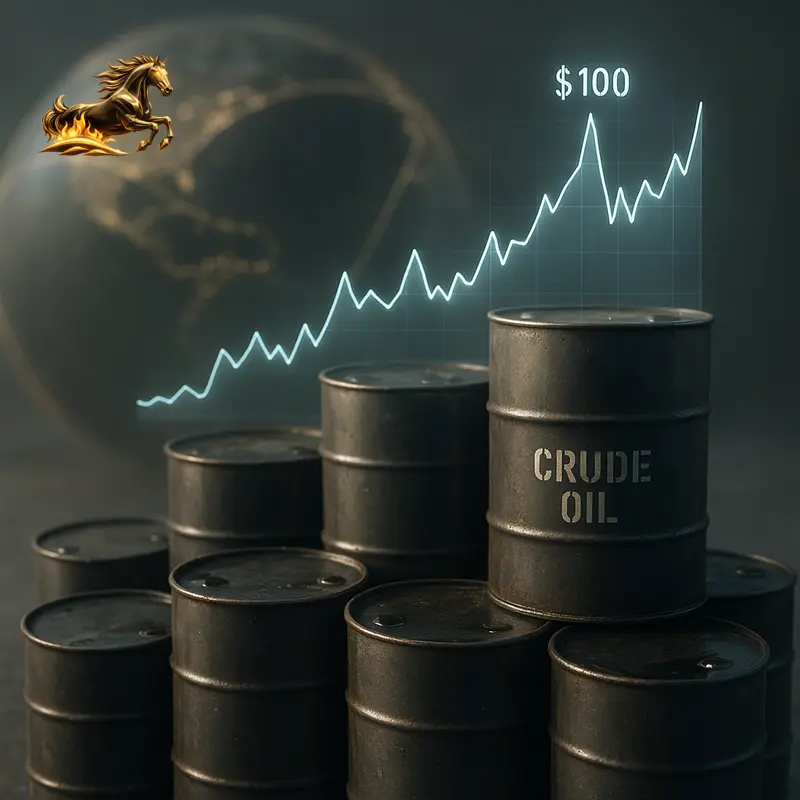
Barrel Price Now: Navigating the $100+ Volatility and Future of Crude in 2026
In 2026, the barrel price now remains one of the most crucial global economic barometers. Beyond a mere commodity value, it captures the complex interplay of geopolitical tensions, economic shifts, and the accelerating energy transition. Recent months have witnessed extreme volatility, with prices surging above $114 per barrel before tumbling near $68 as political and economic dynamics evolve. For investors, business leaders, and policymakers alike, decoding these price swings is essential to making informed decisions in today’s intricate landscape.
This article delivers an insightful overview of the current global oil market, the key factors driving barrel price now volatility, and what lies ahead as we navigate through 2026 and beyond.
Understanding the Current Oil Price Landscape in 2026
Entering 2026, oil prices are entrenched within a higher, more volatile range than seen previously. Brent crude prices steadily oscillate between $85 and $115 per barrel, with West Texas Intermediate (WTI) typically a few dollars cheaper—reflecting differing regional supply and demand conditions. This marks a shift from the pre-2020 era when prices mostly hovered between $50 and $70 per barrel.
Why this change? It stems from a finely balanced global supply-demand equation:
- Supply Constraints: Spare global production capacity is alarmingly scarce, near historic lows. Even minor disruptions can instantly push prices higher.
- Demand Resilience: Despite mounting pressure from the energy transition and electrification, demand remains sturdy, especially in emerging Asian markets and industries like petrochemicals and aviation. This near-term vigor sustains price levels amid structural transitions.
Brent vs. WTI: The Key Crude Benchmarks
Grasping the differences between Brent and WTI is critical to understanding barrel price now trends:
- Brent Crude: Extracted from the North Sea, Brent functions as the global benchmark for roughly two-thirds of international oil trade. Its price reflects supply and demand across Europe, Africa, and the Middle East.
- West Texas Intermediate (WTI): A U.S.-based benchmark, WTI is lighter and sweeter, sensitive to North American inventories, pipeline flows, and domestic policies. The Brent-WTI spread reveals regional market dynamics at play.
While geopolitical crises often move both in tandem, events such as U.S. Strategic Petroleum Reserve releases or OPEC+ production changes cause notable divergences.
Key Insight: Today’s oil price environment is structurally tighter and increasingly sensitive to shocks, resulting in a higher baseline and larger price swings than previous decades.
The Geopolitical Spark: How Conflict Moves the Market
Geopolitical turmoil remains the foremost catalyst behind barrel price now volatility. The oil market’s vulnerability intensifies due to critical transit chokepoints situated in politically fragile regions.
The Strait of Hormuz: A Pivotal Chokepoint
About 20-30% of the world’s seaborne oil transits through the narrow Strait of Hormuz. Any sign of disruption here immediately spikes uncertainty and boosts prices.
Recent events illustrate this dynamic:
- Announcements of potential blockades in the Strait triggered price surges above $100 per barrel, with Brent hitting $101.88 and U.S. crude $104.69, reflecting acute market fears.
- Conversely, after a cargo ship attack near the Strait, prices unexpectedly dropped—indicating market confidence that tanker operations would remain uninterrupted despite regional threats.
These examples underline the market’s nuanced, real-time interpretation of geopolitical risks beyond headlines.
Cycles of Surge and Retracement
Price behavior often follows a predictable arc:
- Surge: Fear of conflict drives prices sharply upward, occasionally topping $114 per barrel.
- Peak: Worst-case disruption scenarios push Brent close to $119 during hotspots.
- Retracement: Diplomatic easing causes prices to plunge, reversing much of the gains.
This classic “buy the rumor, sell the news” pattern directly translates into higher fuel costs and inflationary pressures worldwide.
Critical Takeaway: Geopolitical signals wield immediate influence over barrel price now levels, making conflict risk a pivotal factor in market strategy.
Beyond Conflict: Other Key Drivers of Barrel Price Now in 2026
While geopolitical flashpoints dominate, several fundamental forces consistently shape oil price movements:
OPEC+ Policy and Production Discipline
OPEC+ remains the chief architect controlling global supply. Its production choices aim to uphold prices that support member economies without crippling demand through steep costs.
In 2026, OPEC+ faces balancing multiple pressures:
- High prices risk hastening energy transition adoption.
- U.S. shale production acts as a flexible supply source, capping price spikes.
- Maintaining unity across diverse member interests remains challenging.
Recent OPEC+ meetings highlight a preference for cautious market calibration over sudden shifts.
The Evolving U.S. Shale Sector
U.S. shale producers have shifted from aggressive output expansion to disciplined capital management, focusing on shareholder returns. This reduces shale’s ability to rapidly counter supply shocks, tightening global supply conditions and amplifying price sensitivity.
Economic Growth and Demand Patterns
Oil demand closely tracks economic performance:
- Advanced economies are plateauing or reducing oil use due to efficiency gains and electrification.
- Emerging Asian economies continue to propel demand through industrial growth and rising vehicle ownership.
Recession threats pose downside risk, potentially depressing demand and prices quickly.
Financial Factors: U.S. Dollar and Speculative Trading
Because oil is priced in U.S. dollars, a stronger dollar tends to suppress demand by making oil costlier in other currencies. Additionally, speculative activity in oil futures markets can magnify short-term price swings, sometimes disconnecting prices from physical supply realities.
Summary: Supply policies, economic trends, and financial nuances intertwine to shape a sophisticated and volatile barrel price now landscape beyond headline geopolitics.
The Energy Transition: The Long-Term Shadow Over Oil
The global energy transition is fundamentally reshaping oil demand trajectories.
Policies and Climate Commitments
Worldwide net-zero pledges accelerate renewables deployment, EV adoption, and carbon pricing—all designed to curtail fossil fuel consumption gradually.
While these measures decrease transportation fuel demand over decades, change unfolds steadily rather than abruptly.
Oil’s Persistent Role as Industrial Feedstock
Despite shrinking fuel demand, oil remains indispensable as feedstock for petrochemicals, plastics, fertilizers, and industrial products—securing a baseline of sustained demand.
Many oil firms now reposition as broader energy and materials providers, investing in carbon capture, hydrogen, and recycling to future-proof their portfolios.
Key Point: The energy transition sets a gradual ceiling on oil demand growth, even as essential industrial uses persist.
Regional Hotspots Influencing Barrel Price Now
Beyond the Middle East, various regions command influence over oil markets:
- Russia & Caspian: Sanctions and altered trade routes raise logistical costs, supporting higher prices.
- Venezuela & Latin America: Political shifts could revive Venezuelan output easing tight supplies, while regional instability in Brazil and Mexico pose risks.
- Africa: Emerging projects offer promise but face political, security, and infrastructure hurdles increasing supply uncertainty.
Insight: Regional developments demand close monitoring, as they can trigger sudden price shifts or reshape supply outlooks.
Practical Implications for Stakeholders
Investors and Traders
Volatility creates both risk and opportunity. Effective risk management and vigilant market analysis are vital. Energy equities benefit from elevated prices, while fuel-dependent sectors face headwinds.
Businesses
Fluctuating energy costs complicate budgeting and operations. Embracing hedging strategies and integrating energy transition scenarios into capital planning is critical.
Consumers
Rising barrel price now levels translate into higher fuel and heating expenses and broader inflation, impacting household finances and purchasing power.
Bottom Line: Oil price volatility reverberates across sectors, underscoring the importance of informed, proactive strategies.
Future Outlook: What Lies Ahead for Barrel Price Now?
While precise forecasts are difficult, three plausible scenarios shape the 2026 outlook:
- Bullish: Prolonged geopolitical strife, strict OPEC+ supply controls, resilient Asian demand, and underinvestment in new fields sustain prices above $100.
- Bearish: Diplomatic breakthroughs, recessionary pressures, aggressive U.S. shale growth, and rapid energy innovations push prices near $70.
- Most Likely: Continued sharp volatility within a $75-$125 per barrel range, reflecting tight supplies balanced by emerging demand constraints.
Essential Takeaway: Price swings will remain the norm, driven by geopolitical risks, market discipline, and the evolving energy transition.
Conclusion and Key Takeaways
Navigating oil prices in 2026 involves balancing acute geopolitical risks and constrained supplies against the long-term shifts ushered in by the energy transition. Understanding this dynamic helps decode the barrel price now and anticipate future market movements.
Summary:
- Geopolitical tensions, especially around chokepoints like the Strait of Hormuz, remain top price volatility triggers.
- Global supply is structurally tight, heightening sensitivity to disruptions.
- OPEC+ carefully balances revenue needs against market share amid shifting dynamics.
- The energy transition imposes a gradual but inevitable ceiling on oil demand growth.
- Market participants must deploy agile risk management and forward-looking strategies amidst ongoing volatility.
For investors, businesses, and consumers, staying tuned to geopolitical updates, OPEC+ policies, economic indicators, and inventory trends is key to managing risks and capitalizing on opportunities.
FAQ: Barrel Price Now in 2026
Q1: Why is there so much oil price volatility?
With minimal spare capacity, any supply threat or hope rapidly shifts prices. The market constantly adjusts to geopolitical news, economic data, and policy changes, driving swift fluctuations.
Q2: What distinguishes Brent from WTI crude?
Brent is the international benchmark from the North Sea, representing supply conditions for Europe, Africa, and the Middle East. WTI, U.S.-based, is lighter and sweeter, influenced by North American dynamics. Their price gap reflects regional market imbalances.
Q3: How do high oil prices impact consumers?
They increase gasoline, diesel, and heating costs directly and raise broader goods prices through higher transportation expenses, fueling inflation and curbing disposable income.
Q4: Is oil losing relevance due to electric vehicles?
Not yet. While transportation fuel demand may plateau or decline gradually, oil’s role in petrochemicals and industrial feedstock keeps it essential. The energy transition is steady but incremental.
Q5: Who benefits most from elevated oil prices?
Oil-exporting nations and producers gain higher revenues, while importing countries and fuel-reliant industries face increased costs and economic strain.
The barrel price now isn’t just a number; it embodies the crux of global economic power, geopolitical shifts, and an energy sector in transition. Mastering its story equips you to navigate the challenges and seize the opportunities that 2026 presents.
