
body {
font-family: Arial, Helvetica, sans-serif;
color: #333;
line-height: 1.6;
max-width: 900px;
margin: 2em auto;
padding: 0 1em;
background-color: #fcfcfc;
}
h1 {
color: #0b3d91;
border-bottom: 3px solid #0b3d91;
padding-bottom: 0.3em;
margin-bottom: 1em;
font-weight: 700;
}
h2 {
color: #105293;
border-bottom: 2px solid #ccc;
padding-bottom: 0.3em;
margin-top: 2em;
margin-bottom: 0.8em;
font-weight: 600;
}
h3 {
color: #31708f;
margin-top: 1.5em;
margin-bottom: 0.5em;
font-weight: 600;
font-style: italic;
}
p, li {
font-size: 1rem;
margin-bottom: 1em;
}
strong {
color: #d35400;
}
ul {
margin-left: 1.2em;
margin-bottom: 1em;
list-style-type: disc;
color: #555;
}
blockquote {
border-left: 4px solid #0b3d91;
background-color: #e9f1fb;
padding: 0.6em 1em;
margin: 1.5em 0;
font-style: italic;
color: #264a7f;
}
hr {
border: none;
border-top: 1px solid #ccc;
margin: 2em 0;
}
.faq-question {
font-weight: 700;
margin-top: 1.2em;
color: #0b3d91;
}
WTI Oil Price Per Barrel Today: Market Analysis
As we near the long U.S. Independence Day weekend, West Texas Intermediate (WTI) crude oil prices remain steady within a familiar range. On July 3, 2026, WTI is trading between $68.5 and $69 per barrel, reflecting a market that’s currently balanced in the near term. This pricing is more than a number—it represents the complex mix of shifting geopolitical factors, supply adjustments, and evolving global energy strategies. For investors and industry players, understanding the drivers behind today’s WTI oil price is essential to navigating the energy market’s ongoing complexities. This analysis dives into the key influences, places current prices in historical context, and offers a forward-looking 2026 forecast.
Why WTI Oil Prices Matter Today
WTI crude oil serves as a critical benchmark, shaping economic activity, industry decisions, and geopolitical strategies across the globe.
The Significance of WTI as a Global Benchmark
West Texas Intermediate’s light, sweet quality makes it ideal for refining products like gasoline, grounded as the North American oil standard and widely referenced worldwide. Traded on the New York Mercantile Exchange (NYMEX), WTI price movements provide real-time insights into supply-demand dynamics, geopolitical risks, and investor sentiment, often setting the tone when the market talks “oil prices.”
Today’s Price Snapshot: Stability in the High-$60s
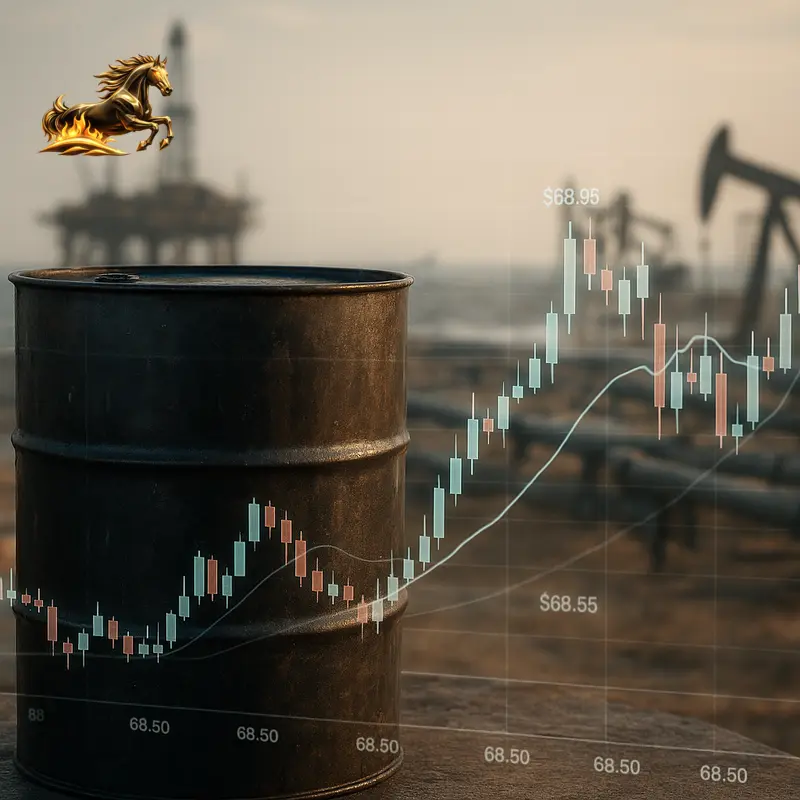
According to TradingEconomics, WTI is holding at about $68.5 per barrel, nearly matching yesterday’s close of $68.43. Investing.com’s live futures data echoes this, hovering around $68.7. This consolidation just below the low-$70s seen last week signals the market is digesting recent changes in supply risks and demand forecasts.
Core Factors Driving July 2026 WTI Prices
Multiple intertwined drivers shape the current WTI oil price range, reflecting both economic fundamentals and shifting market psychology.
1. Geopolitical Tensions Ease, Reducing Hormuz Risk Premium
One of the most impactful factors is the easing of geopolitical risk.
- Progress in U.S.-Iran Diplomacy: Improved diplomatic ties between the U.S. and Iran ease fears concerning the Strait of Hormuz, a vital artery for almost 20% of global oil flows.
- Risk Premium Unwinds: Earlier concerns added a premium to prices due to potential supply disruptions. As tensions cool, this premium has been removed. That accounts for WTI’s drop from nearly $70 on June 24 to today’s balanced range, reflecting renewed confidence in uninterrupted Persian Gulf oil shipments.
2. Growing Focus on Supply Surplus
While geopolitical risks fade, attention shifts squarely to supply fundamentals.
- Supply Surplus Concerns: The market is increasingly aware that current crude supplies—including U.S. shale, OPEC+ production, and non-OPEC output—are ample relative to demand.
- Balanced or Abundant Supply Environment: This abundance dampens price rallies and keeps WTI trading within its current range.
3. Adjusted Financial Firm Outlooks
Institutional investors are adjusting expectations accordingly.
- UBS Revises Downward Forecast: UBS has lowered its 2026–2027 oil price projections, citing improved supply flows and less geopolitical disruption. These institutional signals temper bullish sentiment and reinforce the price ceiling near $70.
4. Holiday Trading Dynamics
Approaching the U.S. Independence Day influences market activity.
- Lower Trading Volumes: Many traders reduce exposure, decreasing liquidity and price volatility.
- Federal Reserve’s Policy Outlook: Moderation in expectations for monetary tightening supports risk assets but is offset by bearish supply narratives in oil.
Historical Perspective: WTI’s Journey to Today
Viewing today’s price in light of historical events provides crucial context.
Pandemic Shock and Rebound
The COVID-19 pandemic caused unprecedented disruption, with WTI briefly turning negative in April 2020 amid collapsing demand and storage shortages. Recovery followed through coordinated OPEC+ cuts, vaccine rollouts, and rebounding demand, driving prices above $100 in 2022 amid geopolitical tensions from Russia’s invasion of Ukraine.
The Shale Oil Revolution
U.S. shale transformed the market by adding flexible supply, smoothing extreme price swings, and promoting a more stable, range-bound environment.
The Energy Transition Influence
Global climate commitments are reshaping demand expectations, challenging sustained price growth as renewables, electric vehicles, and decarbonization efforts accelerate.
2026 and Beyond: What Lies Ahead for WTI Prices
Several key themes will steer WTI’s trajectory for the rest of 2026 and into 2027.
OPEC+ Faces a Delicate Balancing Act
- Revenue Needs vs. Competition: OPEC+’s production decisions must balance funding government budgets against competing non-OPEC supplies.
- Maintaining Group Unity: Diverse member interests complicate cohesive policy-making.
- Strategic Reserves Impact: Oil reserve releases or refills by consuming countries will continue to sway prices.
U.S. Shale’s Role: Discipline Over Growth
- Capital Discipline Focus: Producers prioritize profitability over output surges, limiting fast supply growth.
- Technological Advances Plateau: With fewer breakthroughs on the horizon, production responses to pricing shifts are more measured.
Ongoing Geopolitical Uncertainties
- Regional Instability: Political upheavals in oil-producing areas can quickly sway prices.
- Global Power Rivalries: Strategic competition affects energy flows and security, adding volatility risks.
Demand Outlook: Growth Meets Decarbonization
- Economic Growth: Especially from emerging markets in Asia.
- Decarbonization Pace: Adoption of EVs, renewables, and alternatives will shape mid- to long-term demand patterns.
Practical Advice for Investors and Traders
Navigating WTI markets successfully requires a balanced, informed approach.
Reading Today’s Price Action
- Range-Bound Trading: With oil hovering between $65 and $70, strategies exploiting this corridor are prudent.
- Watch for Volatility: Periods of low volatility may precede significant price moves. Breakouts beyond this range could signal a new market phase.
Key Data to Track
- Weekly U.S. Inventory Reports: Essential for short-term supply-demand insights.
- OPEC+ Policy Announcements: Production quota changes influence market tone.
- Shale Rig Count Data: Early indicator of U.S. production trends.
- Global Purchasing Managers’ Indices (PMIs): Provide clues on industrial demand for oil.
Managing Risk During Market Transition
- Diversify Portfolios: Blend traditional oil exposure with emerging clean energy investments.
- Scenario Planning: Prepare for varied long-term price outcomes.
- Focus on Quality Assets: Low-cost producers with strong financials are best positioned for volatility.
Conclusion: Navigating a New Normal in Oil Markets
At around $68.5 per barrel, today’s WTI price reflects a market balancing waning geopolitical fears against plentiful supply. The wild swings of recent years have given way to managed volatility, where U.S. shale dampens upside risk and OPEC+ efforts limit downside.
Key points for 2026:
- Geopolitics Remain a Swift Price Trigger: Hormuz tensions have eased but can reemerge suddenly.
- Supply Surplus is Front and Center: Without inventory drawdowns, major rallies are unlikely.
- Long-Term Price Ceiling Faces Structural Limits: Energy transition and efficiency gains point to lower long-term peaks.
For investors and traders, close attention to supply trends, geopolitical developments, and the gradual energy transformation is vital. A clear grasp of these factors will empower better decision-making in this evolving oil market.
Frequently Asked Questions (FAQ)
Q1: What is the exact WTI oil price per barrel today?
On July 3, 2026, WTI is trading tightly between $68.5 and $69 per barrel, with TradingEconomics showing about $68.5 and Investing.com’s futures near $68.7.
Q2: Why has the price declined from last week’s low-$70s?
The main cause is the fading geopolitical risk premium as U.S.-Iran relations improve, easing fears of supply disruption through the Strait of Hormuz and shifting focus toward ample supply.
Q3: What impact does UBS’s forecast revision have?
UBS’s lower medium-term price forecast signals more cautious market expectations, reinforcing the current price ceiling below $70.
Q4: How does the U.S. Independence Day holiday affect oil trading?
With many traders reducing positions ahead of the holiday, liquidity dips and price volatility declines, leading to consolidation.
Q5: What could push WTI prices back above $70?
Renewed geopolitical crises threatening supply routes or substantial global inventory drawdowns signaling tightening supply could drive prices higher.
