
Light vs Heavy Crude Oil: Your 2026 Guide
Light vs Heavy Crude Oil: Your 2026 Guide to Market Dynamics, Pricing & the Future of Energy
The global oil market in 2026 is more volatile and complex than ever. Prices twist and turn amid geopolitical tensions and uncertain supply, putting the spotlight on the core differences between light and heavy crude oil. Knowing how these two crude types uniquely affect pricing, refining, and the energy transition is essential—not just for industry pros, but for anyone tracking the global economy and geopolitics. This guide breaks down light and heavy crude oil in clear terms, helping you understand their roles as the world charts its energy future.
Light and Heavy Crude Oil: What’s the Difference?
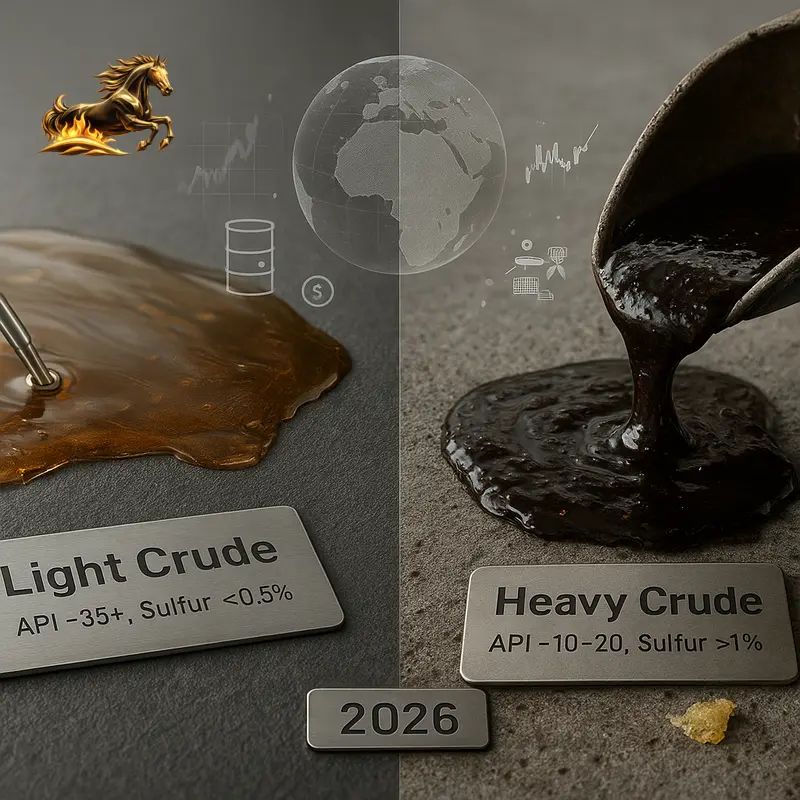
Crude oil classification mostly comes down to density and sulfur content — factors that shape how oil is refined, transported, and priced.
API Gravity: Measuring Weight and Density
API gravity (American Petroleum Institute gravity) tells us if crude is light or heavy by comparing it to water:
- Light Crude Oil: API gravity above 31.1° — less dense, flows easily, and is considered “higher quality.”
- Heavy Crude Oil: API gravity below 20° — denser, thicker, more like syrup, needing more energy to handle.
Think of light crude as water in flow and heavy crude as honey — much harder to move and process.
Sweet vs Sour Crude: The Sulfur Content
Sulfur content further divides crude:
- Sweet Crude: Less than 0.5% sulfur — cheaper and cleaner to refine.
- Sour Crude: More than 0.5% sulfur — requires complex refining to remove pollutants.
Markets prefer light, sweet crude for its cost-efficiency and cleaner processing. Iconic benchmarks like West Texas Intermediate (WTI) and Brent are examples of light sweet crude oils.
Bottom line: Density and sulfur define crude oil’s market value and refining paths. Understanding this is key to grasping the oil market.
Why It Matters: Economics and Refining Realities
Light crude sells at a premium because it produces more valuable fuels like gasoline, diesel, and jet fuel with less refining. Heavy crude, richer in lower-value residues, demands costly upgrading to turn into profitable products.
In 2026, heavy crude often trades at a discount because refining it is complex and expensive. For instance, Light Louisiana Sweet faces pricing pressures compared to Brent.
Refinery Design Shapes Demand
Not all refineries are equal:
- Complex refineries: Usually on the U.S. Gulf Coast, equipped with cokers and hydrocrackers, process heavy, sour crude efficiently.
- Simple refineries: Geared toward light, sweet crude and can’t economically handle heavy crude without costly upgrades.
This infrastructure explains trade flows: the U.S. exports light shale crude but imports heavy crude from Canada and the Middle East for its complex refineries. Heavy crude producers invest in refineries suited for their oil quality.
Takeaway: Refinery setup drives crude demand and pricing differences between light and heavy oil.
The 2026 Market Landscape: Geopolitics, Supply & Volatility
Geopolitical events influence light and heavy crude markets differently in 2026.
Middle East Tensions Impact Heavy Crude
The Strait of Hormuz, a key chokepoint for 20% of seaborne oil, causes Brent crude spikes during disruptions. Heavy sour crude exporters like Saudi Arabia and Iraq feel this acutely, affecting global refinery feedstock.
Saudi Arabia’s cautious price cuts amid regional unrest demonstrate how supply risk sustains prices.
Tight Inventories Boost Light Crude Prices
U.S. crude inventories fell sharply (2.3 million barrels per EIA, 8.1 million barrels per API in May), signaling tight supply or strong demand. Light crude benefits first, thanks to refining flexibility and export potential.
Bottom line: Geopolitical risks and inventory trends keep the pricing game intense, with heavy crude’s vulnerabilities highlighting refinery configurations’ importance.
Regional Insights: Who Produces What?
Crude quality varies by region, driving global trade patterns.
North America
- U.S.: Leader in light shale crude, shifted from importer to exporter. Its light sweet crude suits refineries lacking heavy-processing capacity.
- Canada: Heavy oil sands require dilution or upgrading, mostly exported to U.S. complex refineries.
Middle East
Saudi Arabia, Iraq, and Kuwait mainly produce medium to heavy sour crudes. Regional instability makes their exports vital but vulnerable, influencing global prices and refinery sourcing.
Latin America
- Venezuela: Holds massive heavy crude reserves but faces production challenges.
- Brazil: Growing production of both light and heavy crudes offshore, boosting its global role.
Conclusion: Regional oil types and geopolitics shape global market moves and pricing.
Environmental Impact & The Energy Transition in 2026
Environmental factors now heavily influence crude oil economics.
Carbon Intensity Matters
Light crude generally has a smaller carbon footprint across extraction, transport, and refining versus heavy crude. Rising carbon taxes and regulations mean lighter crude often commands a “carbon premium.”
Emissions & Regulation Hit Heavy Crude
Heavy sour crude refining generates more emissions and sulfur waste, triggering tighter regulations and higher costs. This drives heavier crude price discounts further.
Key point: Environmental policies increasingly shape crude valuations, favoring lighter, cleaner barrels.
Tech Innovations: Closing the Gap?
Technology eases heavy crude challenges but doesn’t eliminate them:
- Upgrading at the source: Solvent de-asphalting converts heavy oil to lighter synthetic crude.
- Enhanced recovery: Methods like Steam-Assisted Gravity Drainage (SAGD) unlock tough reserves.
- Refinery advances: New catalysts improve heavy crude processing.
Still, these tech investments are costly and must balance environmental trade-offs amid stricter carbon rules.
Summary: Innovation helps, but heavy crude faces uphill battles compared to lighter oil.
What This Means: Strategy & Outlook for 2026 and Beyond
- Producers: Heavy crude suppliers must boost carbon efficiency and market access to counter discounts. Light crude producers hold market advantages but must navigate transition pressures and investor expectations.
- Refiners: Complex refineries processing heavy crude gain flexibility and margins; simple refiners stay tied to volatile light crude markets.
- Policymakers: Balancing secure oil supplies with climate goals requires nuanced strategy amid light-heavy crude divides.
Bottom line: Success hinges on managing technical, economic, and regulatory challenges across the crude oil spectrum.
Key Takeaways for 2026
- Density and sulfur content drive pricing, refining choices, and trade flows.
- Geopolitical events affect light and heavy crude differently, with heavy sour grades more exposed.
- Inventory declines indicate tight markets, favoring light crude’s adaptability.
- Carbon intensity shapes crude demand and valuation in an evolving regulatory landscape.
- Refinery design remains a critical factor in crude oil economics.
Keep an Eye On
- Middle East tensions: Strait of Hormuz developments directly affect heavy crude prices and supplies.
- Inventory reports: EIA and API weekly data will signal market balance shifts.
- Price spreads: Watch differentials between WTI (light crude) and heavy grades (Western Canadian Select, Arab Heavy) to gauge refinery demand and margins.
- Energy policies: New carbon regulations could quickly reshape heavy crude economics.
FAQs
Q1: Can refineries easily switch between light and heavy crude?
No. Simple refineries can’t handle heavy crude without costly upgrades; complex refineries need advanced equipment but can process heavier grades efficiently.
Q2: Why is heavy crude cheaper despite its abundance?
Heavy crude’s refining is energy-intensive and costly, leading the market to price it lower to reflect these expenses.
Q3: What are the main benchmarks for light crude?
West Texas Intermediate (WTI) and Brent are the most influential light sweet crude benchmarks worldwide.
Q4: How does the energy transition affect light vs heavy crude demand?
Heavier crude faces higher costs due to carbon intensity, favoring lighter crude demand; however, some heavy crude persists due to diesel and petrochemical needs.
Q5: What does a “crude inventory draw” mean and why is it important?
It means stored oil volumes have dropped, indicating tight supply or strong demand. Recent large draws hinted at market tightening and supported price rises.
Understanding light vs heavy crude oil unlocks vital insights into today’s energy landscape. From their physical traits to market dynamics and geopolitical impacts, these distinctions reveal not just price fluctuations but the unfolding story of energy’s future.
