
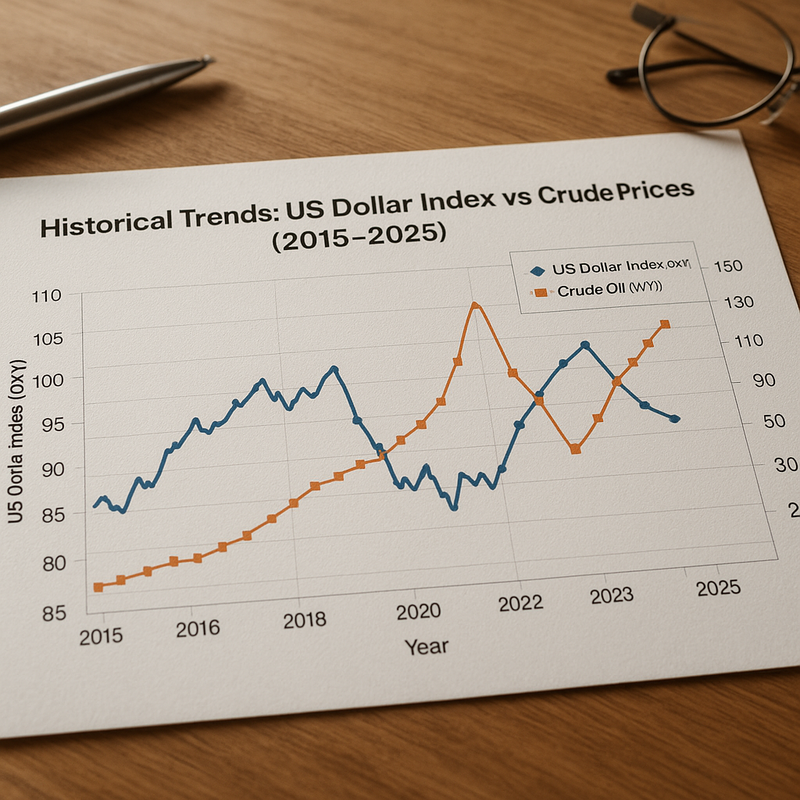
The Relationship Between the US Dollar and Crude
The Relationship Between the US Dollar and Crude Oil: Insights for 2026
Introduction
The US dollar (USD) occupies a pivotal role in global finance, especially as the dominant currency in international trade. Its influence significantly shapes the pricing and dynamics of key commodities like crude oil, affecting market trends, economic policies, and geopolitical interactions. For investors, policymakers, and consumers alike, grasping the interplay between the USD and crude oil prices is crucial to navigating today’s complex economic environment.
This article presents a comprehensive analysis of the forces connecting the US dollar and crude oil, highlighting historical patterns, recent developments in 2026, and future outlooks. Readers will gain valuable insights into how currency fluctuations impact oil prices and, conversely, how oil market trends influence the USD, empowering more informed decisions in a rapidly evolving market.
The Fundamentals of Oil Pricing
How Crude Oil is Priced
Crude oil is predominantly priced in US dollars on global markets, establishing a direct link between the USD’s value and oil prices. When the dollar strengthens against other currencies, oil effectively becomes more expensive for purchasers using foreign currencies, typically suppressing demand and pushing prices downward. Conversely, a weaker dollar usually lowers oil costs internationally, boosting demand and driving prices up.
Key Price Influencers
Beyond the USD’s influence, several critical factors shape oil prices, including:
- Supply and Demand Dynamics: Fluctuations in production levels and consumption patterns directly govern oil pricing.
- Geopolitical Events: Political instability, sanctions, and conflicts in major oil-producing regions generate supply uncertainties and price volatility.
- Market Sentiment and Speculation: Traders’ expectations and speculative activities often cause short-term price swings.
- Other Currency Movements: While less influential, currencies like the Euro (EUR) and Japanese Yen (JPY) still play roles in commodity pricing variations.
A thorough understanding of these variables reveals the complex drivers behind crude oil price movements beyond currency fluctuations alone.
Historical Context: The USD and Crude Oil Prices
The Late 20th Century: A Foundation
Since the 1970s, the connection between oil prices and the USD has been well documented. During the oil crises of 1973 and 1979, prices spiked amid intricate currency shifts. Notably, high oil prices tended to widen US trade deficits, often triggering a weaker dollar. This inverse relationship has been a cornerstone of economic policy and market behavior for decades.
The 2008 Financial Crisis
The 2008 financial meltdown vividly exemplified the USD-oil relationship. Oil prices soared near $140 per barrel before plummeting, coinciding with a dollar rally as investors sought safe assets amid uncertainty. A stronger dollar rendered oil more expensive for foreign buyers, suppressing demand and intensifying price declines. This crisis underlined how financial turmoil can amplify the currency-commodity interplay.
Recent Developments: The Covid-19 Pandemic and Beyond
The COVID-19 pandemic disrupted typical market dynamics. Oil prices collapsed sharply, even briefly turning negative as lockdowns halted demand. Simultaneously, the USD appreciated as investors sought security in US assets. This pronounced inverse relationship reinforced the enduring link between the dollar and oil prices during volatile periods and continues to shape market responses into 2026.
The Current State of the USD and Crude Oil Prices (2026)
Today’s Price Trends
By March 2026, crude oil prices have surged to approximately $95.91 per barrel. This rebound reflects rising global demand, especially within fast-growing emerging markets recovering from pandemic-related setbacks. Data from Trading Economics shows oil prices increased by over 47% in the prior month, driven by industrial revival and supply adjustments.
Economic Indicators and Forecasts
Several key economic factors influence USD strength and crude oil pricing in 2026:
- US Economic Growth: Expansion in the US economy often correlates with heightened energy consumption, pushing oil prices higher.
- Inflation and Federal Reserve Policy: Inflation trends and central bank interest rate decisions impact the dollar’s value and subsequently oil prices.
- Geopolitical Tensions: Political instability in oil-rich regions like the Middle East can disrupt supply chains, triggering price fluctuations.
The USD-Oil Market Link
In regions such as Europe, where oil demand is substantial, a stronger dollar raises the cost of oil imports priced in USD, impacting energy affordability and inflation. The European Central Bank emphasizes exchange rate dynamics as a critical factor influencing energy prices and overall economic conditions.
Case Studies: USD and Oil Prices in Action
OPEC’s Strategic Influence
OPEC remains a key player in balancing oil supply to influence prices. In 2026, OPEC’s production cuts, set against volatile dollar movements, contributed to higher oil prices. This scenario highlights how supply management and currency fluctuations work together to affect global markets.
Impact of the U.S. Shale Revolution
The rise of US shale oil production adds complexity to the USD-oil relationship. Increased shale output strengthens US oil exports, supporting a stronger dollar. This shift reshapes conventional pricing models and underscores the tight link between domestic energy policies and global oil markets.
The Future: Trends and Outlook for 2026 and Beyond
Economic Forecasts and Emerging Scenarios
Looking ahead, several factors could influence the USD and crude oil dynamics:
- Energy Transition: Growing adoption of renewable energy may reduce oil dependency, altering traditional correlations with currency movements.
- Changing Currency Landscape: The rise of digital currencies and geopolitical shifts could challenge the USD’s dominance in commodity pricing.
- Investment Shifts: Increased capital flow into alternative energy sectors may impact oil demand and pricing structures.
Strategies for Managing Risk
To navigate these uncertainties, stakeholders should consider:
- Utilizing hedging strategies such as futures and options to manage price volatility effectively.
- Diversifying energy investments by incorporating renewable energy sources to reduce risk exposure.
- Maintaining vigilant monitoring of economic and geopolitical indicators to anticipate market shifts promptly.
These approaches can bolster resilience in a continually shifting market environment.
Conclusion
The intricate relationship between the US dollar and crude oil pricing remains a defining feature of the global economy in 2026. A nuanced understanding of this dynamic—where currency strength inversely affects oil prices amid broader economic and geopolitical factors—is vital for informed decision-making.
Key insights include:
- A stronger USD generally suppresses oil prices by increasing costs for non-dollar buyers, while a weaker dollar tends to elevate prices.
- Broader economic elements such as inflation trends, US growth, and geopolitical developments strongly influence both oil and currency markets.
- Proactive risk management and adaptation to the evolving energy landscape are essential for investors and policymakers.
Grasping these complexities equips stakeholders to better navigate the evolving intersection of the US dollar and crude oil markets.
Suggested Next Steps
- Stay Updated: Follow trusted financial news outlets and economic reports to track market shifts.
- Leverage Analytical Tools: Use platforms like TradingView and Bloomberg for real-time oil and currency data.
- Expand Your Expertise: Review research from the European Central Bank and the Energy Information Administration for deeper insights.
By engaging with reliable information and strategic financial practices, market participants can confidently face the intertwined future of the US dollar and crude oil pricing.
