
The Brent Oil Price Trend in 2026: Analysis
Introduction
As we move through 2026, the Brent crude oil price trend remains a critical focus for financial markets, policymakers, and the energy sector worldwide. Brent crude is a key benchmark for global oil prices, directly impacting economies, energy policies, and investment decisions. Understanding its price movements is essential for businesses and governments to navigate the market’s ongoing fluctuations effectively.
Recent years have brought complexity to oil pricing, shaped by geopolitical tensions, shifting supply and demand, evolving environmental regulations, and technological breakthroughs. This analysis offers a clear snapshot of Brent’s current pricing, the main factors influencing it, and forecasts to help stakeholders plan confidently throughout 2026.
Current State of Brent Oil Prices
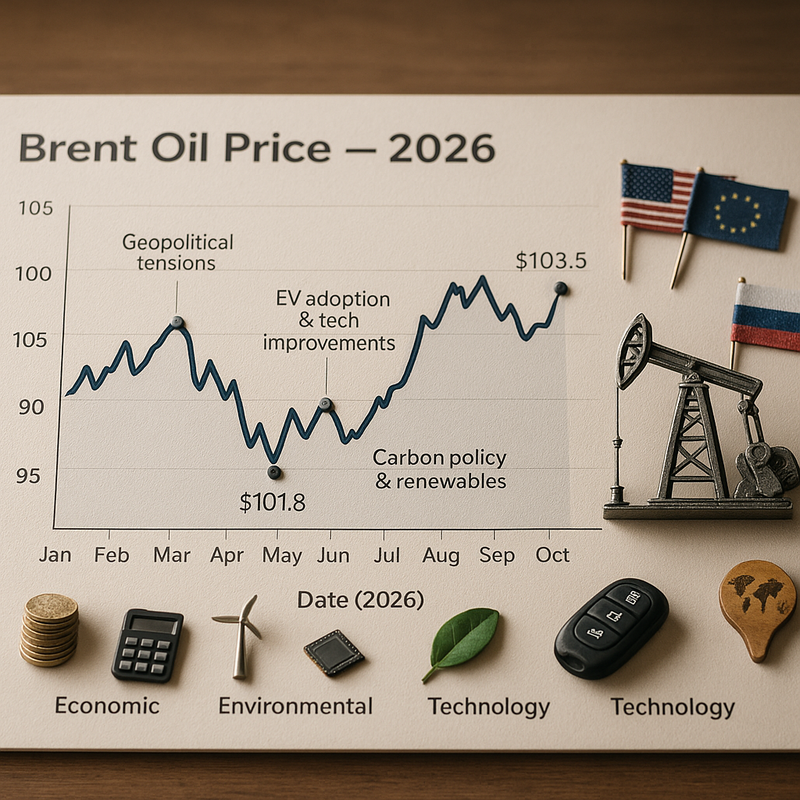
Right now, Brent crude is trading around $101.15 per barrel. This figure follows a 1.93% drop in March 2026, after a sharp 50% rise the previous month. Such volatility highlights how sensitive Brent prices are to new economic data and geopolitical events.
Key Influences on Brent Oil Prices
- Geopolitical Tensions: Conflicts and sanctions in major oil-producing nations, like Russia and Libya, continue to create supply uncertainties.
- OPEC+ Production Decisions: The alliance’s production quotas remain crucial to maintaining price stability.
- Economic Recovery: While the global economy is bouncing back, uneven growth—especially from big consumers like China—affects oil demand.
- Technological Advances: Innovations in shale fracking and the rise of renewable energy sources are reshaping production and consumption.
- Environmental Regulations: Stricter carbon emission targets complicate demand forecasting and production strategies.
Real-World Example
For example, as COVID-19 restrictions eased worldwide, fuel consumption surged unexpectedly. Production couldn’t immediately keep pace, leading to a supply-demand mismatch that directly pushed prices higher.
Long-Term Brent Oil Price Predictions for 2026 and Beyond
What Analysts Say
- J.P. Morgan predicts an average price near $60 per barrel in 2026, reflecting expectations of ample supply and moderate demand growth.
- The U.S. Energy Information Administration (EIA) expects Brent prices to hold above $95 per barrel initially, potentially falling below $80 later as supply stabilizes.
Trends Shaping the Forecast
- Supply and Demand: Recovery-driven demand growth balanced against boosted U.S. shale production and OPEC+ coordination may limit price spikes.
- Environmental Factors: Stronger carbon regulations could reduce long-term oil demand, though short-term price swings are possible.
- Technological Progress: Advances in energy technologies will continue to influence both supply chains and consumption patterns.
- Economic and Geopolitical Policies: Inflation control, global growth strategies, and international relations significantly impact oil prices.
Scenario Breakdown
- Optimistic Case: Stable geopolitics and steady economic growth could support Brent prices between $90 and $100 per barrel, buoyed by rising consumption and investor confidence.
- Pessimistic Case: Rapid shifts to clean energy and geopolitical factors favoring excess supply might drag prices down to $55–$60, aligning with more conservative outlooks.
Historical Brent Oil Price Trends in Perspective
Brent crude has historically been volatile:
- The 1970s oil crises sparked sharp price hikes due to geopolitical unrest.
- During 2014–2016, prices fell from over $100 to below $30 amid oversupply and changing demand.
- The 2020 pandemic caused unprecedented disruptions, briefly pushing Brent prices negative.
What History Teaches Us
These past fluctuations show that while short-term shocks can cause dramatic swings, long-term prices typically reflect fundamental market conditions and geopolitical stability. Recognizing these cycles helps anticipate future market risks and opportunities.
Conclusion
The Brent oil price outlook in 2026 is complex, shaped by a dynamic mix of geopolitical, economic, environmental, and technological factors. Market participants should expect ongoing price volatility but can better prepare by understanding the key drivers and future scenarios discussed here.
Key Takeaways
- Brent crude prices are inherently volatile, influenced by geopolitical tensions and economic changes.
- 2026 forecasts span a wide range, driven by supply-demand dynamics and policy shifts.
- Staying informed about global developments and renewable energy trends is vital for strategic planning.
Recommendations
- Monitor geopolitical events affecting oil supply closely.
- Follow forecasts from trusted sources like the EIA and major financial institutions.
- Diversify energy investments to mitigate risks from oil market fluctuations.
For deeper insights into the Brent oil price trend and global oil markets, authoritative resources like Oilprice.com, Trading Economics, and the EIA offer valuable, up-to-date information. Engaging with these platforms supports smart, informed decisions in the evolving energy landscape.
