
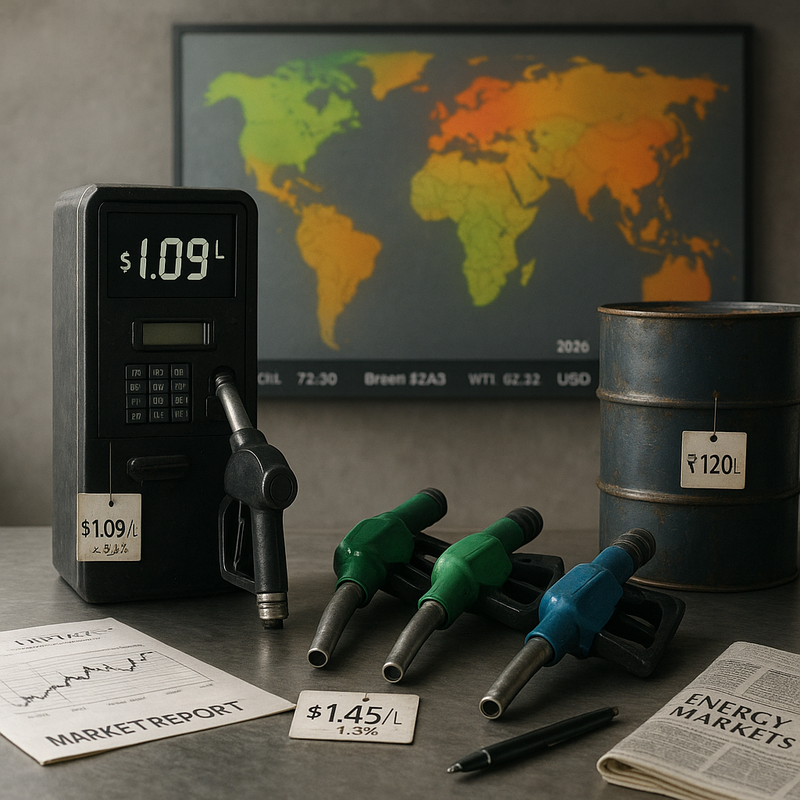
The State of Petrol Prices in the World
The State of Petrol Prices in the World Market – 2026
Introduction
As we move into 2026, petrol prices continue to play a crucial role in shaping economies, geopolitics, and everyday life around the globe. From the shifting barrels of crude oil to the wide regional price differences at the pump, understanding the dynamics of petrol prices is vital for consumers, businesses, and policymakers alike. This article provides an insightful overview of the current global petrol price landscape, the key drivers behind these fluctuations, and what the future may hold.
Understanding Global Petrol Prices
Current Prices
On March 11, 2026, Brent crude was trading around $86.98 per barrel, showing an upward trajectory compared to previous periods. WTI prices reflect this strengthening trend, signaling positive momentum in global oil markets.
Historical Context
Looking back over recent years helps contextualize today’s figures. After a dramatic slump during the 2020 pandemic shutdowns, demand surged strongly in 2021 and 2022, pushing prices higher. The prevailing trend has seen a steady rise influenced by global oil consumption and production strategies.
- 2022 Average: $75/barrel
- 2023 Average: $81/barrel
- 2024 Average: $84/barrel
- 2026 (Current): $86.98/barrel
These gradual increases reflect growing demand, careful production management by OPEC+, and ongoing geopolitical tensions.
Factors Influencing Petrol Prices
Several interconnected factors drive petrol price movements. Understanding these components can help anticipate market trends and make informed decisions.
1. Supply and Demand Dynamics
At the core, the balance of supply and demand dictates oil prices. Expanding consumption in emerging markets like India and China significantly boosts demand, while OPEC+ strategically adjusts production to balance or influence prices.
2. Geopolitical Factors
Instability in key oil-producing regions, such as the Middle East, or sanctions on major producers, can disrupt supply chains and transportation routes, pushing prices upward.
3. Economic Indicators
The global economy’s health shapes oil consumption patterns. Despite inflation worries, 2026’s global GDP growth supports rising oil demand, though slower growth in some developed countries could temper price pressures.
4. Environmental Policies and Energy Transition
Growing climate commitments worldwide drive investments in renewable energy, which gradually impacts long-term petrol demand and could help stabilize oil market volatility over time.
5. Technological Innovations
Advances in extraction technologies, including increased shale oil production, enhance supply, influencing global petrol price trends.
6. Market Speculation
Investor speculation based on future price expectations often introduces short-term volatility, complicating price forecasts.
Regional Price Variations
Retail petrol prices vary widely across regions due to taxes, subsidies, and local market factors.
- North America: Gasoline averages around $3.50 per gallon, influenced by refining and distribution costs.
- Europe: Higher taxes and environmental levies push prices between $4.50 and $5.00 per gallon.
- Asia-Pacific: Rapid demand growth in nations like India and China results in prices near $4.80–$5.00 per gallon.
These regional differences emphasize that crude oil benchmarks are just one piece of the petrol price puzzle for consumers.
Future Outlook for Petrol Prices
Predicting petrol prices involves many uncertainties shaped by unpredictable geopolitical and economic events.
Predictive Trends
Some experts forecast a price moderation later this year. For instance, J.P. Morgan projects Brent crude to average about $60 per barrel in 2026, citing potential supply surpluses and slowing demand growth.
However, geopolitical risks persist and unexpected disruptions could trigger intermittent price spikes.
Practical Tips for Consumers
With petrol prices fluctuating, households and businesses face increased expenses. To mitigate these effects, consumers can:
- Adjust budgets to accommodate fuel price changes.
- Invest in fuel-efficient or alternative fuel vehicles to reduce petrol reliance.
- Use alternative transport options like public transit, cycling, or carpooling.
Proactive strategies will help ease the financial impact during volatile price periods.
Conclusion
The petrol price landscape in 2026 reflects a complex interplay of supply-demand factors, geopolitical influences, economic conditions, and the ongoing shift toward cleaner energy. Staying informed about these elements empowers consumers and stakeholders to navigate future challenges with confidence.
Key Takeaways
- Petrol price fluctuations are mainly driven by supply-demand shifts and geopolitical events.
- Prices in 2026 show resilience but remain vulnerable to external shocks.
- Consumers can lessen cost impacts through strategic planning and adopting fuel alternatives.
Suggested Next Steps
- Keep track of global oil market developments and economic indicators.
- Explore fuel-efficient transport options to reduce petrol dependence.
- Utilize regional petrol price tools and apps for real-time updates.
Petrol prices mirror the dynamic nature of global economic and political realities. A well-informed approach allows individuals and organizations to adapt successfully as the energy market continues to evolve.
