
Understanding Light Crude Oil: A Deep Dive into Its Implications for 2026
Introduction
As the global energy landscape evolves, grasping the nuances of different types of crude oil is more important than ever. Among these, light crude oil stands out for its favorable traits and critical role in meeting both current and future energy demands. Known for its low density and high API gravity, light crude oil offers easier, more cost-effective refining, making it the preferred feedstock for producing cleaner fuels.
This article provides a thorough exploration of light crude oil—delving into its defining properties, refining benefits, and the broader economic and environmental implications anticipated in 2026. Whether you’re a policymaker, industry professional, or consumer, understanding light crude oil is essential as the energy sector navigates sustainability challenges and market fluctuations.
What is Light Crude Oil?
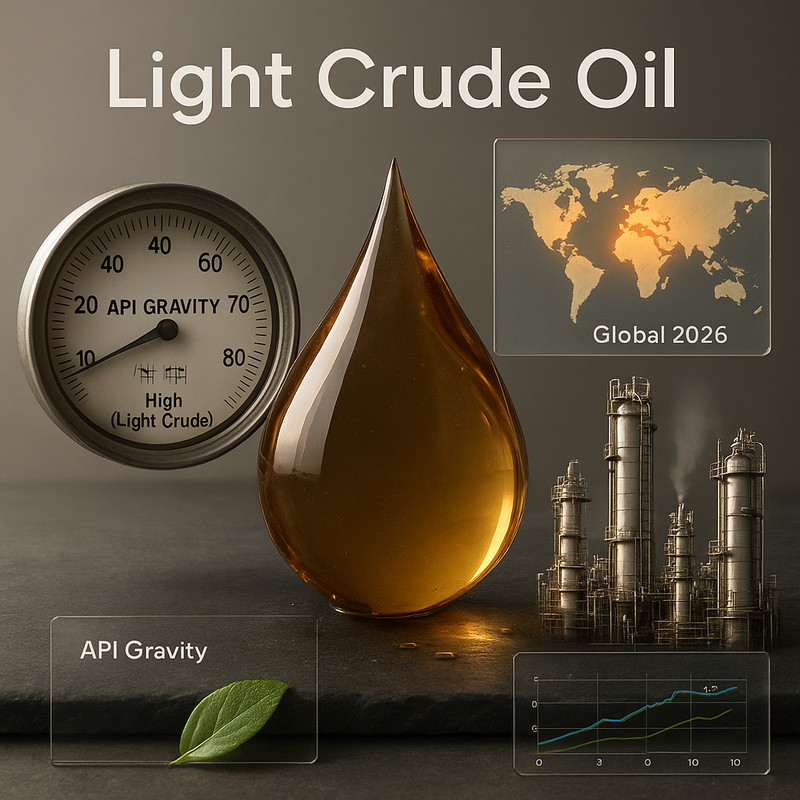
Light crude oil is prized for its low density and viscosity, which make it more fluid and simpler to process than heavier crude oils. Its classification largely depends on API gravity—a measure comparing petroleum’s density to water. Typically, light crude has an API gravity above 31.1°, meaning it’s lighter than water and floats, distinguishing it clearly from heavier varieties.
Key Properties of Light Crude Oil
- Density: Ranges between 0.83 and 0.87 g/cm³, aiding in easier extraction and flow.
- API Gravity: Above 31.1°, signifying a lighter, less energy-intensive feedstock.
- Viscosity: Low viscosity enables efficient pipeline transportation.
- Chemical Composition: Rich in paraffin hydrocarbons, ideal for producing high-quality fuels.
- Sulfur Content: Less than 0.5% sulfur—categorizing it as “sweet” crude, which supports cleaner fuel production.
Thanks to these attributes, light crude oil is an optimal raw material for refining into gasoline, diesel, jet fuel, and vital petrochemicals that power modern economies.
Why Light Crude Oil Matters in 2026
Despite the rapid push toward renewable energy, light crude oil will remain crucial in the 2026 energy mix. Its cleaner refining profile and versatility uniquely position it to balance energy demands and environmental priorities.
Economic Factors Shaping 2026
- Market Demand: Regions with established refining infrastructure—like North America and parts of Asia—continue to rely heavily on light sweet crude to meet transportation fuel needs.
- Supply Trends: Innovations in extraction technologies, including hydraulic fracturing and horizontal drilling, unlock new light crude reserves, helping stabilize or expand supply.
- Regulatory Climate: Emission reduction policies and stricter fuel standards directly impact market prices and incentives, often favoring sweet light crude.
Understanding these economic dynamics is vital for effective investment and energy policy decisions in 2026.
Refining Light Crude Oil: Advantages and Processes
The physical and chemical profile of light crude oil simplifies refining, producing higher yields of valuable products with less complexity.
Distillation and Beyond
- Initial Distillation: Lower distillation temperatures allow efficient separation of prime fractions like gasoline, diesel, and jet fuel.
- Secondary Processing: Light crude’s composition requires less intensive upgrading, reducing costs and operational complexity.
- By-products: Beyond fuels, light crude is essential for manufacturing petrochemicals used in plastics, fertilizers, and other industries, highlighting its industrial significance.
These refining benefits not only boost economic value but also contribute to lower greenhouse gas emissions during production, supporting broader environmental objectives.
Environmental Impacts of Light Crude Oil
While all fossil fuels carry environmental challenges, light crude oil offers some relative advantages:
- Lower Emissions: Refining light crude typically produces fewer pollutants—such as sulfur oxides and particulate matter—compared to heavier crudes.
- Spill Behavior: In spill scenarios, light crude evaporates faster, potentially minimizing long-term environmental harm, though short-term marine impacts remain serious.
- Sustainability Synergy: Emerging technologies like carbon capture and utilization can mitigate environmental impacts, extending light crude’s role in a low-carbon future.
A balanced understanding of these factors is key to responsible energy decisions.
Case Studies: Real-World Impact of Light Crude Oil
Examining regional examples highlights light crude oil’s global importance as we approach 2026.
North American Shale Revolution
Breakthroughs in shale extraction, including hydraulic fracturing and horizontal drilling, have positioned the U.S. as a major light crude producer, influencing global supply and pricing.
- Economic Effects: Enhanced energy security and more competitive consumer prices reflect this boom, despite market volatility.
- Technological Innovation: Ongoing investments aim to improve extraction efficiency and environmental safeguards.
Middle East Production Trends
Nations like Saudi Arabia and the UAE continue to prioritize light sweet crude, leveraging modern extraction and refining technologies to maintain global leadership.
- Market Influence: Production stability from the region heavily affects global pricing dynamics.
- Economic Diversification: While oil remains central, these countries are balancing production with broader economic reforms.
These cases underscore light crude’s vital role within the evolving global energy landscape.
Conclusion
Light crude oil is far more than just a fossil fuel type—it’s a cornerstone in the ongoing energy transition. Its refining advantages, relatively cleaner environmental profile, and economic significance ensure it will remain influential through 2026 and beyond.
For energy stakeholders committed to sustainable solutions, mastering the complexities of light crude oil is critical. Striking the right balance between economic benefits and environmental responsibility will unlock its full potential during this transformative era.
Recommended Next Steps
To stay ahead of developments in light crude oil and energy markets:
- Consult Authoritative Sources: Dive into detailed insights from the International Energy Agency (IEA) and U.S. Energy Information Administration (EIA).
- Track Market Movements: Use platforms like CME Group for real-time pricing and trends.
- Engage in Industry Dialogue: Join forums and seminars focused on energy innovation and sustainability.
